Muskan Bhandari
2024/08/15
4 / 5
Excellent Book
RefHub featured
Book guide and evaluation
Valentina Alto
8 reviews
Published
pages
views
Introduction to Building LLM Powered Applications Large Language Models LLMs have revolutionized the way we approach natural language processing enabling developers to build intelligent applications that can understand generate and interact with human language. As the author o
Before you read
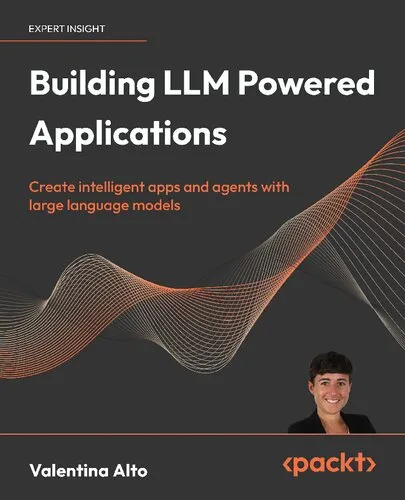
Large Language Models LLMs have revolutionized the way we approach natural language processing enabling developers to build intelligent applications that can understand generate and interact with human language. As the author of "Building LLM Powered Applications Create intelligent apps and agents with large language models" I'm excited to introduce this comprehensive guide that helps you harness the power of LLMs to build cutting-edge applications.
"Building LLM Powered Applications" is a hands-on guide that takes you through the process of building intelligent applications powered by large language models. The book starts by introducing the fundamentals of LLMs including their architecture training data and limitations. You'll then dive into the world of NLP learning about text preprocessing sentiment analysis and named entity recognition.
Throughout the book you'll learn how to build various LLM-powered applications such as
The book covers a range of tools and frameworks including Transformers Hugging Face and TensorFlow. You'll learn how to fine-tune and adapt LLMs to your specific use case ensuring that your applications are accurate efficient and reliable.
In addition to the technical aspects the book also explores the practical considerations of building LLM-powered applications such as
By the end of the book you'll have a comprehensive understanding of how to build intelligent applications that can understand generate and interact with human language.
Here are some of the key takeaways from the book
Here are some quotes from the book that capture the essence of building LLM-powered applications
"The future of natural language processing is not about building platforms that can understand human language but about building platforms that can be understood by humans."
"The true power of LLMs lies not in their ability to generate human-like text but in their ability to understand the context and nuances of human language."
"Building LLM-powered applications is not a technical challenge but a creative one. It requires us to think beyond the limitations of technology and focus on the needs and desires of the users."
"Building LLM Powered Applications" is more than just a technical guide it's a roadmap for creating a new generation of intelligent applications that can understand generate and interact with human language. As LLMs continue to revolutionize the way we approach natural language processing this book provides the necessary foundation for developers researchers and practitioners to build innovative applications that transform industries and revolutionize human-computer interaction.
Persian Summary
Your question is answered in the context of this title and author. Each answer uses 2 points.
8 reviews, 4.6 average out of 5
2024/08/15
4 / 5
Excellent Book
2024/08/15
4 / 5
Excellent Book
2024/10/16
5 / 5
This book is a must-read for software evelopers and engineers seeking to improve their skills and knowledge in AI software
2025/01/03
4 / 5
Good book
2025/01/18
5 / 5
This's an excellent book!
2025/06/02
5 / 5
software developers and engineers should have this book in their library.
2025/10/20
5 / 5
This book is a very good practical guide for someone who has some software engineering/ML background and wants to jump into building real applications with LLMs and agents. It walks you from foundations through to working applications using relevant frameworks and models. It’s neither super-specialised nor purely conceptual — it strikes a useful middle ground.
2026/01/07
5 / 5
This book balances itself by being the right fit for both beginners and seasoned professionals in the AI field. It starts with foundational concepts and gradually advances to hands-on applications, it also includes bonus chapters on LLM fine-tuning, touches upon AI ethics, and some industrial use cases.
The discussion on choosing the right LLM is particularly insightful, offering practical advice on how to navigate the myriad options available, considering factors like architecture, data, and performance trade-offs. The chapters on building conversational applications and recommendation systems are valuable for anyone looking to implement real-world AI solutions. As the field is quickly evolving, some of the LangChain code snippets might get deprecated and readers would need to find other packages and functionalities to achieve the same.
Overall, the book is a well-structured resource that balances theoretical knowledge with practical implementation.
Sign in to publish a review.
Ask a focused question and learn from the community.
Related references that continue this learning path.
Emmanuel Ameisen