
Space and Place in the Hunger Games: New Readings of the Novels
Deidre Anne Evans Garriott,Whitney Elaine Jones,Julie Elizabeth Tyler
2014
View book
Book guide and evaluation
George A Dunn;Nicolas Michaud
0 reviews
Published
pages
views
Welcome to an in-depth exploration of 'The Hunger Games and Philosophy: A Critique of Pure Treason,' a compelling analysis of philosophical themes embedded within Suzanne Collins' dystopian universe. This book offers readers an opportunity to delve into the ethical, political,
Before you read
Welcome to an in-depth exploration of 'The Hunger Games and Philosophy: A Critique of Pure Treason,' a compelling analysis of philosophical themes embedded within Suzanne Collins' dystopian universe. This book offers readers an opportunity to delve into the ethical, political, and existential questions raised by the brutal world of Panem, where the stakes are survival and rebellion against tyranny.
'The Hunger Games and Philosophy: A Critique of Pure Treason' dissects the philosophical layers interwoven in The Hunger Games trilogy. This anthology, edited by George A. Dunn and Nicolas Michaud, comprises various essays by different scholars who apply philosophical frameworks to explore key themes from the series. Each chapter investigates how the story challenges its audience with profound questions about morality, society, and the human condition.
From Nietzchean concepts of power and identity to Aristotelian ethics concerning courage and justice, the book questions not only the world of Panem but also our real-world systems and values. It explores how Katniss Everdeen's journey symbolizes a fight against systemic oppression and how her choices reflect deeper existential dilemmas. Philosophical dialogues related to reason versus emotion, authoritarian governance, and human liberty feature prominently throughout the discourse.
The questions that The Hunger Games poses to its readers is whether they would have the courage to rise against injustice, even when the price of resistance is high.
Human beings, when pushed to their limits, reveal their truest selves—not as solitary entities but products of their social, ethical, and political environments.
The Hunger Games and Philosophy: A Critique of Pure Treason' is pivotal in understanding how literature can serve as a conduit for philosophical debate. By engaging with the text, readers are prompted to reflect on the nature of freedom, sacrifice, and the collective human experience. This work does not merely entertain; it acts as a mirror reflecting our societal imperfections and urging critical discourse and action.
In an age where authoritarianism and moral ambiguity dominate global conversations, this book stimulates intellectual curiosity and ethical questioning. It is essential for both fans of The Hunger Games trilogy and those interested in philosophy to explore the complex interplay between fiction and reality, power and rebellion, and how they dictate the way societies function.
Persian Summary
Your question is answered in the context of this title and author. Each answer uses 2 points.
0 reviews, 4.4 average out of 5
Sign in to publish a review.
Ask a focused question and learn from the community.
Related references that continue this learning path.
Deidre Anne Evans Garriott,Whitney Elaine Jones,Julie Elizabeth Tyler
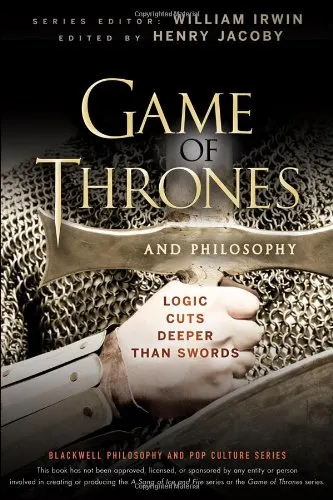
Henry Jacoby,William Irwin