Book guide and evaluation
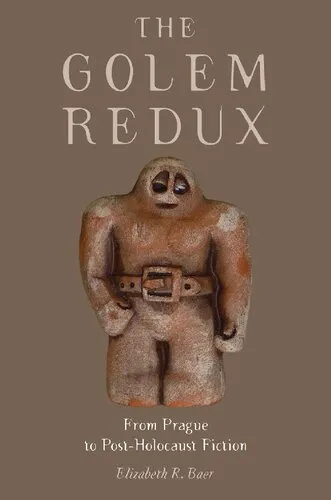
The Golem Redux: From Prague to Post-Holocaust Fiction
Elizabeth R. Baer
English
Intermediate
novel
4.8 / 5
0 reviews
2014
Published
241
pages
372
views
First mentioned in the Book of Psalms in the Hebrew Bible, the golem is a character in an astonishing number of post-Holocaust Jewish-American novels and has served as inspiration for such varied figures as Mary Shelley's monster in her novel Frankenstein, a frightening character
Before you read
What will you get from this book?
First mentioned in the Book of Psalms in the Hebrew Bible, the golem is a character in an astonishing number of post-Holocaust Jewish-American novels and has served as inspiration for such varied figures as Mary Shelley's monster in her novel Frankenstein, a frightening character in the television series The X-Files, and comic book figures such as Superman and the Hulk. In The Golem Redux: From Prague to Post-Holocaust Fiction, author Elizabeth R. Baer introduces readers to these varied representations of the golem and traces the history of the golem legend across modern pre- and post-Holocaust culture. In five chapters, The Golem Redux examines the different purposes for which the golem has been used in literature and what makes the golem the ultimate text and intertext for modern Jewish writers.
Baer begins by introducing several early manifestations of the golem legend, including texts from the third and fourth centuries and from the medieval period; Prague's golem legend, which is attributed to the Maharal, Rabbi Judah Loew; the history of the Josefov, the Jewish ghetto in Prague, the site of the golem legend; and versions of the legend by Yudl Rosenberg and Chayim Bloch, which informed and influenced modern intertexts. In the chapters that follow, Baer traces the golem first in pre-Holocaust Austrian and German literature and film and later in post-Holocaust American literature and popular culture, arguing that the golem has been deployed very differently in these two contexts. Where prewar German and Austrian contexts used the golem as a signifier of Jewish otherness to underscore growing anti-Semitic cultural feelings, post-Holocaust American texts use the golem to depict the historical tragedy of the Holocaust and to imagine alternatives to it. In this section, Baer explores traditional retellings by Isaac Bashevis Singer and Elie Wiesel, the considerable legacy of the golem in comics, Michael Chabon's The Amazing Adventures of Kavalier and Clay, and, finally, "Golems to the Rescue" in twentieth- and twenty-first-century works of film and literature, including those by Cynthia Ozick, Thane Rosenbaum, and Daniel Handler.
By placing the Holocaust at the center of her discussion, Baer illustrates how the golem works as a self-conscious intertextual character who affirms the value of imagination and story in Jewish tradition. Students and teachers of Jewish literature and cultural history, film studies, and graphic novels will appreciate Baer's pioneering and thought-provoking volume.
Ask this book
Your question is answered in the context of this title and author. Each answer uses 2 points.
Sign in to ask the book assistant.
Reader reviews
0 reviews, 4.8 average out of 5
No reviews yet
If you have read this book, help the next reader with your experience.
Write a review
Sign in to publish a review.
Reader questions and answers
Ask a focused question and learn from the community.
Sign in to ask or answer a question.
No questions yet
Be the first to ask a clear, useful question.
What to read next
Related references that continue this learning path.
Crossing the Line: Violence, Play, and Drama in Naval Equator Traditions
Simon J. Bronner
2007
View book