Book guide and evaluation
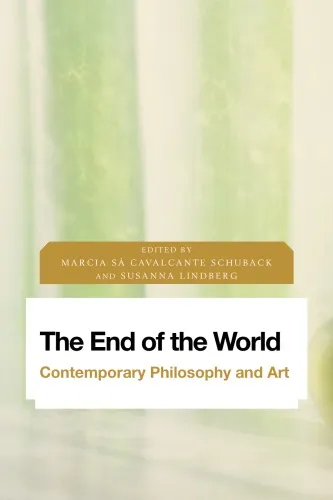
The end of the world: contemporary philosophy and art
Lindberg, Susanna;Schuback, Marcia Sá Cavalcante
English
Beginner
Art History
4.8 / 5
0 reviews
2017
Published
317
pages
587
views
Introduction to "The End of the World: Contemporary Philosophy and Art" As the world undergoes rapid transformations politically, socially, and environmentally, the dialogue between philosophy and art becomes crucial in exploring these changes. "The End of the World: Contempor
Before you read
What will you get from this book?
Introduction to "The End of the World: Contemporary Philosophy and Art"
As the world undergoes rapid transformations politically, socially, and environmentally, the dialogue between philosophy and art becomes crucial in exploring these changes. "The End of the World: Contemporary Philosophy and Art" by Lindberg, Susanna, and Schuback, Marcia Sá Cavalcante delves into this profound discourse, providing readers with a compelling narrative about the role of contemporary thought and artistic expression in times of global uncertainty.
Detailed Summary of the Book
At the heart of "The End of the World: Contemporary Philosophy and Art" lies a thorough examination of how the concept of 'the end' has permeated current philosophical and artistic landscapes. The authors meticulously analyze various philosophical theories and artistic movements that address apocalyptic themes, reflecting on what it means to live in anticipation or fear of an ending.
The book challenges readers to rethink the notion of 'the end' not simply as a catastrophic conclusion but as a transformative stage that offers unique perspectives on existence, ethics, and creativity. By drawing from an extensive range of contemporary philosophical ideas and artistic works, the authors offer insights into how humanity can find meaning amidst chaos and unpredictability.
Key Takeaways
- Understanding the pervasive impact of apocalyptic thinking on modern philosophy and art.
- Exploring the dialogue between philosophical reflection and artistic expression in the face of global challenges.
- Identifying new avenues for philosophical thought and creative innovation by embracing the idea of 'the end' as a transformative process.
- Fostering a renewed sense of hope and responsibility towards the future.
Famous Quotes from the Book
"In the contemplation of our world's potential endings, we uncover the vast possibilities for its rebirth."
"Philosophy and art, as twin lenses, offer us nuanced visions of hope amidst the shadows of despair."
"Every anticipated end is but an echo of a new beginning, urging us to rethink where we stand."
Why This Book Matters
This book stands out as a pivotal contribution to the ongoing discourse surrounding existential challenges faced by contemporary society. With global crises becoming increasingly common, understanding the cultural and intellectual responses through philosophy and art is more relevant than ever.
Lindberg and Schuback's work provides a framework for readers to critically engage with complex issues, fostering a deeper appreciation for the transformative power of creativity and intellectual thought. The book serves as both a guide for those looking to navigate apocalyptic anxieties and an inspirational source for cultivating resilience and innovation.
Ultimately, "The End of the World: Contemporary Philosophy and Art" not only instills a sense of hope and urgency but also encourages a proactive approach to shaping a world beyond anticipated endings.
Ask this book
Your question is answered in the context of this title and author. Each answer uses 2 points.
Sign in to ask the book assistant.
Reader reviews
0 reviews, 4.8 average out of 5
No reviews yet
If you have read this book, help the next reader with your experience.
Write a review
Sign in to publish a review.
Reader questions and answers
Ask a focused question and learn from the community.
Sign in to ask or answer a question.
No questions yet
Be the first to ask a clear, useful question.
What to read next
Related references that continue this learning path.