Book guide and evaluation
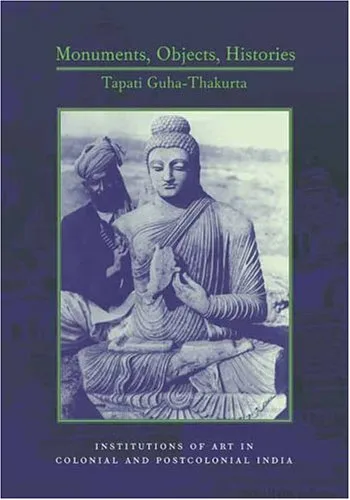
Monuments, Objects, Histories: Institutions of Art in Colonial and Post-Colonial India (Cultures of History)
Tapati Guha-Thakurta
English
Beginner
Art History
4.5 / 5
0 reviews
2004
Published
431
pages
658
views
Welcome to an insightful journey into the multifaceted world of art institutions in India through 'Monuments, Objects, Histories: Institutions of Art in Colonial and Post-Colonial India.' This book serves as a groundbreaking work by Tapati Guha-Thakurta, unraveling the complex
Before you read
What will you get from this book?
Welcome to an insightful journey into the multifaceted world of art institutions in India through 'Monuments, Objects, Histories: Institutions of Art in Colonial and Post-Colonial India.' This book serves as a groundbreaking work by Tapati Guha-Thakurta, unraveling the complex histories and evolving paradigms of art institutions from the colonial era to post-colonial India.
Detailed Summary
In 'Monuments, Objects, Histories,' Tapati Guha-Thakurta delves deep into how art institutions have been shaped and reshaped over the decades in India, influenced by varying historical, political, and social factors. The book is segmented into parts, each serving as a critical examination of the intricate web that has been woven around these institutions since the colonial period. Delving into colonial-era transformations, Guha-Thakurta traces the genealogy of art institutions, emphasizing the pivotal role of these entities in cultural representation, national identity, and historical consciousness. Through meticulous research, she explores the juxtaposition and sometimes the convergence of colonial practices with indigenous traditions, illustrating the power dynamics at play.
As the book transitions into the post-colonial era, it highlights the shifts in art institutions' roles and narratives, aligning them with newly independent India’s national aspirations. The text offers a thorough analysis of how institutions like museums, galleries, and academies have navigated the complex terrain of tradition versus modernity, and the responsibilities of narrating a cohesive national history. By engaging critically with the roles of individuals, policies, and cultural dialogues, Guha-Thakurta provides a comprehensive picture of the evolution of art institutions as living entities shaped by and shaping history.
Key Takeaways
- The book provides a deep understanding of the colonial and post-colonial shifts in India's art institutions.
- It offers insight into the construction of national identity through art and cultural narratives.
- Guha-Thakurta's work highlights the tension between traditional practices and modern innovations within art institutions.
- The book underscores the role of individuals and political forces in shaping art history in India.
Famous Quotes from the Book
"Art institutions do not merely serve to preserve or showcase; they are battlegrounds of representation, where histories are constructed and deconstructed."
"In post-colonial India, art institutions must navigate the delicate balance between evoking pride in a rich heritage and fostering a vision for modernity."
Why This Book Matters
'Monuments, Objects, Histories' stands out as an essential read for students, researchers, and enthusiasts of art history and cultural studies, particularly those interested in the Indian subcontinent. The book is pivotal in understanding how historic art has been curated and interpreted within institutional confines over centuries. It is instrumental in shedding light on the layered complexities that underscore the art world, providing a scholarly yet accessible narrative about how history is recorded through the lens of art.
Tapati Guha-Thakurta presents a detailed examination of the impact of political shifts and cultural dialogues on the evolution of art institutions. By doing so, she not only documents the history but also stimulates critical thought about the future directions these institutions might take amid ongoing globalization and digital transformation.
Ask this book
Your question is answered in the context of this title and author. Each answer uses 2 points.
Sign in to ask the book assistant.
Reader reviews
0 reviews, 4.5 average out of 5
No reviews yet
If you have read this book, help the next reader with your experience.
Write a review
Sign in to publish a review.
Reader questions and answers
Ask a focused question and learn from the community.
Sign in to ask or answer a question.
No questions yet
Be the first to ask a clear, useful question.
What to read next
Related references that continue this learning path.
History of the Restoration and Conservation of Works of Art
Alessandro Conti,Helen Glanville
2007
View book