
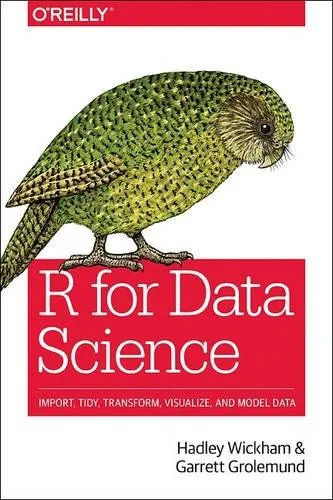
R for Data Science: Import, Tidy, Transform, Visualize, and Model Data
Hadley Wickham,Garrett Grolemund
2017
View book
Book guide and evaluation
Rosina Marquez Reiter,Maria Elena Placencia
0 reviews
Published
pages
views
Introduction to 'The End of Organization Theory' Welcome to the profound exploration of organizational dynamics and the evolving tapestry of management paradigms through 'The End of Organization Theory'. This book challenges conventional wisdom and delves into the depths of or
Before you read
Welcome to the profound exploration of organizational dynamics and the evolving tapestry of management paradigms through 'The End of Organization Theory'. This book challenges conventional wisdom and delves into the depths of organizational structures, processes, and the underlying philosophies that have shaped the business world for decades.
In 'The End of Organization Theory', the author embarks on a critical examination of the classical theories that have dominated the field of organizational studies. The book questions the relevance of traditional frameworks in the context of modern day organizations that are increasingly complex and adaptive. The narrative unfolds with a scrutiny of foundational theories, dissecting their core assumptions and scrutinizing their applicability in contemporary settings. It highlights the transition from rigid hierarchical structures to more fluid and decentralized forms of organization.
The book argues that the era of standardized practices and fixed theoretical models is dissipating, giving way to a new age characterized by innovation, agility, and a focus on human-centric approaches. It presents a compelling case for the dissolution of existing paradigms, proposing a paradigm shift in how we perceive and study organizations. This transformation is necessitated by technological advancements, globalization, and shifting cultural landscapes, all of which demand a more nuanced and flexible approach to organizational theory.
"The dissolution of rigid organizational boundaries heralds a new dawn for creativity and adaptability."
"In the age of digital transformation, it is the human connection that will define the ultimate success of organizations."
'The End of Organization Theory' matters because it challenges us to rethink the foundations upon which business schools have built their curriculums for decades. It serves as a clarion call for scholars, practitioners, and leaders alike to embrace new ways of thinking and to revitalize the study of organizations for the current era. The book provides a roadmap for navigating the complexities of the modern business environment, where agility and innovation are not just desirable but imperative for survival.
Its significance lies not only in its critical perspective but also in its capacity to inspire a transformative dialogue around the practice and study of management. By questioning established paradigms, it encourages a forward-thinking approach to organizational studies, one that is open to diversity, complexity, and continuous evolution.
Your question is answered in the context of this title and author. Each answer uses 2 points.
0 reviews, 4.4 average out of 5
Sign in to publish a review.
Ask a focused question and learn from the community.
Related references that continue this learning path.
Hadley Wickham,Garrett Grolemund

Mihai Surdeanu,Marco Antonio Valenzuela-Escarcega