Book guide and evaluation
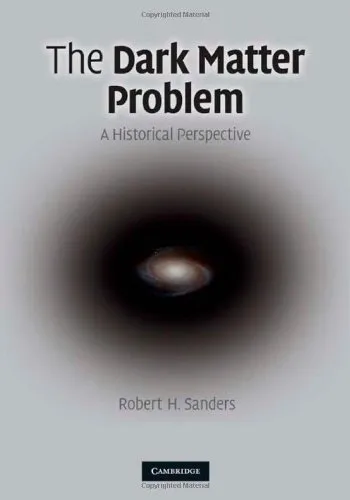
The dark matter problem: A historical perspective
Robert H. Sanders
English
Intermediate
novel
4.3 / 5
0 reviews
2009
Published
239
pages
344
views
Most astronomers and physicists now believe that the matter content of the Universe is dominated by dark matter: hypothetical particles which interact with normal matter primarily through the force of gravity. Though invisible to current direct detection methods, dark matter can
Before you read
What will you get from this book?
Most astronomers and physicists now believe that the matter content of the Universe is dominated by dark matter: hypothetical particles which interact with normal matter primarily through the force of gravity. Though invisible to current direct detection methods, dark matter can explain a variety of astronomical observations. This book describes how this theory has developed over the past 75 years, and why it is now a central feature of extragalactic astronomy and cosmology. Current attempts to directly detect dark matter locally are discussed, together with the implications for particle physics. The author comments on the sociology of these developments, demonstrating how and why scientists work and interact. Modified Newtonian Dynamics (MOND), the leading alternative to this theory, is also presented. This fascinating overview will interest cosmologists, astronomers and particle physicists. Mathematics is kept to a minimum, so the book can be understood by non-specialists.
Ask this book
Your question is answered in the context of this title and author. Each answer uses 2 points.
Sign in to ask the book assistant.
Reader reviews
0 reviews, 4.3 average out of 5
No reviews yet
If you have read this book, help the next reader with your experience.
Write a review
Sign in to publish a review.
Reader questions and answers
Ask a focused question and learn from the community.
Sign in to ask or answer a question.
No questions yet
Be the first to ask a clear, useful question.
What to read next
Related references that continue this learning path.
Crossing the Line: Violence, Play, and Drama in Naval Equator Traditions
Simon J. Bronner
2007
View book