Book guide and evaluation
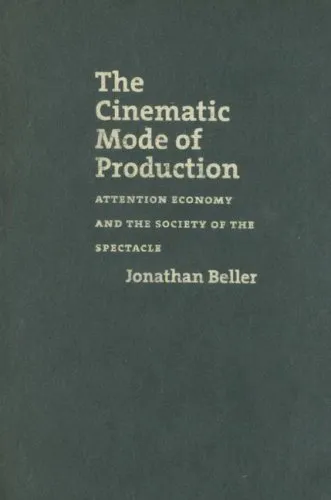
The Cinematic Mode of Production: Attention Economy and the Society of the Spectacle
Jonathan Beller
English
Intermediate
novel
4.3 / 5
0 reviews
2006
Published
349
pages
400
views
Cinema brings the industrial revolution to the eye, writes Jonathan Beller, and engages spectators in increasingly dematerialized processes of social production. In his groundbreaking critical study, cinema is the paradigmatic example of how the act of looking has been construed
Before you read
What will you get from this book?
Cinema brings the industrial revolution to the eye, writes Jonathan Beller, and engages spectators in increasingly dematerialized processes of social production. In his groundbreaking critical study, cinema is the paradigmatic example of how the act of looking has been construed by capital as productive labor. Through an examination of cinema over the course of the twentieth century, Beller establishes on both theoretical and historical grounds the process of the emergent capitalization of perception. This process, he says, underpins the current global economy. By exploring a set of films made since the late 1920s, Beller argues that, through cinema, capital first posits and then presupposes looking as a value-productive activity. He argues that cinema, as the first crystallization of a new order of media, is itself an abstraction of assembly-line processes, and that the contemporary image is a politico-economic interface between the body and capitalized social machinery. Where factory workers first performed sequenced physical operations on moving objects in order to produce a commodity, in the cinema, spectators perform sequenced visual operations on moving montage fragments to produce an image. Beller develops his argument by highlighting various innovations and film texts of the past century. These innovations include concepts and practices from the revolutionary Soviet cinema, behaviorism, Taylorism, psychoanalysis, and contemporary Hollywood film. He thus develops an analysis of what amounts to the global industrialization of perception that today informs not only the specific social functions of new media, but also sustains a violent and hierarchical global society."
Ask this book
Your question is answered in the context of this title and author. Each answer uses 2 points.
Sign in to ask the book assistant.
Reader reviews
0 reviews, 4.3 average out of 5
No reviews yet
If you have read this book, help the next reader with your experience.
Write a review
Sign in to publish a review.
Reader questions and answers
Ask a focused question and learn from the community.
Sign in to ask or answer a question.
No questions yet
Be the first to ask a clear, useful question.
What to read next
Related references that continue this learning path.
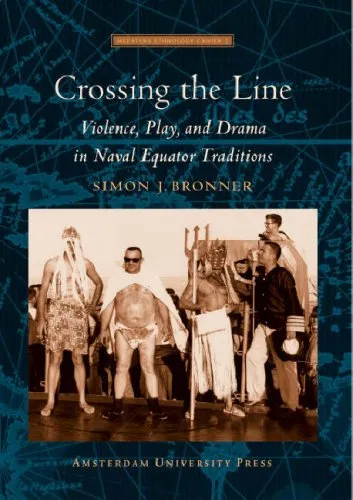
Crossing the Line: Violence, Play, and Drama in Naval Equator Traditions
Simon J. Bronner
2007
View book