Book guide and evaluation
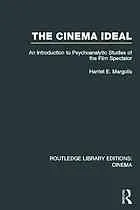
The Cinema Ideal : An Introduction to Psychoanalytic Studies of the Film Spectator
Margolis,Harriet Elaine
English
Advanced
Film & Cinema
4.9 / 5
0 reviews
2014
Published
329
pages
472
views
"This study explores the model derived from Freudian and Lacanian psychoanalysis, via Marxism and semiotics, of looking at film. It retraces the steps of film theory from ideological criticism of the late '60s to spectator studies in 1988 when the book was originally published. P
Before you read
What will you get from this book?
"This study explores the model derived from Freudian and Lacanian psychoanalysis, via Marxism and semiotics, of looking at film. It retraces the steps of film theory from ideological criticism of the late '60s to spectator studies in 1988 when the book was originally published. Psychoanalysis enables a discussion of the cinema's role as a social and political force and this book enters a discourse of the politics of representation. Reconstructing discussion of basic issues, the book addresses our instincts and defences in reacting to cinema, the similarity between mental processes and cinematic technique, narrative techniques and the 'cinematic apparatus'. Importantly, the book concerns itself with the concept of ideology and how the filmviewing experience engages the spectator in a complex net of stimuli presenting representations of an ideal world and the effect of this within film studies."--Publisher's website. Read more... Abstract: "This study explores the model derived from Freudian and Lacanian psychoanalysis, via Marxism and semiotics, of looking at film. It retraces the steps of film theory from ideological criticism of the late '60s to spectator studies in 1988 when the book was originally published. Psychoanalysis enables a discussion of the cinema's role as a social and political force and this book enters a discourse of the politics of representation. Reconstructing discussion of basic issues, the book addresses our instincts and defences in reacting to cinema, the similarity between mental processes and cinematic technique, narrative techniques and the 'cinematic apparatus'. Importantly, the book concerns itself with the concept of ideology and how the filmviewing experience engages the spectator in a complex net of stimuli presenting representations of an ideal world and the effect of this within film studies."--Publisher's website
Ask this book
Your question is answered in the context of this title and author. Each answer uses 2 points.
Sign in to ask the book assistant.
Reader reviews
0 reviews, 4.9 average out of 5
No reviews yet
If you have read this book, help the next reader with your experience.
Write a review
Sign in to publish a review.
Reader questions and answers
Ask a focused question and learn from the community.
Sign in to ask or answer a question.
No questions yet
Be the first to ask a clear, useful question.
What to read next
Related references that continue this learning path.
![Cover of Film Art: An Introduction [with Connect Access Code]](https://s3.refhub.ir/images/thumb/Film_Art__An_Introduction__with_Connect_Acces_7824.webp)
Film Art: An Introduction [with Connect Access Code]
David Bordwell,Kristin Thompson,Jeff Smith
2015
View book