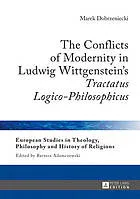
The conflicts of modernity in Ludwig Wittgenstein's Tractatus Logico-Philosophicus
Dobrzeniecki,Marek
2016
View book

Book guide and evaluation
C. V. Salmon
0 reviews
Published
pages
views
Introduction In 'The Central Problem of David Hume's Philosophy; An Essay towards a Phenomenological Interpretation of the First Book of the Treatise of Human Nature (1929)', C.V. Salmon embarks on an intellectual journey exploring one of the most intricate and debated aspects
Before you read
In 'The Central Problem of David Hume's Philosophy; An Essay towards a Phenomenological Interpretation of the First Book of the Treatise of Human Nature (1929)', C.V. Salmon embarks on an intellectual journey exploring one of the most intricate and debated aspects of Western philosophy. By undertaking a phenomenological interpretation, Salmon provides an innovative examination of Hume's thoughts on human cognition and its limits. This text delves into Hume's Treatise, unveiling philosophical insights that remain relevant and thought-provoking today.
Salmon's book is an in-depth analysis of David Hume's 'A Treatise of Human Nature,' particularly the first book, which deals with understanding the operations of the human mind. Salmon identifies what he argues to be the 'central problem' of Hume’s philosophy: the challenge of connecting our perceptions with what we consider as external reality. His phenomenological approach allows him to explore Hume's work beyond its empirical confines, suggesting that Hume inadvertently prefigures later existential and phenomenological themes.
Throughout the text, Salmon dissects Hume’s exploration of human understanding, focusing on Hume's propositions about ideas, impressions, and the self. He argues that Hume's philosophical skepticism – particularly his doubts about causality, substance, and personal identity – aligns closely with phenomenological inquiry's fundamental questions. By reinterpreting Hume through this lens, Salmon uncovers subtleties in Hume's ideas that suggest a deeper, arguably more coherent, philosophical enterprise than traditionally perceived.
"To comprehend fully the skepticism of Hume is to delve deeply into the very essence of human cognition and its ultimate limitations."
"The phenomenological imagination allows us to see Hume not as an adherent of hard empiricism but as a philosopher grappling with the very nature of being and knowing."
Salmon’s book is critical for scholars and students of philosophy due to its pioneering approach in bridging Hume's empirical inquiries with phenomenological thought. At a time when philosophical debates often segmented between empiricism and idealism, Salmon's work provided a synthesis that suggested collaborative dialogues were not only possible but necessary. The book's implications extend beyond academic circles, touching on the broader human quest to understand consciousness, experience, and reality. As we navigate an increasingly complex world, 'The Central Problem of David Hume's Philosophy' offers essential insights into the continuing relevance of philosophical skepticism.
Moreover, this text is a testament to the enduring impact of David Hume’s philosophy. By presenting Hume’s inquiries in a new light, Salmon helps pave the way for future interpretations and philosophical innovations. Readers will find themselves contemplating critical questions of existence and consciousness that echo through the corridors of philosophical thought up to today.
Your question is answered in the context of this title and author. Each answer uses 2 points.
0 reviews, 4.4 average out of 5
Sign in to publish a review.
Ask a focused question and learn from the community.
Related references that continue this learning path.
Dobrzeniecki,Marek