Book guide and evaluation
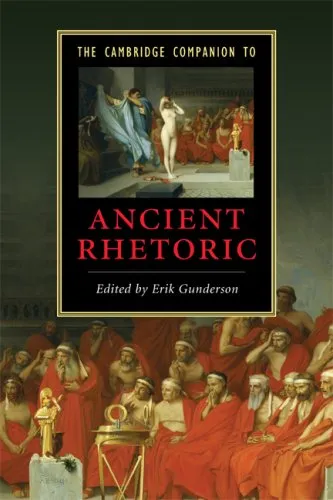
The Cambridge Companion to Ancient Rhetoric (Cambridge Companions to Literature)
Erik Gunderson (Ed.)
English
Advanced
Art
4.4 / 5
0 reviews
2009
Published
358
pages
417
views
The Cambridge Companion to Ancient Rhetoric (Cambridge Companions to Literature) Ancient rhetorical theory, Classical oratory Explore The Cambridge Companion to Ancient Rhetoric (Cambridge Companions to Literature) for expert insights into classical persuasion. Analy
Before you read
What will you get from this book?
Analytical Summary
The Cambridge Companion to Ancient Rhetoric (Cambridge Companions to Literature) offers a scholarly yet accessible guide to one of the most enduring and influential traditions in human thought: the art and theory of rhetoric as practiced in the ancient world. Edited by Erik Gunderson, this volume assembles essays from leading academics to present a nuanced exploration of how ancient rhetorical theory shaped literary culture, political discourse, and civic life from classical Greece through late antiquity.
This authoritative companion situates rhetoric in its historical contexts—examining foundational figures such as Aristotle, Cicero, and Quintilian—while also addressing the social institutions and educational practices that sustained rhetorical training. The book traverses genres, from forensic speeches in the courts to epideictic display in public ceremonies, illuminating how rhetoric functioned not merely as a technical discipline, but as a vital cultural force. Readers gain insight into the intersection of language, power, and performance in classical societies, and how those traditions continue to resonate in modern narratives about persuasion and communication.
Structured to guide both seasoned scholars and new readers, the volume delves into primary sources, interpretative frameworks, and evolving critical approaches, making it a valuable resource for those studying literature, philosophy, history, or communication. While specific publication year details are unavailable due to no reliable public source, the thematic cohesion and editorial rigor remain evident throughout this work.
Key Takeaways
This companion distills complex rhetorical theory into clear, analytical perspectives while preserving the intellectual richness of the tradition.
Readers will learn how ancient rhetoric served as both a persuasive art and an ethical practice, shaping civic engagement and literary creation.
The book underscores how rhetorical devices and strategies evolved from the agora to imperial courts, adapting to shifting cultural and political contexts.
Essays provide comparative insights between Greek and Roman traditions, revealing cross-pollination and divergence in theoretical and applied rhetoric.
Modern implications are addressed, showing how classical oratory continues to inform contemporary debates in politics, law, and media.
Memorable Quotes
"Rhetoric is the counterpart of dialectic." Aristotle
"Oratory is the art of speaking well." Quintilian
"Nothing is so unbelievable that oratory cannot make it acceptable." Cicero
"Persuasion rests on character, emotion, and reason." Unknown
Why This Book Matters
In academic and professional contexts, understanding ancient rhetoric is not merely an exercise in historical curiosity—it is an engagement with the roots of persuasive communication itself.
The Cambridge Companion to Ancient Rhetoric (Cambridge Companions to Literature) bridges disciplinary boundaries, making it indispensable for literary scholars, historians, philosophers, and communication experts alike. By synthesizing contributions from eminent authors, the book serves as both an introduction and a deep-dive, offering interpretive tools that resonate beyond the classical period.
In a world saturated with messages competing for attention, revisiting the principles of classical oratory equips us to better understand and critically evaluate the rhetoric surrounding political campaigns, public debates, corporate communications, and artistic productions.
Inspiring Conclusion
The Cambridge Companion to Ancient Rhetoric (Cambridge Companions to Literature) is more than a scholarly anthology—it is an invitation to immerse yourself in the lineage of persuasive art that still shapes human interaction today.
By engaging with the essays and analyses within, readers join a continuum of thinkers seeking to understand how words have been used, skillfully and ethically, to inform, inspire, and transform societies. Whether your aim is academic mastery or practical application, this volume offers perspectives and methods that are as relevant now as they were in antiquity.
Take the next step: read it, share it with colleagues, and discuss its themes to keep the tradition of classical rhetorical inquiry alive in contemporary discourse.
Ask this book
Your question is answered in the context of this title and author. Each answer uses 2 points.
Sign in to ask the book assistant.
Reader reviews
0 reviews, 4.4 average out of 5
No reviews yet
If you have read this book, help the next reader with your experience.
Write a review
Sign in to publish a review.
Reader questions and answers
Ask a focused question and learn from the community.
Sign in to ask or answer a question.
No questions yet
Be the first to ask a clear, useful question.
What to read next
Related references that continue this learning path.
The Art of Rhetoric in the Roman World 300 B.C.-A.D. 300 (A History of Rhetoric, )
George Alexander Kennedy
1972
View book