Book guide and evaluation
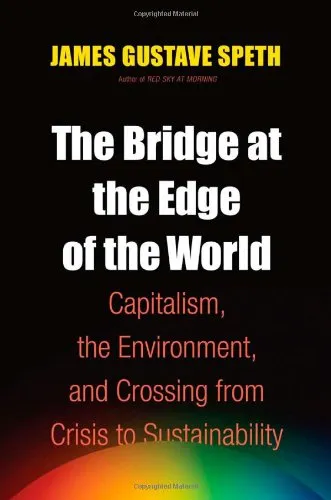
The Bridge at the Edge of the World: Capitalism, the Environment, and Crossing from Crisis to Sustainability
James Gustave Speth
English
Intermediate
novel
3.8 / 5
0 reviews
2008
Published
319
pages
573
views
Introduction to "The Bridge at the Edge of the World" Welcome to the profound exploration of our environmental and economic crossroads in "The Bridge at the Edge of the World: Capitalism, the Environment, and Crossing from Crisis to Sustainability." This compelling narrati
Before you read
What will you get from this book?
Introduction to "The Bridge at the Edge of the World"
Welcome to the profound exploration of our environmental and economic crossroads in "The Bridge at the Edge of the World: Capitalism, the Environment, and Crossing from Crisis to Sustainability." This compelling narrative by James Gustave Speth challenges our conception of modern capitalism as it intersects with the glaring realities of environmental degradation. As the earth grapples with unprecedented ecological challenges, Speth elucidates the pressing need for a transformative change in how our global economy operates to foster sustainability and resilience.
Detailed Summary of the Book
In "The Bridge at the Edge of the World," Speth thoroughly investigates the systemic nature of environmental crises and the economic structures that exacerbate them. By dissecting the industrial growth model, the author reveals how economic practices and priorities, ingrained in contemporary capitalism, systematically undermine ecological stability. Speth argues that this relentless pursuit of economic growth at any cost has led to profound environmental, social, and ethical issues.
The book is divided into critical thematic analyses, including the failures of environmentalism as it traditionally stands, and presents the effectiveness of current political and business solutions. Speth is particularly focused on the limitations of what he terms 'weak reformism,' suggesting that incremental adjustments will not suffice to avert environmental collapse.
Instead, Speth advocates for 'transformative change' that calls for reimagining societal values and priorities. It involves crafting new strategies that align human development with ecological limits and acknowledges the intrinsic connections between human well-being and the health of our planet.
Speth envisions a future where economic decisions are rooted in stewardship and responsibility. The book outlines potential pathways towards achieving sustainable societies through local, national, and global restructuring of economic and governance systems.
Key Takeaways
- Current economic practices are fundamentally unsustainable and destructive to the environment.
- Incremental reforms are insufficient; radical, transformative change is necessary.
- A new economy must prioritize ecological preservation and human well-being over mere profit and growth.
- Sustainability demands approaching environmental problems with holistic, integrated strategies that consider social justice and ethical dimensions.
Famous Quotes from the Book
"We can no longer tinker at the margins of environmental protection; the system itself is the problem."
"Today's economic paradigm is a long-term recipe for planetary disaster."
"To achieve sustainability, we must embark on a profound transformation of our society."
Why This Book Matters
This book is a clarion call to action, compelling readers to reckon with the severe implications of inaction in the face of environmental imperatives. It matters because it moves beyond conventional green discourse, challenging deeply entrenched economic ideologies and advocating for a transformative shift towards ecological and social sustainability. Speth's insightful analysis and clear vision for a sustainable future offers indispensable guidance for policymakers, business leaders, and activists looking to make a substantive impact.
Ask this book
Your question is answered in the context of this title and author. Each answer uses 2 points.
Sign in to ask the book assistant.
Reader reviews
0 reviews, 3.8 average out of 5
No reviews yet
If you have read this book, help the next reader with your experience.
Write a review
Sign in to publish a review.
Reader questions and answers
Ask a focused question and learn from the community.
Sign in to ask or answer a question.
No questions yet
Be the first to ask a clear, useful question.
What to read next
Related references that continue this learning path.