The Third Pillar: How Markets and the State Leave the Community Behind
Raghuram Rajan
2019
View book
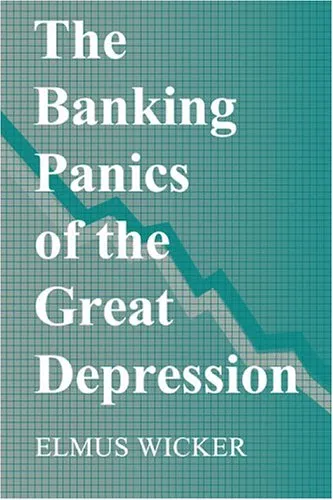
Book guide and evaluation
Elmus Wicker
0 reviews
Published
pages
views
Elmus Wicker's "The Banking Panics of the Great Depression" offers a comprehensive analysis of one of the most turbulent financial periods in American history. The book digs deep into the complexities of the banking sector during the Great Depression, shedding light on how sy
Before you read
Elmus Wicker's "The Banking Panics of the Great Depression" offers a comprehensive analysis of one of the most turbulent financial periods in American history. The book digs deep into the complexities of the banking sector during the Great Depression, shedding light on how systemic failures and policy inadequacies contributed to the financial chaos of the era.
The book meticulously examines the series of banking panics that occurred throughout the 1930s, each distinct yet interconnected in its impact on the broader economic collapse. Wicker identifies five major banking panics during this period, challenging existing narratives that often oversimplify the causes and effects of these events. By analyzing regional differences, regulatory environments, and economic policies, Wicker provides a nuanced perspective that illustrates how various factors collectively exacerbated the Depression's severity.
Wicker employs a cross-regional analysis approach to uncover the geographical disparities in banking stability. His work reveals how particular regions were more susceptible to banking failures due to specific economic conditions, policy decisions, and institutional weaknesses. This regional focus allows readers to understand the heterogeneity of banking experiences and why certain areas were disproportionately affected.
The author also scrutinizes the role of the Federal Reserve and how its perfunctory responses may have inadvertently fueled the banking crisis. Wicker critiques the monetary policies of the time, providing insights into how alternative strategies might have mitigated the extent of the panics or at least alleviated their severe consequences.
"The intricacies of banking panics are not mere episodes of mass hysteria but are rooted in structural weaknesses and policy failures."
"One cannot understand the depths of the Great Depression without a thorough examination of the financial institutions that crumbled during its course."
"The Banking Panics of the Great Depression" plays a pivotal role in macroeconomic history by debunking oversimplified theories about the Great Depression's financial turmoil. Wicker's work is essential for historians, economists, and policymakers looking to derive lessons from past financial crises. By dissecting the multilayered dimensions of the banking panics, the book provides valuable insights that remain relevant in today's financial landscape, where systemic banking issues continue to challenge economic stability.
This book not only adds depth to our understanding of the Great Depression but also serves as a cautionary tale, emphasizing the necessity for vigilant economic oversight and adaptable policy-making. As global economies advance and new financial challenges emerge, Wicker's analysis underscores the importance of learning from history to prevent future banking crises.
Your question is answered in the context of this title and author. Each answer uses 2 points.
0 reviews, 4.5 average out of 5
Sign in to publish a review.
Ask a focused question and learn from the community.
Related references that continue this learning path.
Raghuram Rajan
Nassim Nicholas Taleb