
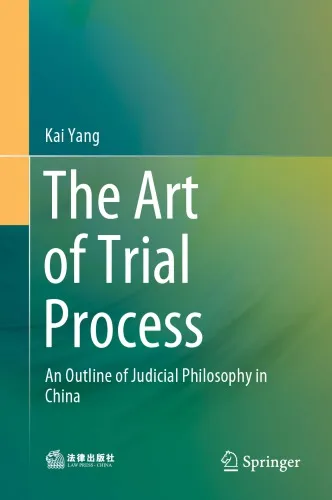
Book guide and evaluation
The Art Of Trial Process: An Outline Of Judicial Philosophy In China
Kai Yang
English
Beginner
Logic and Foundations
4.7 / 5
0 reviews
2020
Published
110
pages
453
views
The complex tapestry of China's judicial philosophy is both intricate and profound, woven through centuries of legal evolution and cultural influence. 'The Art Of Trial Process: An Outline Of Judicial Philosophy In China' delves into this multifaceted world, exploring the uni
Before you read
What will you get from this book?
The complex tapestry of China's judicial philosophy is both intricate and profound, woven through centuries of legal evolution and cultural influence. 'The Art Of Trial Process: An Outline Of Judicial Philosophy In China' delves into this multifaceted world, exploring the unique principles and practices that define China's legal system today.
Detailed Summary of the Book
The book begins with a historical overview of the Chinese judicial system, tracing its origins from ancient legal codes to the sophisticated frameworks established during the dynastic periods. As the narrative unfolds, readers discover how these historical foundations influence contemporary judicial practices. The text delves into the philosophical underpinnings that inform judicial decision-making in China, from Confucian ideals emphasizing morality and social harmony to Legalist doctrines focused on order and discipline.
As the book progresses, the focus shifts to the modern era, examining how China’s unique political and social context impacts its legal philosophy. It explores the balance between state sovereignty and individual rights, the integration of Western legal concepts, and the influence of Communist Party ideologies. Furthermore, the book provides insights into daily judicial processes, revealing how principles are applied in real-world scenarios through detailed case studies and analysis.
Key Takeaways
- An understanding of the historical and cultural foundations of China's legal system.
- Insight into the philosophical doctrines that guide Chinese judicial thinking.
- Analysis of the interaction between traditional values and modern legal reforms.
- Comprehension of the balance between collective societal goals and individual rights.
- Perspective on the influence of political ideology within the courtrooms.
Famous Quotes from the Book
"In understanding China's approach to law, one must appreciate the subtle dance between the ancient and the modern."
"The Chinese legal philosophy, like its art, embodies a harmony that seeks to balance order with compassion."
Why This Book Matters
In an increasingly globalized world, understanding diverse legal systems is not merely an academic exercise; it is a necessity. The significance of 'The Art Of Trial Process: An Outline Of Judicial Philosophy In China' lies in its ability to bridge knowledge gaps by providing a comprehensive exploration of a legal philosophy that is often misunderstood or overlooked. As China continues to assert its influence on the world stage, grasping its judicial ethos becomes crucial for international lawyers, scholars, and policymakers.
This book stands out as an essential resource for anyone seeking to understand the intricacies of Chinese law. It empowers readers with the knowledge needed to navigate the complexities of international legal interactions, fostering a deeper appreciation of the subtle nuances that shape judicial processes in different cultural contexts.
Ask this book
Your question is answered in the context of this title and author. Each answer uses 2 points.
Sign in to ask the book assistant.
Reader reviews
0 reviews, 4.7 average out of 5
No reviews yet
If you have read this book, help the next reader with your experience.
Write a review
Sign in to publish a review.
Reader questions and answers
Ask a focused question and learn from the community.
Sign in to ask or answer a question.
No questions yet
Be the first to ask a clear, useful question.
What to read next
Related references that continue this learning path.
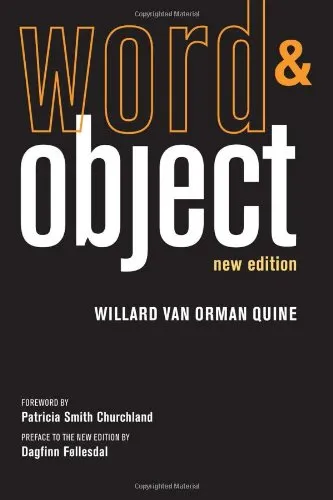
Word and Object
Willard Van Orman Quine,Dagfinn Føllesdal (Preface),Patricia Smith Churchland (Foreword)
2013
View book