Book guide and evaluation
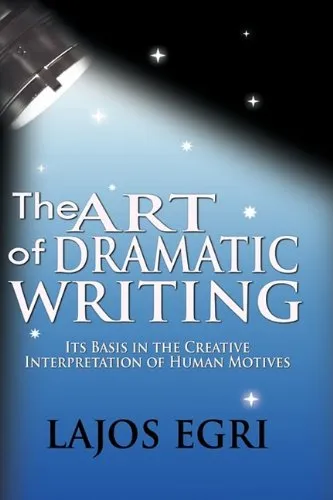
The Art Of Dramatic Writing: Its Basis In The Creative Interpretation Of Human Motives
Lajos Egri
English
Advanced
Film & Cinema
4.9 / 5
0 reviews
2009
Published
321
pages
434
views
The Art Of Dramatic Writing: Its Basis In The Creative Interpretation Of Human Motives dramatic writing techniques, character development in storytelling The Art Of Dramatic Writing: Its Basis In The Creative Interpretation Of Human Motives explores character, conflict,
Before you read
What will you get from this book?
Analytical Summary
Written by Lajos Egri, The Art Of Dramatic Writing: Its Basis In The Creative Interpretation Of Human Motives stands as a seminal work in the study of dramatic structure, offering a rigorous blueprint for crafting compelling narratives grounded in believable human behavior. This authoritative text moves beyond formulaic storytelling to dissect the anatomy of drama, emphasizing that at its heart lies the interplay of conflict, premise, and character motivation.
Egri’s framework insists that memorable drama originates from well-defined premises—a concise thematic statement that drives every action and reaction within a story. Rather than focusing solely on plot mechanics, he champions deep exploration of character psychology, showing how motives, desires, and contradictions serve as the true engines of narrative progression.
The book investigates the organic growth of dramatic action, tracing how properly conceived characters inevitably create escalating conflict. It integrates literary theory with practical examples to illustrate how the anatomy of drama parallels the complexities of human life itself. With its methodical breakdown of premise, character, and conflict, this resource remains indispensable for playwrights, screenwriters, novelists, and critics seeking to elevate their craft.
Key Takeaways
Readers will find that the key value of this work lies in its systematic approach to developing drama from the inside out, marrying theory to practice with unyielding clarity.
1. A strong premise is the foundation upon which all dramatic writing techniques rest; without it, narratives falter.
2. Character development in storytelling demands psychological depth—superficial traits will not sustain complex conflict.
3. Conflict is not an optional add-on; it is the lifeblood of drama, arising naturally from clashing motives.
4. Unity between theme, plot, and character action ensures narrative integrity and audience engagement.
5. The writer’s role is to interpret human motives creatively and truthfully, resisting clichés and contrivances.
Memorable Quotes
Every good play must start with a clearly defined premise. Lajos Egri
Characters must be flesh and blood beings with motives rooted in the reality of their circumstances. Lajos Egri
Conflict is the soul of drama; without it, stories collapse into triviality. Unknown
Why This Book Matters
For academics, professionals, and serious readers, this book offers more than mere instruction—it provides a disciplined lens through which all storytelling can be refined and understood.
The Art Of Dramatic Writing: Its Basis In The Creative Interpretation Of Human Motives still resonates decades after its release. Information unavailable regarding its exact first publication year, due to no reliable public source. Nevertheless, its principles remain timeless: the alignment of thematic intent with character and conflict creates works that endure across mediums.
Drama is not accidental; it is carefully cultivated through the synthesis of human psychology and narrative architecture. By internalizing Egri’s teachings, writers can create works that challenge, move, and captivate audiences, while scholars gain a robust framework for critical analysis.
Inspiring Conclusion
In absorbing The Art Of Dramatic Writing: Its Basis In The Creative Interpretation Of Human Motives, readers take on an invitation to think more critically about the forces that drive human behavior and the art of dramatizing them.
Lajos Egri’s masterwork continues to be both a guide and a challenge: a guide in its clear articulation of dramatic principles, and a challenge in its demand that the writer dig deep into the truth of human motives. Whether you are crafting your first play, developing a screenplay, or conducting scholarly research, the insights herein will enrich your understanding of how premise, character, and conflict conspire to produce art that endures.
The next step is yours—read the book, share its wisdom, and discuss its implications with fellow artists and thinkers. In doing so, you carry forward its enduring legacy of truthful, compelling storytelling.
Ask this book
Your question is answered in the context of this title and author. Each answer uses 2 points.
Sign in to ask the book assistant.
Reader reviews
0 reviews, 4.9 average out of 5
No reviews yet
If you have read this book, help the next reader with your experience.
Write a review
Sign in to publish a review.
Reader questions and answers
Ask a focused question and learn from the community.
Sign in to ask or answer a question.
No questions yet
Be the first to ask a clear, useful question.
What to read next
Related references that continue this learning path.