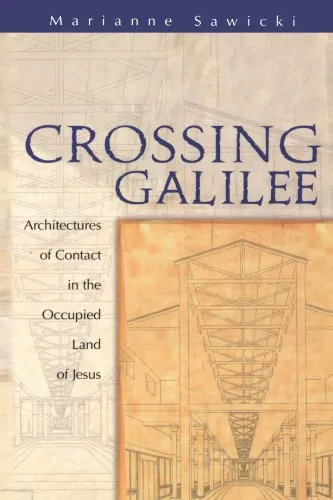
Crossing Galilee: Architectures of Contact in the Occupied Land of Jesus
Marianne Sawicki
2000
View book
Book guide and evaluation
Jodi Magness
0 reviews
Published
pages
views
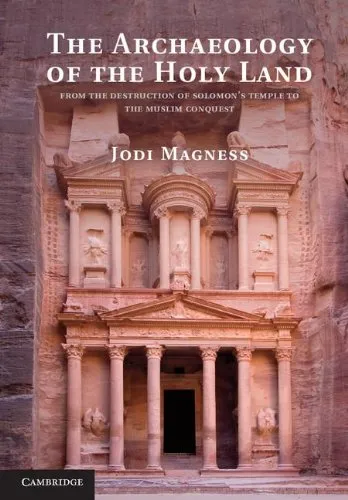
Introduction to The Archaeology of the Holy Land: From the Destruction of Solomon's Temple to the Muslim Conquest The Holy Land, a region soaked in millennia of history, spirituality, and cultural evolution, offers a profound lens into the ancient world. My book, "The
Before you read
The Holy Land, a region soaked in millennia of history, spirituality, and cultural evolution, offers a profound lens into the ancient world. My book, "The Archaeology of the Holy Land: From the Destruction of Solomon's Temple to the Muslim Conquest," seeks to explore this rich tapestry by delving into the archaeological narratives that unearth the past. This introduction lays the groundwork for understanding the depths and dynamics captured within these pages.
Spanning nearly a thousand years, this book provides a scholarly examination of the major archaeological and historical developments in the Holy Land. Beginning with the destruction of Solomon's Temple in 586 BCE, it traverses through the rise and fall of successive empires, cultural exchanges, and religious transformations, culminating in the Muslim conquest of the early 7th century CE. By integrating archaeological evidence with historical sources, the book offers a narrative that is both educational and engaging, setting it apart from simple historical recounts.
This extensive survey introduces readers to key sites and artifacts that have been excavated over the years. Through the investigation of these findings, the book not only reconstructs the region’s turbulent past but also highlights the interactions among the various peoples who have inhabited it. It emphasizes the continuity and changes that define the Holy Land and how these have been influenced by geographic, political, and religious diversity.
Throughout the book, various insights provide depth and perspective on the historical and archaeological narratives:
"Every layer of soil turned in the Holy Land reveals not just artifacts, but the whispers of history that challenge our understanding of the past."
"The stones of Jerusalem, the pottery of Jericho, the scrolls of Qumran – each bears witness to a history that is as much ours as it is theirs."
"The Archaeology of the Holy Land: From the Destruction of Solomon's Temple to the Muslim Conquest" is an essential read for both scholars and enthusiasts interested in the ancient Near East. The book is significant in that it provides a comprehensive, integrative view of the numerous and varied influences that have shaped one of the world's most historically significant regions.
In an era where the past continuously informs the present, understanding the archaeological underpinnings of the Holy Land offers critical insights into current cultural and political landscapes. This book not only serves as a detailed guide through the archaeological journey of the region but also as a reminder of the enduring legacy of the past that continues to impact global civilization.
Your question is answered in the context of this title and author. Each answer uses 2 points.
0 reviews, 4.5 average out of 5
Sign in to publish a review.
Ask a focused question and learn from the community.
Related references that continue this learning path.
Marianne Sawicki
Glenn M. Schwartz,John J. Nichols