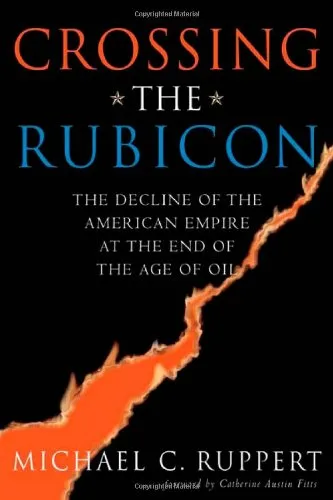
Crossing the Rubicon - Decline of the American Empire at the end of the Age of Oil
Michael C. Ruppert,Catherine Austin Fitts
2004
View book
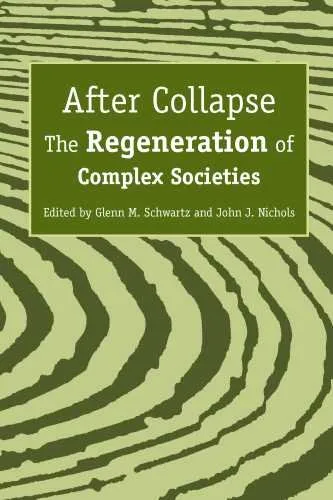
Book guide and evaluation
Glenn M. Schwartz,John J. Nichols
0 reviews
Published
pages
views
Introduction Welcome to 'After Collapse: The Regeneration of Complex Societies,' a profound exploration of how societies recuperate following extensive periods of decline or collapse. Authored by Glenn M. Schwartz and John J. Nichols, this book delves into the resilience
Before you read
Welcome to 'After Collapse: The Regeneration of Complex Societies,' a profound exploration of how societies recuperate following extensive periods of decline or collapse. Authored by Glenn M. Schwartz and John J. Nichols, this book delves into the resilience and adaptability of human civilizations across history. In examining the past, the authors draw pivotal lessons that resonate intensely with contemporary global challenges.
The book comprehensively addresses a fundamental question: What happens after complex societies undergo collapse? This analytical endeavor involves a multidisciplinary approach whereby archaeology, anthropology, and history intersect to uncover the factors that contribute to societal regeneration. The authors meticulously analyze various ancient civilizations, such as the Maya, Mesopotamia, and the Roman Empire, to elucidate the common threads of rebirth and resurgence post-collapse.
By dissecting case studies, 'After Collapse' reveals the transformational processes that allow societies to rebuild and reimagine themselves. The authors articulate how sociopolitical structures adapt and how new governance systems emerge from the vestiges of old systems. This exploration underscores the paradox that collapse often sets the stage for innovation and renewal, urging societies to reconsider their operational paradigms in the face of adversity.
"The end of civilization as we know it is not the end of human ingenuity; rather, it is the pause that precedes pivotal transformation."
"In the ashes of the past lies the blueprint for the future, if only we can decipher its lessons."
In an era marked by unprecedented global challenges, 'After Collapse' offers invaluable perspectives on resilience and renewal. This book is crucial for policymakers, scholars, and anyone interested in understanding how societies can rebound from catastrophic events. By illustrating the cyclic nature of collapse and regeneration throughout human history, Schwartz and Nichols foster a sense of hope and possibility, advocating that lessons from the past can guide present strategies for sustainable future growth.
As we navigate an increasingly complex world, this book serves as a reminder that human civilization has repeatedly demonstrated remarkable resilience. Understanding this cyclical nature equips us with the wisdom needed to confront looming crises and aids us in crafting a more resilient global society.
Your question is answered in the context of this title and author. Each answer uses 2 points.
0 reviews, 4.5 average out of 5
Sign in to publish a review.
Ask a focused question and learn from the community.
Related references that continue this learning path.
Michael C. Ruppert,Catherine Austin Fitts