Book guide and evaluation
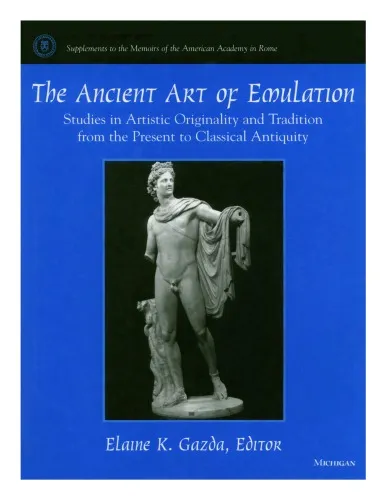
The Ancient Art of Emulation: Studies in Artistic Originality and Tradition from the Present to Classical Antiquity
Elaine K. Gazda (editor)
English
Intermediate
novel
4.9 / 5
0 reviews
2002
Published
327
pages
363
views
All too often, museums throughout the world label their Roman sculpture and wall paintings as "Roman copy after a Greek original." In this book, Elaine K. Gazda and the contributors question the often too simplistic, deeply ingrained thinking that underlies this view of the relat
Before you read
What will you get from this book?
All too often, museums throughout the world label their Roman sculpture and wall paintings as "Roman copy after a Greek original." In this book, Elaine K. Gazda and the contributors question the often too simplistic, deeply ingrained thinking that underlies this view of the relationship between Greek and Roman art.Examining the problems associated with such thinking by situating them within a broad chronological framework, The Ancient Art of Emulation calls attention to many of the sources underlying traditional ingrained prejudices. The essays in this book underscore the need, in the case of Roman art, to distinguish more clearly than we have done in the past what "originality"---or invention---meant to the Romans, and how those notions differ from what our Romanticist/modernist expectations have led us to expect in the present.This book builds upon revisionist scholarship of the past three decades, which redefines a number of the terms of discussion of "Roman copies" by reclassifying many of them as neoclassical or idealising works and treating them as legitimate expressions of Roman cultural concerns. The contributors extend that line of inquiry by considering recent discourse on copying and originality as well as on related issues such as imitation, artistic agency, influence, appropriation, and authenticity. The chapters are presented in an unorthodox reverse chronological sequence in order to emphasise how thought and tastes of recent centuries have conditioned our views of the classical past and how "the Roman copy" must be seen as an artificial construct, the product of modern prejudices and their intellectual sources.The Ancient Art of Emulation will appeal to a broad range of intellectual interests and humanistic disciplines. In addition to classical archaeologists and historians of ancient art, it will speak to art historians of later periods, practising artists, and art critics, as well as scholars and students who have an interest in the phenomenon of artistic imitation.
Ask this book
Your question is answered in the context of this title and author. Each answer uses 2 points.
Sign in to ask the book assistant.
Reader reviews
0 reviews, 4.9 average out of 5
No reviews yet
If you have read this book, help the next reader with your experience.
Write a review
Sign in to publish a review.
Reader questions and answers
Ask a focused question and learn from the community.
Sign in to ask or answer a question.
No questions yet
Be the first to ask a clear, useful question.
What to read next
Related references that continue this learning path.
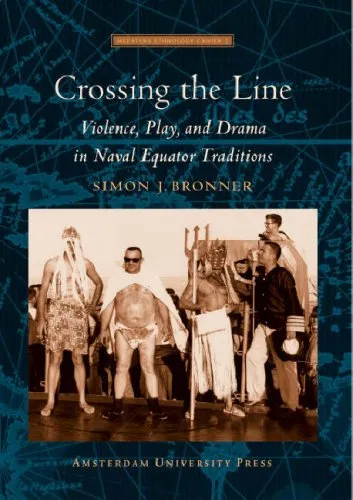
Crossing the Line: Violence, Play, and Drama in Naval Equator Traditions
Simon J. Bronner
2007
View book