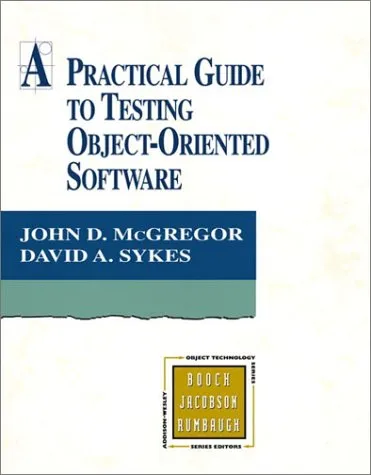
Book guide and evaluation
Testing Object-Oriented Systems: Models, Patterns, and Tools
John D. McGregor,David A. Sykes
English
Beginner
End-to-End Testing
4.0 / 5
0 reviews
2001
Published
417
pages
659
views
Introduction to Testing Object-Oriented Systems: Models, Patterns, and Tools In the dynamic world of software development, object-oriented systems have garnered immense popularity for their modularity and reusability. "Testing Object-Oriented Systems: Models, Patterns, and
Before you read
What will you get from this book?
Introduction to Testing Object-Oriented Systems: Models, Patterns, and Tools
In the dynamic world of software development, object-oriented systems have garnered immense popularity for their modularity and reusability. "Testing Object-Oriented Systems: Models, Patterns, and Tools" by John D. McGregor and David A. Sykes stands as a seminal guide in this domain, offering an exhaustive exploration of testing strategies tailored specifically for object-oriented software systems.
Detailed Summary
Object-oriented programming has revolutionized software development with its emphasis on encapsulation, inheritance, and polymorphism. While these features enhance modifiability and flexibility, they also introduce unique complexities in testing. This book addresses the critical need for effective testing methodologies that cater to these novel paradigms.
The authors begin with a comprehensive examination of the fundamental principles of object-oriented software and their implications on testing. By elucidating the intricacies of object interactions and state-based behavior, they lay a robust foundation for understanding the challenges in verifying the correctness and reliability of such systems.
Moving beyond theory, the book delves into practical aspects with a focus on models and patterns that can be employed to systematically test object-oriented systems. It introduces various design patterns and demonstrates their usage in creating test cases that are not only efficient but also reusable. Furthermore, it highlights the use of tools that facilitate the automation of these testing processes, enabling developers to maintain high standards of quality in their codebase.
Key Takeaways
- Understand the fundamental challenges in testing object-oriented systems.
- Learn how to leverage object-oriented principles to create modular and effective test cases.
- Explore a range of design patterns that can be utilized to enhance the reusability and efficiency of your test suite.
- Gain insights into the various tools available for automating the testing of object-oriented systems.
- Develop a comprehensive strategy for integrating testing as an integral part of the software development lifecycle.
Famous Quotes from the Book
"The quality of a software system is verified through a thorough and systematic approach to testing, which involves understanding the intricate dance of interactions within an object-oriented paradigm."
"Effective testing is both art and science. It requires creativity to anticipate possible scenarios and rigor in verifying the correctness of object behavior under varying conditions."
Why This Book Matters
This book is a cornerstone for software engineers and testers who are entrenched in the object-oriented realm. As software systems continue to evolve, the complexity and interdependence of components within those systems amplify the challenges associated with ensuring their reliability. "Testing Object-Oriented Systems" addresses these challenges head-on, offering readers a meticulous methodology for approaching testing with the rigor and creativity required to ensure success.
The book's integration of models, patterns, and tools sets it apart from other testing literature, making it a valuable resource for both novice and experienced testers. By bridging the gap between theory and practical application, it empowers developers to craft superior quality software that meets and exceeds user expectations.
Ask this book
Your question is answered in the context of this title and author. Each answer uses 2 points.
Sign in to ask the book assistant.
Reader reviews
0 reviews, 4.0 average out of 5
No reviews yet
If you have read this book, help the next reader with your experience.
Write a review
Sign in to publish a review.
Reader questions and answers
Ask a focused question and learn from the community.
Sign in to ask or answer a question.
No questions yet
Be the first to ask a clear, useful question.
What to read next
Related references that continue this learning path.