Book guide and evaluation
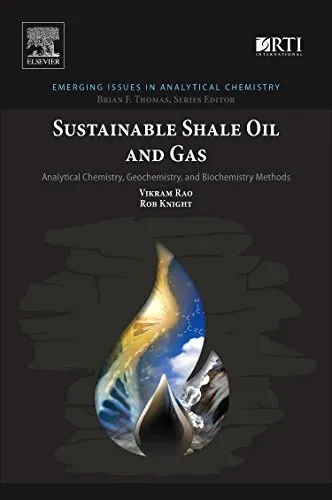
Sustainable Shale Oil and Gas. Analytical Chemistry, Geochemistry, and Biochemistry Methods
Vikram Rao,Rob Knight
English
Beginner
Mathematics
4.5 / 5
0 reviews
2017
Published
172
pages
370
views
Introduction to 'Sustainable Shale Oil and Gas: Analytical Chemistry, Geochemistry, and Biochemistry Methods' The exploitation and use of shale oil and gas have revolutionized the global energy landscape over the past few decades. However, the environmental and social conseq
Before you read
What will you get from this book?
Introduction to 'Sustainable Shale Oil and Gas: Analytical Chemistry, Geochemistry, and Biochemistry Methods'
The exploitation and use of shale oil and gas have revolutionized the global energy landscape over the past few decades. However, the environmental and social consequences of these advancements have introduced significant challenges that must be addressed to ensure a sustainable future. 'Sustainable Shale Oil and Gas: Analytical Chemistry, Geochemistry, and Biochemistry Methods' delves deeply into the science, technologies, and methodologies that can enable sustainable operations while maintaining efficiency and profitability in the energy sector.
Detailed Summary of the Book
This book is a multidisciplinary exploration of how cutting-edge methods from analytical chemistry, geochemistry, and biochemistry can be leveraged to address the sustainability challenges associated with the shale oil and gas industry. It integrates scientific rigor with practical industrial applications, offering a roadmap for responsible extraction practices that limit environmental harm while optimizing production processes.
Written by Vikram Rao and Rob Knight, the volume examines critical topics including environmental monitoring, contamination control, resource management, and innovative technologies for minimizing the ecological footprint of shale operations. This text also addresses challenges such as water usage, fracking chemicals, and methane emissions, proposing science-driven solutions to mitigate their impact while harnessing shale's economic potential.
By balancing deep scientific insights with actionable recommendations, the book bridges gaps between industry practitioners, policymakers, and environmental advocates. Insights from analytical chemistry and biochemical methods illustrate how systematic monitoring and innovation can lower greenhouse gas emissions, improve water treatment practices, and optimize biogeochemical processes, resulting in more sustainable extraction techniques.
Key Takeaways
- An in-depth analysis of the environmental challenges associated with shale oil and gas extraction.
- Practical applications of analytical chemical techniques for contamination detection and monitoring.
- Solutions for managing water resources, reducing wastewater, and enhancing water recycling processes.
- Examination of biogeochemical processes for better resource management and reduced ecological impact.
- Guidance on achieving net-zero emissions through methane capture and utilization methods.
- Frameworks for collaboration between industry leaders, scientists, and environmental policymakers.
Famous Quotes from the Book
"Sustainability in the shale oil and gas sector is not merely an aspiration but an imperative—one that will shape the future energy paradigm."
"Analytical chemistry and biochemistry hold the key to dismantling the trade-offs between energy production and environmental stewardship."
Why This Book Matters
The shale oil and gas industry faces growing scrutiny as the world steps up its efforts to combat climate change and protect vital ecosystems. This book addresses the critical need for sustainable practices by providing a compendium of solutions informed by state-of-the-art science and technological innovation. It matters because it does not simply diagnose the problems inherent in shale oil and gas extraction—it actively offers strategies to resolve them.
As nations transition toward cleaner energy systems, the interim role of shale resources cannot be ignored. Yet, without sustainable practices, this resource could paradoxically hinder rather than help that transition. By empowering stakeholders with scientific and practical knowledge, this book plays a crucial role in advancing sustainability goals across the energy sector.
Whether you are an industry professional seeking improved operational methods, a policymaker striving for balanced regulation, or a researcher pursuing innovative solutions, this book serves as a vital resource. Its multidisciplinary approach underscores the interconnected nature of modern energy challenges and highlights the actionable steps we can take today to secure a better tomorrow.
Ask this book
Your question is answered in the context of this title and author. Each answer uses 2 points.
Sign in to ask the book assistant.
Reader reviews
0 reviews, 4.5 average out of 5
No reviews yet
If you have read this book, help the next reader with your experience.
Write a review
Sign in to publish a review.
Reader questions and answers
Ask a focused question and learn from the community.
Sign in to ask or answer a question.
No questions yet
Be the first to ask a clear, useful question.
What to read next
Related references that continue this learning path.
Robert of Chester’s (?) Redaction of Euclid’s Elements, the so-called Adelard II Version: Volume II
Dr. Hubert L. L. Busard,Prof. Dr. Menso Folkerts (auth.)
1992
View book

The Commentary of al-Nayrizi on Books II-IV of Euclid's Elements of Geometry
Anthony Lo Bello
2009
View book