

Critical insights: the great Gatsby: by F. Scott Fitzgerald
Fitzgerald, Francis Scott;Dickstein, Morris
2010
View book
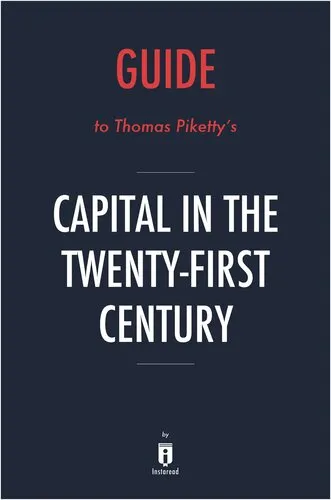
Book guide and evaluation
. Instaread
0 reviews
Published
pages
views
Introduction to the Summary of "Capital in the Twenty-First Century" by Thomas Piketty In recent years, Thomas Piketty's "Capital in the Twenty-First Century" has emerged as a seminal text in economic discourse, igniting debates about wealth, inequality, and the future o
Before you read
In recent years, Thomas Piketty's "Capital in the Twenty-First Century" has emerged as a seminal text in economic discourse, igniting debates about wealth, inequality, and the future of capitalism. This summary presents a comprehensive overview of Piketty's monumental work, distilling its core arguments and insights. As we delve into this analysis, we will explore the intricate dynamics of capital accumulation, the historical contexts of economic disparities, and the potential pathways to a more equitable society.
Thomas Piketty's "Capital in the Twenty-First Century" meticulously examines the historical trajectory of wealth and income inequality from the 18th century to today. The book's central thesis posits that the rate of return on capital (r) tends to outpace the rate of economic growth (g), leading to an exacerbation of wealth inequality. Piketty explores how this fundamental inequality is not merely an economic anomaly but a persistent characteristic of capitalist economies.
Utilizing a vast array of data collected over decades, Piketty demonstrates that the post-World War II era, often considered an anomaly due to its relatively low inequality levels, does not reflect the broader historical norms. In fact, he argues that the reduction in inequality during this period was largely due to unique circumstances such as global wars and economic policies that are not replicable under contemporary conditions.
Furthermore, the book delves into the societal and political implications of rising inequality, emphasizing the concentration of wealth among an elite minority. Piketty further explores the role of capital in various forms, from tangible assets like real estate to intangible assets like intellectual property, in perpetuating social hierarchies.
"The history of inequality is shaped by the way economic, social, and political actors view what is just and what is not, as well as by the relative power of those actors and the collective representations they make of the world."
"When the rate of return on capital exceeds the rate of growth of output and income, as it did in the 19th century and seems quite likely to do in the 21st, capitalism automatically generates arbitrary and unsustainable inequalities."
"Capital in the Twenty-First Century" provides a vital framework for understanding the mechanisms driving wealth inequality in modern societies. Piketty's work challenges traditional economic assumptions and inspires policymakers, economists, and the general public to critically assess the sustainability of current economic paradigms.
The book's cross-disciplinary approach, incorporating history, economics, and sociology, elevates its relevance beyond academic circles, prompting a global reevaluation of the policies that govern wealth distribution. Moreover, by advocating for progressive tax reforms and enhanced regulatory frameworks, Piketty offers actionable solutions to combat systemic inequalities.
Ultimately, Piketty's incisive analysis serves as a clarion call to address the moral and practical exigencies posed by entrenched economic disparities, emphasizing the necessity of collective political action to craft a more equitable global society.
Your question is answered in the context of this title and author. Each answer uses 2 points.
0 reviews, 4.0 average out of 5
Sign in to publish a review.
Ask a focused question and learn from the community.
Related references that continue this learning path.
Fitzgerald, Francis Scott;Dickstein, Morris

Baptist,Edward E