Book guide and evaluation
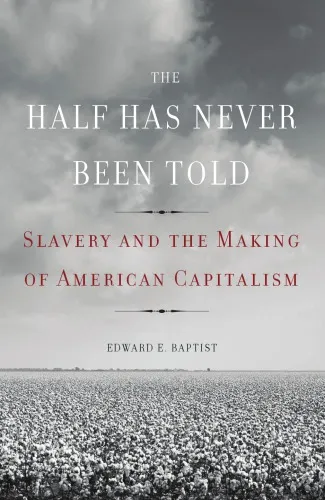
The half has never been told: slavery and the making of American capitalism
Baptist,Edward E
English
Intermediate
novel
4.8 / 5
0 reviews
2016
Published
529
pages
658
views
Welcome to the introductory guide to "The Half Has Never Been Told: Slavery and the Making of American Capitalism" by Edward E. Baptist. This profound work delves into the integral role that slavery played in shaping the economic landscape of the United States. We explore the
Before you read
What will you get from this book?
Welcome to the introductory guide to "The Half Has Never Been Told: Slavery and the Making of American Capitalism" by Edward E. Baptist. This profound work delves into the integral role that slavery played in shaping the economic landscape of the United States. We explore the book's comprehensive narrative, key insights, memorable quotes, and its significance in the broader context of both historical and contemporary understanding.
Detailed Summary of the Book
Edward E. Baptist's "The Half Has Never Been Told" offers an in-depth analysis of how slavery molded America's economic and political structures, proving essential to understanding the country's development. Contrary to the notion that slavery was only a 'Southern' institution, Baptist argues that it was a national economic engine that significantly contributed to the country's rapid growth during the 19th century.
Baptist organizes the book into ten chapters, each named after a human body part, emphasizing the physicality and brutality of enforced labor. He reconstructs the lives of enslaved people through historical data and personal narratives, showcasing the human cost of America's prosperity. Through vivid storytelling, the book highlights the expansion of the Cotton Kingdom, the systematic exploitation, and the heart-wrenching realities faced by enslaved people.
Baptist refutes the myth that slavery was somehow economically inefficient by outlining how the forced labor system increased productivity, which led to vast profits and the growth of financial markets. The book identifies a direct link between the economic practices developed during slavery and the modern capitalist system, challenging traditional narratives that sanitize America's economic history.
Key Takeaways
- Slavery was central, not peripheral, to the development of American capitalism.
- The expansion of the United States was catalyzed by vast profits from slave labor, particularly in the cotton industry.
- Enslavers implemented complex management systems that were precursors to modern business practices.
- The book provides a voice to the enslaved individuals, fleshing out their personal stories amidst the broader economic narrative.
- Baptist identifies a continued legacy and historical trauma from slavery that still affects socio-economic dynamics today.
Famous Quotes from the Book
"People know what happened, but they don’t want to look at it... what does it mean to the stories we tell about the United States?"
"The expansion of slavery, its extension over space and its intensification over time, made the Commodity Frontier."
Why This Book Matters
Baptist's work is pivotal in reshaping how we understand the narrative of American growth and prosperity. By thoroughly examining slavery's profound impact on economic development, it challenges the traditional view of capitalism as a product only of free labor and entrepreneurship. The book compels us to confront uncomfortable truths about the foundations of wealth in America, encouraging a critical examination of economic histories and moral considerations.
In today's sociopolitical climate, understanding the interconnectedness of past and present economic systems is crucial. "The Half Has Never Been Told" serves as a vital resource for historians, economists, students, and anyone interested in delving deeper into the complex relationships between history, morality, and the socio-economic structures of modern-day America.
Ask this book
Your question is answered in the context of this title and author. Each answer uses 2 points.
Sign in to ask the book assistant.
Reader reviews
0 reviews, 4.8 average out of 5
No reviews yet
If you have read this book, help the next reader with your experience.
Write a review
Sign in to publish a review.
Reader questions and answers
Ask a focused question and learn from the community.
Sign in to ask or answer a question.
No questions yet
Be the first to ask a clear, useful question.
What to read next
Related references that continue this learning path.