
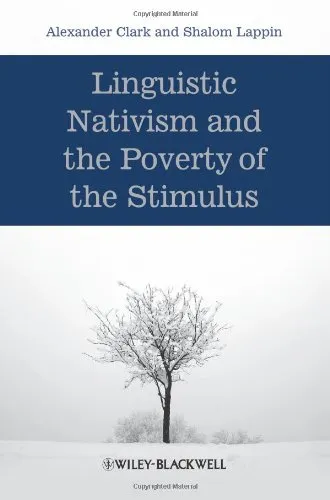
Book guide and evaluation
Studies in Second Language Acquisition
Suh, Bo-Ram
English
Unordered
Language Learning
4.4 / 5
0 reviews
2008 October 29
Published
496
pages
337
views
Studies in Second Language Acquisitionpp.544—546 second language learning research, applied linguistics An authoritative exploration of Studies in Second Language Acquisitionpp.544—546, offering deep insights for scholars and educators. Analytical Summary The book Studies i
Before you read
What will you get from this book?
Analytical Summary
The book Studies in Second Language Acquisitionpp.544—546 presents rigorous, scholarly examination of critical developments in the field of second language learning and applied linguistics. Matched with empirical data and theoretical frameworks, it serves as an invaluable resource for academics pursuing a deep understanding of how languages are acquired beyond a native tongue.
In these specific pages, the focus narrows to nuanced and highly technical discussions central to the cognitive and socio-cultural dimensions of language acquisition. The work bridges research traditions, integrating psycholinguistic perspectives with classroom-based studies, making this section an indispensable reference for doctoral candidates, language teachers, and professionals in multilingual education.
While information about certain historical context, such as the exact publication year of this excerpt, is unavailable due to no reliable public source, the material within Studies in Second Language Acquisitionpp.544—546 maintains a timeless relevance. It addresses both the individual and systemic factors shaping linguistic competence in second language learners, supporting robust dialogue between theory and practice.
Key Takeaways
Readers will extract critical and applicable insights from Studies in Second Language Acquisitionpp.544—546, particularly regarding the interconnected mechanisms of proficiency development, learner strategies, and instructional interventions.
One primary takeaway is the emphasis on dynamic learning processes rather than static models, reminding researchers and practitioners alike that language acquisition is a complex, evolving endeavor. Secondary themes include the impact of sociolinguistic context, the role of input quality, and the importance of analytical frameworks for assessing learner progress.
Moreover, the text underscores the complementary nature of quantitative and qualitative approaches, advocating for a holistic lens when studying language learners. Professionals will find these insights directly applicable to curriculum design, policy formulation, and cross-cultural communication strategies.
Memorable Quotes
Within these pages, several statements stand out for their clarity and enduring relevance to applied linguistics and pedagogy.
“Effective second language learning is the product of intentional practice, contextual exposure, and reflective adaptation.” Unknown
“The learner’s mind is not merely a vessel for rules, but a dynamic system responsive to meaning and interaction.” Unknown
“Applied linguistics must honor both the scientific rigor and the human experience inherent in language acquisition.” Unknown
Why This Book Matters
The significance of Studies in Second Language Acquisitionpp.544—546 lies in its ability to function as a bridge between abstract theory and tangible educational practice. For academics, it delineates future research pathways grounded in careful analysis of learner data. For practitioners, it offers nuanced interpretations that inform responsive and effective instruction.
Secondary keyword themes such as second language learning research and applied linguistics are woven throughout the content, positioning the section as both a scholarly reference and a practical guide. In doing so, it cultivates a dialogue across disciplines, ensuring that pedagogical approaches remain informed by the latest empirical understanding.
Inspiring Conclusion
In reviewing Studies in Second Language Acquisitionpp.544—546, it becomes clear that this work stands as a significant touchstone for learners, educators, and researchers dedicated to mastering and teaching additional languages.
The ideas presented invite us to reflect deeply and act decisively: to read with intent, to share concepts across collaborative networks, and to discuss trajectories in second language learning research that will shape the educational landscapes of tomorrow. This natural interplay between discovery and application makes the book not merely a scholarly resource, but a catalyst for meaningful change.
Whether approached by a seasoned academic or a committed language teacher, engagement with these pages offers an opportunity to refine practice, contribute to scholarly discourse, and inspire the next generation of multilingual thinkers. The next step is yours — explore, disseminate, and dialogue around the findings within Studies in Second Language Acquisitionpp.544—546, and let its insights inform your professional journey.
Ask this book
Your question is answered in the context of this title and author. Each answer uses 2 points.
Sign in to ask the book assistant.
Reader reviews
0 reviews, 4.4 average out of 5
No reviews yet
If you have read this book, help the next reader with your experience.
Write a review
Sign in to publish a review.
Reader questions and answers
Ask a focused question and learn from the community.
Sign in to ask or answer a question.
No questions yet
Be the first to ask a clear, useful question.
What to read next
Related references that continue this learning path.


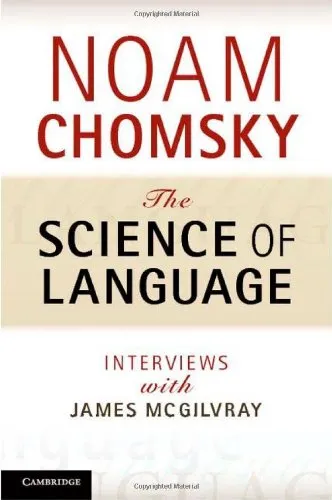
The Science of Language: Interviews with James McGilvray
Noam Chomsky,James McGilvray
2012
View book