Book guide and evaluation
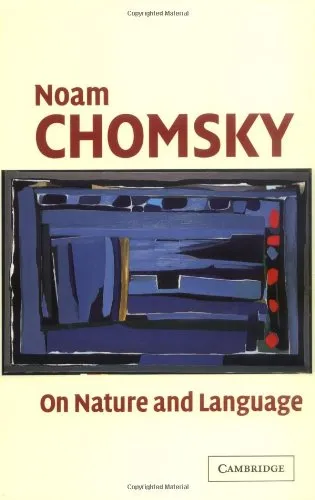
On nature and language
Noam Chomsky,Adriana Belletti,Luigi Rizzi
English
Unordered
Language Learning
4.5 / 5
0 reviews
2002
Published
217
pages
576
views
Introduction to "On Nature and Language" "On Nature and Language" is a profound and insightful work exploring the intersections of linguistics, biology, and cognitive science. Authored by Noam Chomsky, Adriana Belletti, and Luigi Rizzi, the book compiles a series o
Before you read
What will you get from this book?
Introduction to "On Nature and Language"
"On Nature and Language" is a profound and insightful work exploring the intersections of linguistics, biology, and cognitive science. Authored by Noam Chomsky, Adriana Belletti, and Luigi Rizzi, the book compiles a series of compelling essays offering a detailed examination of the nature of human language, its structure, and its evolutionary underpinnings. Drawing from Chomsky's celebrated theories, the book delves into the philosophical and scientific implications of the human capacity for language and situates these ideas within the broader fields of natural sciences and the humanities.
Originally presented as lectures, the essays in this book unravel the complex relationship between language and the human mind. By focusing on the concept of Universal Grammar, the book proposes that there are fundamental principles governing all human languages, deeply embedded in the human brain. Combining scientific rigor with philosophical inquiries, "On Nature and Language" presents key arguments that have influenced modern-day linguistics, cognitive science, and even psychology.
The text is divided across discussions on central theoretical constructs, practical consequences of linguistic research, and reflections on its interdisciplinary implications. With contributions by Belletti and Rizzi—both prominent figures in the field of syntax—the book offers in-depth discussions of empirical data while maintaining accessibility for readers with varied levels of expertise. Whether you are a seasoned linguist or a curious reader, this book is a cornerstone for understanding how the study of human language shapes the way we perceive the natural world.
Detailed Summary of the Book
"On Nature and Language" is divided into several essays that converge on the idea of language as a biological phenomenon. Chomsky begins by introducing his concept of Universal Grammar, the theoretical framework suggesting that humans are born with an innate ability to acquire language. This biological endowment, he proposes, not only distinguishes humans from other species but also lays the groundwork for similarities across languages.
The book also explores the Minimalist Program, a paradigm introduced by Chomsky to simplify linguistic theory by identifying economy and efficiency as intrinsic aspects of language design. Meanwhile, Belletti and Rizzi expand on these ideas through focused explorations of syntactic structures, highlighting empirical findings in syntax and morphology that support Chomsky's broader theories.
Additionally, the book touches on the implications of linguistic theory in understanding human creativity, cognition, and cultural transmission. The authors argue for a scientific yet humanistic understanding of language, situating linguistics within the larger context of the natural sciences while emphasizing its uniquely human aspects. Throughout, "On Nature and Language" balances theoretical insights with practical considerations, offering a compelling case for the significance of linguistics in both scientific and philosophical domains.
Key Takeaways
- Language is a uniquely human trait, deeply rooted in our biology and governed by innate principles.
- Universal Grammar suggests that all languages share common structural features, shaped by the human mind.
- The Minimalist Program strives for simplicity and elegance in linguistic theory, highlighting the efficient design of language.
- Language is not only a system of communication but also a window into human creativity, cognition, and the mind's architecture.
- The study of language extends beyond linguistics to influence fields like cognitive science, psychology, and philosophy.
Famous Quotes from the Book
"Language is a mirror of mind in a deep and significant sense."
"The simplest explanations often reveal the deepest truths about human nature."
"Universal Grammar is not something we learn, but something we grow."
Why This Book Matters
"On Nature and Language" is a significant contribution to the scientific and philosophical study of human language. Its interdisciplinary focus bridges gaps between linguistics, cognitive science, and philosophy, offering insights into the biological nature of language that continue to shape contemporary research. Chomsky’s groundbreaking theories challenge traditional notions of language acquisition, inspiring decades of inquiry into the relationship between mind, body, and culture.
In an era where communication forms the bedrock of human progress, understanding language as a natural phenomenon is more important than ever. This book not only serves as an introduction to Chomsky’s influential ideas but also encourages readers to appreciate the beauty and complexity of the human cognitive faculty. For academics and laypersons alike, "On Nature and Language" is an indispensable resource for anyone seeking to explore the mysteries of language and its role in human nature.
Ask this book
Your question is answered in the context of this title and author. Each answer uses 2 points.
Sign in to ask the book assistant.
Reader reviews
0 reviews, 4.5 average out of 5
No reviews yet
If you have read this book, help the next reader with your experience.
Write a review
Sign in to publish a review.
Reader questions and answers
Ask a focused question and learn from the community.
Sign in to ask or answer a question.
No questions yet
Be the first to ask a clear, useful question.
What to read next
Related references that continue this learning path.
The Biolinguistic Enterprise: New Perspectives on the Evolution and Nature of the Human Language Faculty (Oxford Studies in Biolinguistics)
Anna Maria Di Sciullo,Cedric Boeckx
2011
View book
Language and Nature: Papers Presented to John Huehnergard on the Occasion of His 60th Birthday: 67 (Studies in Ancient Oriental Civilisation)
Rebecca Hasselbach (editor),Na'ama Pat-El (editor)
2012
View book