
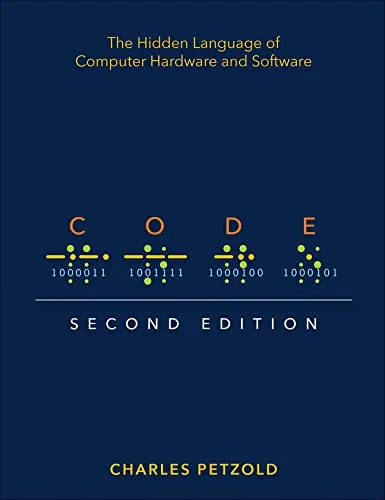
Code: The Hidden Language of Computer Hardware and Software - 2nd Edition
Charles Petzold
2022
View book
Book guide and evaluation
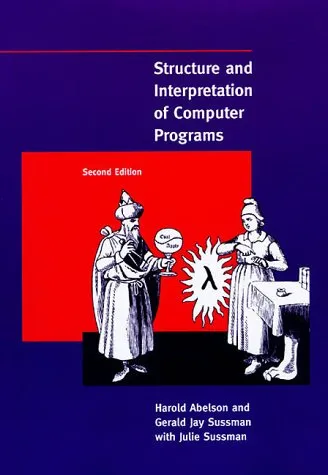
Harold Abelson,Gerald Jay Sussman
0 reviews
Published
pages
views
Introduction to "Structure and Interpretation of Computer Programs - 2nd Edition" The "Structure and Interpretation of Computer Programs" (SICP) is a computer science textbook that has fundamentally shaped the education of students in programming and beyond. Crafted by Harold
Before you read
The "Structure and Interpretation of Computer Programs" (SICP) is a computer science textbook that has fundamentally shaped the education of students in programming and beyond. Crafted by Harold Abelson and Gerald Jay Sussman with Julie Sussman, this book provides an unparalleled narrative on the essence of computer programming.
In its second edition, SICP continues to offer a profound exploration of the abstract concepts that power modern computing. The book walks the reader through programming paradigms, data structures, and problem-solving techniques. It meticulously illustrates how to frame and abstract complex programs and systems using a clear, elegant expression of ideas. Through the lens of Scheme, a dialect of Lisp, the authors emphasize programming as a means to communicate effectively with both humans and machines.
The book is divided into five chapters, each addressing a critical facet of programming:
"Programs must be written for people to read, and only incidentally for machines to execute."
"A computer language is not just a way of getting a computer to perform operations but rather that it is a novel formal medium for expressing ideas about methodology."
"Structure and Interpretation of Computer Programs" exerts a monumental influence on computer science education worldwide. The book does not merely teach programming; it reshapes how learners perceive the essence of computing. By dismantling the complexities of programming into foundational concepts, SICP fosters a deeper understanding of how software should be crafted and judged.
The ability to think critically about the very architecture of software systems is fostered through this book, making it an essential resource for aspiring programmers and seasoned developers alike. Its lessons on abstraction, recursion, higher-order functions, and state lay the groundwork for modern software development methodologies, influencing a vast array of subsequent technologies and frameworks.
In sum, SICP offers more than a framework for programming; it presents a philosophy of thought that challenges its readers to continually explore the evolving landscape of technology with curiosity and rigor.
Persian Summary
Your question is answered in the context of this title and author. Each answer uses 2 points.
0 reviews, 4.5 average out of 5
Sign in to publish a review.
Ask a focused question and learn from the community.
Related references that continue this learning path.
Charles Petzold
Paul Gries,Jennifer Campbell,Jason Montojo
Paul Gries,Jennifer Campbell,Jason Montojo