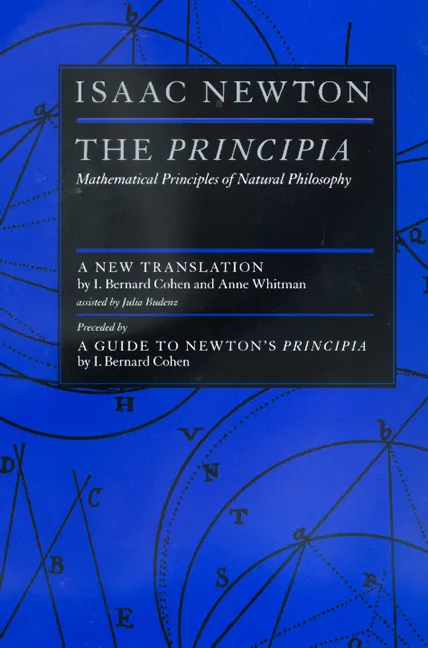
The Principia: Mathematical Principles of Natural Philosophy
Isaac Newton,I. Bernard Cohen,Anne Whitman,Julia Budenz
1999
View book
Book guide and evaluation
Pankaj Sharan
0 reviews
Published
pages
views
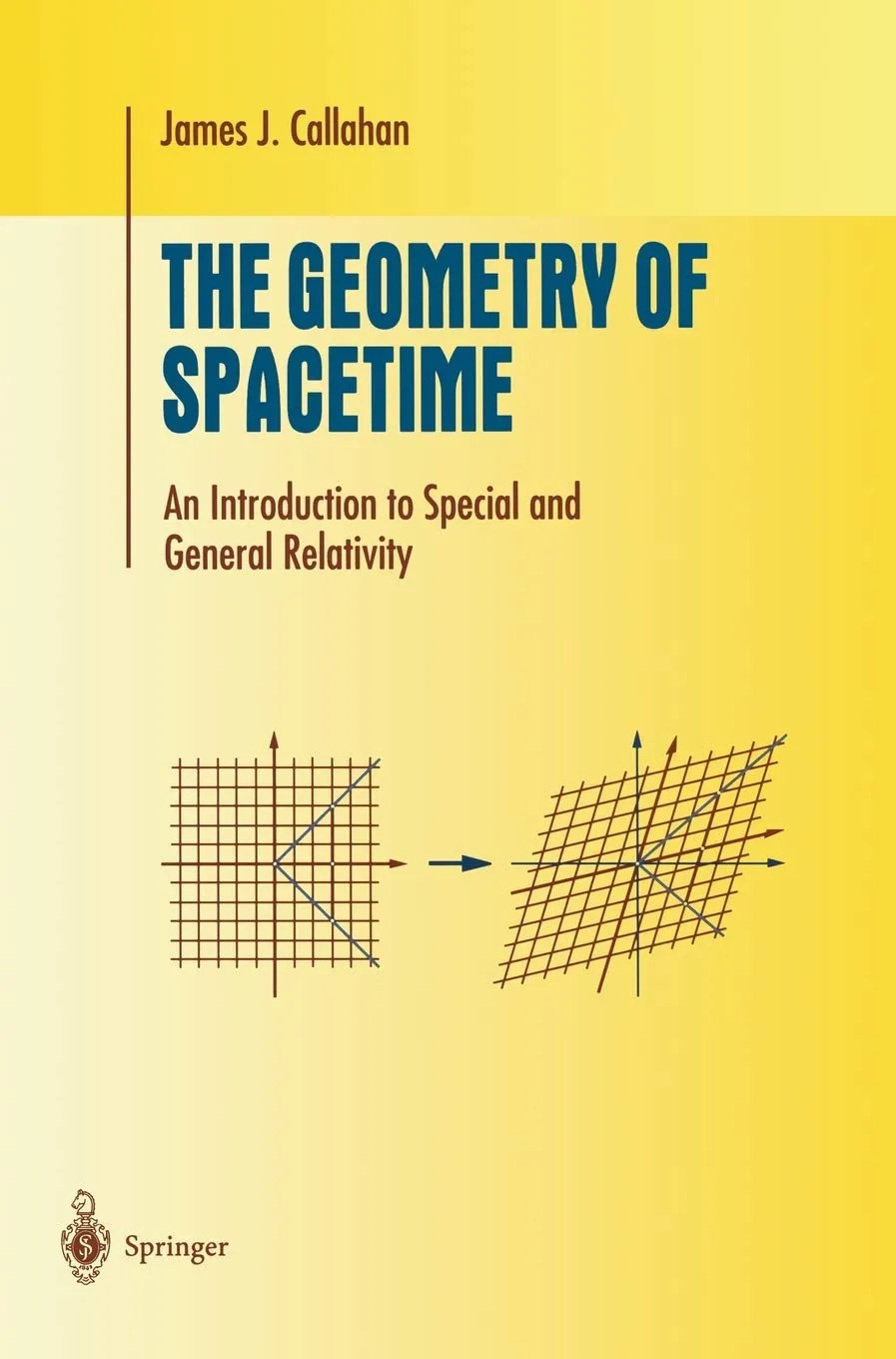
Introduction to "Spacetime, Geometry, and Gravitation" "Spacetime, Geometry, and Gravitation" is a comprehensive exploration of one of the most intriguing and foundational areas of modern physics. Authored with the aim to bridge the gap between mathematical precision and phy
Before you read
"Spacetime, Geometry, and Gravitation" is a comprehensive exploration of one of the most intriguing and foundational areas of modern physics. Authored with the aim to bridge the gap between mathematical precision and physical intuition, this book offers a deep dive into the world of Einstein's general theory of relativity, the geometric fabric of spacetime, and the fundamental forces that govern the universe. It is an ideal resource for advanced undergraduate and graduate students, as well as professionals and enthusiasts, seeking an in-depth understanding of gravitation and spacetime as it pertains to our physical reality.
By adhering to a logical structure and employing mathematical clarity, the book develops the theoretical framework needed to comprehend the dynamic interplay of spacetime and matter. Alongside rigorous derivations, it provides insightful explanations to illuminate complex concepts, making it approachable for readers at various levels of expertise. Let's delve into the essential elements of this masterpiece.
The book begins by introducing the fundamental principles of spacetime, starting from special relativity and building toward the general theory of relativity. The transition from flat spacetime in special relativity to curved spacetime in the presence of mass and energy is explained at length, emphasizing how geometry plays an integral role in understanding gravitation.
Key chapters explore tensor calculus and differential geometry, as these mathematical tools form the backbone of general relativity. Concepts like geodesics, curvature, and the Einstein field equations are presented in a structured manner, ensuring readers build upon their knowledge systematically.
Beyond the theoretical foundations, the book extends into astrophysical applications and predictions of general relativity. Topics include black holes, cosmology, gravitational waves, and the bending of light by massive objects (gravitational lensing). These discussions highlight not only the elegance of Einstein's equations but also their real-world implications in modern astrophysics and observational science.
In addition, the book touches on experimental verifications of general relativity and the ongoing quest to integrate gravitation into a unified quantum framework. It concludes by discussing open questions in the field, encouraging readers to contemplate the future of gravitational research.
"The geometry of spacetime is not just a passive backdrop; it actively governs the motion of matter and energy. In turn, matter and energy sculpt this very geometry."
"Einstein's insight into space and time revolutionized our understanding of the universe, revealing it as a dynamic and interconnected whole, far removed from the static, rigid framework of classical mechanics."
"Spacetime, Geometry, and Gravitation" is more than an academic textbook; it is a testament to the power of human curiosity and intellectual rigor. By demystifying some of the most complex phenomena in the universe, it empowers readers to appreciate and contribute to the field of gravitational physics. The book enriches our perspective on reality, showing how the cosmos operates at the deepest level.
For students and researchers, it provides an indispensable foundation in general relativity and its applications. For enthusiasts, it serves as a guide to understanding the ideas that have shaped modern science. Furthermore, it holds relevance in an era of rapid advancements in astrophysics, as our ability to observe gravitational waves and other relativistic phenomena continues to grow.
This book exemplifies the seamless blend of mathematics and physics, developing concepts with precision while keeping their physical significance at the forefront. In a world where theoretical physics often seems daunting and inaccessible, "Spacetime, Geometry, and Gravitation" successfully opens doors to a deeper understanding of our universe.
Your question is answered in the context of this title and author. Each answer uses 2 points.
0 reviews, 4.5 average out of 5
Sign in to publish a review.
Ask a focused question and learn from the community.
Related references that continue this learning path.
Isaac Newton,I. Bernard Cohen,Anne Whitman,Julia Budenz