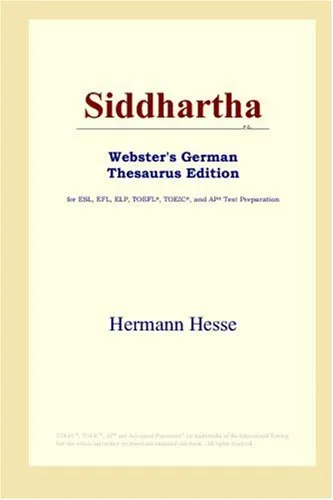
Book guide and evaluation
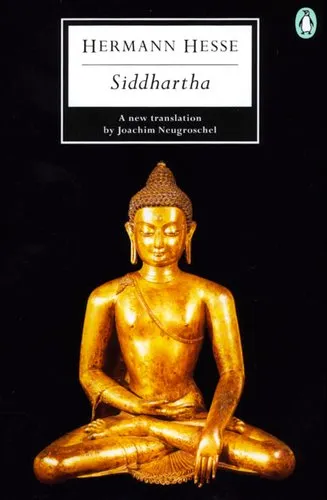
Siddhartha
Hermann Hesse
English
Intermediate
novel
4.1 / 5
0 reviews
2006
Published
155
pages
912
views
Introduction to 'Siddhartha' 'Siddhartha', written by Hermann Hesse, is a profound, philosophical novel that embarks on a journey of self-discovery, spiritual awakening, and the quest for inner peace. First published in 1922, the book is set in ancient India and de
Before you read
What will you get from this book?
Introduction to 'Siddhartha'
'Siddhartha', written by Hermann Hesse, is a profound, philosophical novel that embarks on a journey of self-discovery, spiritual awakening, and the quest for inner peace. First published in 1922, the book is set in ancient India and delves deeply into the spiritual exploration of its protagonist, Siddhartha, who seeks enlightenment beyond the teachings of his traditional upbringing.
Detailed Summary
Siddhartha is a young Brahmin, blessed with intelligence and beauty, who embarks on a quest to explore the depths of his consciousness and the essence of his being. Dissatisfied with the prescribed rites and rituals of Hinduism, Siddhartha yearns for a deeper understanding of life and self. Alongside his friend Govinda, he leaves his home to join the ascetic group known as the Samanas who practice renunciation, in pursuit of spiritual fulfillment.
Despite following years of severe austerity, Siddhartha recognizes that enlightenment cannot be taught or given through ascetic practices or teachings. Disillusioned, he decides to seek out the teachings of Gautama Buddha. After listening to Buddha’s sermons, Siddhartha respectfully acknowledges Buddha’s wisdom but concludes that enlightenment is a personal journey, and the teaching, although enlightening, cannot serve his quest for personal truth.
Siddhartha then ventures into the world of sensual pleasures and material gain, where he meets Kamala, a courtesan, who teaches him the art of love, and Kamaswami, who instructs him in the ways of business and trade. Over time, Siddhartha accumulates wealth and power, but these indulgences leave him feeling empty and disillusioned.
Upon realizing the futility of wealth and desire, Siddhartha retreats to a river where he contemplates his life and hears its eternal voice, which leads him to enlightenment. He comes to understand the essence of unity and the interconnectedness of all things, embracing the river as a symbol of life’s constant flow and perpetual renewal. In his awakening, Siddhartha finds peace and fulfillment, recognizing that enlightenment comes from within and is an experiential knowledge beyond words.
Key Takeaways
- The pursuit of self-discovery is a personal journey that cannot be taught by external sources or solely through religious doctrine.
- Life’s true essence is found in understanding the unity of all existence, exemplified by the river’s symbolism.
- Material wealth and sensual pleasures cannot fulfill the soul’s longing for meaning and connection.
- Enlightenment and wisdom are experiential and often transcend conventional academic teachings.
Famous Quotes from the Book
"I can think, I can wait, I can fast."
"The river is everywhere at the same time, at the source and at the mouth, at the waterfall, at the ferry, at the current, in the ocean and in the mountains, everywhere."
"One must find the source within one's own Self, one must possess it."
Why This Book Matters
'Siddhartha' transcends simple narrative to explore deeply philosophical questions about existential purpose and the human condition. It provides insight into Eastern spiritual traditions while appealing to universal human experiences related to personal growth and inner fulfillment. Hermann Hesse’s work is revered not only for its literary brilliance but also for its timeless messages, which emphasize introspection and personal spirituality over dogma. 'Siddhartha' continues to inspire readers on their own journeys towards self-understanding, challenging them to look within for answers and to embrace the flow of life like the river itself.
Audio introductions
Persian Summary
Ask this book
Your question is answered in the context of this title and author. Each answer uses 2 points.
Sign in to ask the book assistant.
Reader reviews
0 reviews, 4.1 average out of 5
No reviews yet
If you have read this book, help the next reader with your experience.
Write a review
Sign in to publish a review.
Reader questions and answers
Ask a focused question and learn from the community.
Sign in to ask or answer a question.
No questions yet
Be the first to ask a clear, useful question.
What to read next
Related references that continue this learning path.