Book guide and evaluation
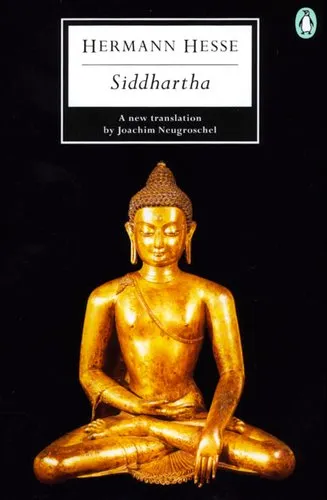
Siddhartha: An Indian Tale (Penguin Twentieth-Century Classics)
Hermann Hesse
English
Intermediate
novel
5.0 / 5
0 reviews
1999
Published
86
pages
735
views
Introduction to 'Siddhartha: An Indian Tale' Hermann Hesse's 'Siddhartha: An Indian Tale' is a philosophical novel that explores the journey of self-discovery, set against the backdrop of ancient India. Originally published in 1922, this profound narrative intertwines spir
Before you read
What will you get from this book?
Introduction to 'Siddhartha: An Indian Tale'
Hermann Hesse's 'Siddhartha: An Indian Tale' is a philosophical novel that explores the journey of self-discovery, set against the backdrop of ancient India. Originally published in 1922, this profound narrative intertwines spiritual teachings with the protagonist's quest for enlightenment. The story echoes the cultural and spiritual richness of Eastern philosophy while addressing universal themes of life, spirituality, and self-realization. It is a timeless classic that continues to resonate with readers around the world.
Detailed Summary of the Book
Siddhartha, the son of a Brahmin, is dissatisfied with the teachings and rituals he has been taught. Feeling a deep restlessness, he sets forth on a journey to find spiritual peace and personal fulfillment. Alongside his dear friend, Govinda, Siddhartha initially seeks refuge with the ascetic Samanas, immersing himself in meditation and self-denial. Despite mastering their practices, he perceives that this path does not lead to true enlightenment.
Continuing his quest, Siddhartha encounters the teachings of Gautama Buddha. Although Govinda decides to join the Buddha's followers, Siddhartha chooses a different path, believing that wisdom cannot be imparted through teachings alone, but must be experienced personally. His quest brings him into the material world, where he learns the pleasures and pains of love and wealth, particularly through his relationship with Kamala, a courtesan, and his life as a successful merchant.
Despite the initial allure, Siddhartha becomes disillusioned with the trappings of material wealth, realizing they only serve to mask his deeper existential void. This realization propels him towards solitude and contemplation near a river, where he meets Vasudeva, the enlightened ferryman, who becomes his spiritual guide. Through the river's teachings and Vasudeva's wisdom, Siddhartha finally achieves the inner peace and enlightenment he has sought throughout his life.
Key Takeaways
- The journey to self-discovery and enlightenment is deeply personal and cannot be taught by others.
- Material wealth and worldly pleasures, although enticing, ultimately lead to dissatisfaction if they are the sole aims of life.
- The unity and interconnection of all life can lead to profound spiritual insights and inner peace.
- True wisdom often emerges from life experiences and introspection rather than from formal teachings and religious doctrines.
Famous Quotes from the Book
"Wisdom cannot be imparted. Wisdom that a wise man attempts to impart always sounds like foolishness to someone else."
"The world has caught him; pleasure, covetousness, idleness, and finally also that vice that he had always despised and scorned as the most foolish—acquisitiveness."
"The river taught me how to listen; you will learn from it too. The river knows everything; one can learn everything from it."
Why This Book Matters
"Siddhartha: An Indian Tale" holds significance not only for its literary and philosophical depth but also for its universal appeal and relevance. It delves into the perennial quest for meaning and understanding, offering a timeless reflection on the nature of existence and the human spirit. The novel's fusion of Eastern spiritualism with Western literary traditions invites readers from diverse backgrounds to explore concepts of enlightenment, identity, and the interconnectedness of all life.
Hesse's nuanced prose and profound insights serve as a guiding light for those seeking self-awareness and personal fulfillment. In a world consumed by rapid change and material pursuits, "Siddhartha" reminds us of the enduring value of introspection and the search for a deeper, more fulfilling truth. It is a masterpiece that continues to inspire introspection and transformation, making it an essential read for anyone on their own journey of self-discovery.
Audio introductions
Persian Summary
Ask this book
Your question is answered in the context of this title and author. Each answer uses 2 points.
Sign in to ask the book assistant.
Reader reviews
0 reviews, 5.0 average out of 5
No reviews yet
If you have read this book, help the next reader with your experience.
Write a review
Sign in to publish a review.
Reader questions and answers
Ask a focused question and learn from the community.
Sign in to ask or answer a question.
No questions yet
Be the first to ask a clear, useful question.
What to read next
Related references that continue this learning path.