Book guide and evaluation
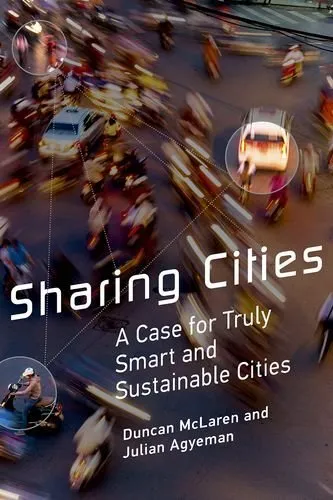
Sharing Cities: A Case for Truly Smart and Sustainable Cities
Duncan McLaren,Julian Agyeman
English
Advanced
Product Design
4.9 / 5
0 reviews
2015
Published
461
pages
416
views
How cities can build on the "sharing economy" and smart technology to deliver a "sharing paradigm" that supports justice, solidarity, and sustainability.The future of humanity is urban, and the nature of urban space enables, and necessitates, sharing -- of resources, goods and se
Before you read
What will you get from this book?
How cities can build on the "sharing economy" and smart technology to deliver a "sharing paradigm" that supports justice, solidarity, and sustainability.The future of humanity is urban, and the nature of urban space enables, and necessitates, sharing -- of resources, goods and services, experiences. Yet traditional forms of sharing have been undermined in modern cities by social fragmentation and commercialization of the public realm. In Sharing Cities, Duncan McLaren and Julian Agyeman argue that the intersection of cities' highly networked physical space with new digital technologies and new mediated forms of sharing offers cities the opportunity to connect smart technology to justice, solidarity, and sustainability. McLaren and Agyeman explore the opportunities and risks for sustainability, solidarity, and justice in the changing nature of sharing. McLaren and Agyeman propose a new "sharing paradigm," which goes beyond the faddish "sharing economy" -- seen in such ventures as Uber and TaskRabbit -- to envision models of sharing that are not always commercial but also communal, encouraging trust and collaboration. Detailed case studies of San Francisco, Seoul, Copenhagen, Medellín, Amsterdam, and Bengaluru (formerly Bangalore) contextualize the authors' discussions of collaborative consumption and production; the shared public realm, both physical and virtual; the design of sharing to enhance equity and justice; and the prospects for scaling up the sharing paradigm though city governance. They show how sharing could shift values and norms, enable civic engagement and political activism, and rebuild a shared urban commons. Their case for sharing and solidarity offers a powerful alternative for urban futures to conventional "race-to-the-bottom" narratives of competition, enclosure, and division.
Ask this book
Your question is answered in the context of this title and author. Each answer uses 2 points.
Sign in to ask the book assistant.
Reader reviews
0 reviews, 4.9 average out of 5
No reviews yet
If you have read this book, help the next reader with your experience.
Write a review
Sign in to publish a review.
Reader questions and answers
Ask a focused question and learn from the community.
Sign in to ask or answer a question.
No questions yet
Be the first to ask a clear, useful question.
What to read next
Related references that continue this learning path.
Designing Sustainability for All : The Design of Sustainable Product-Service Systems Applied to Distributed Economies
Carlo Vezzoli;Brenda Garcia Parra;Cindy Kohtala
2021
View book
Grace in All Simplicity: Beauty, Truth, and Wonders on the Path to the Higgs Boson and New Laws of Nature
Robert N. Cahn,Chris Quigg
2023
View book