Book guide and evaluation
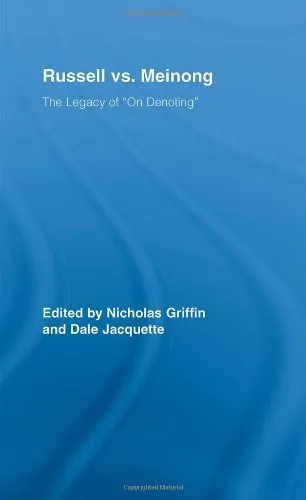
Russell vs. Meinong: The Legacy of 'On Denoting'
Nicholas Griffin,Dale Jacquette (editors)
English
Beginner
Logic and Foundations
4.0 / 5
0 reviews
2008
Published
401
pages
537
views
Introduction to "Russell vs. Meinong: The Legacy of 'On Denoting'" Welcome to a thorough journey through one of the seminal debates in the history of philosophy of language and logical analysis, presented in "Russell vs. Meinong: The Legacy of 'On Denoting'". T
Before you read
What will you get from this book?
Introduction to "Russell vs. Meinong: The Legacy of 'On Denoting'"
Welcome to a thorough journey through one of the seminal debates in the history of philosophy of language and logical analysis, presented in "Russell vs. Meinong: The Legacy of 'On Denoting'". This volume explores the intricate dynamics between Bertrand Russell's groundbreaking work on descriptions and Alexius Meinong’s theory of objects. Curated by renowned editors Nicholas Griffin and Dale Jacquette, this book offers an insightful exploration into their philosophical clash, shedding light on the nature of reference, meaning, and non-existent entities.
Detailed Summary of the Book
The book begins by setting the historical context of how Russell’s seminal essay "On Denoting" reshaped the landscape of logic and philosophy. Russell's essay, published in 1905, was a response to the puzzles and paradoxes that emerged from Meinong’s Theory of Objects, which proposed that objects could subsist in different modes of being and non-being. Meinong had argued for the existence of nonexistent entities, claiming that one could refer meaningfully to objects that do not exist.
Russell, on the other hand, developed his theory of descriptions to address these issues. He aimed to eliminate such entities through a logical analysis that uncovered the hidden logical form of propositions involving definite and indefinite descriptions. His solution has influenced modern philosophy profoundly.
The book brings together essays by various philosophers who delve into different aspects of this debate, examining the implications of both Meinong’s and Russell’s perspectives. The collection not only covers the historical and philosophical background but also assesses the relevance of these ideas to contemporary issues in ontology and semantics.
Key Takeaways
- An understanding of the foundational issues in the philosophy of logic related to reference and denotation.
- Insights into how Russell’s theory of descriptions provides solutions to logical puzzles involving non-existent entities.
- A critical evaluation of Meinong's Theory of Objects and its place in modern philosophy.
- Exploration of the ongoing influence of these philosophical debates on current semantic theories.
Famous Quotes from the Book
“The debate between Russell and Meinong highlights the profound complexities and subtleties involved in understanding how language relates to the world.”
“Russell's theory of descriptions is not merely a solution to specific paradoxes, but a paradigm shift in understanding meaning.”
Why This Book Matters
This volume matters not only for students and scholars of philosophy but for anyone interested in the evolution of logic and language. The clash between Russell and Meinong continues to resonate because it addresses fundamental questions about how we talk about the world, how language functions, and how logic can be used to remove ambiguity in philosophical discourse.
In a modern context, this book serves as a crucial resource for understanding the legacy of these ideas and their enduring impact on subjects ranging from artificial intelligence to cognitive science. The discussions within help reveal the philosophical underpinnings of our most basic intellectual tools, making this work essential reading for those looking to delve deep into the philosophical inquiries of reference and existence.
Ask this book
Your question is answered in the context of this title and author. Each answer uses 2 points.
Sign in to ask the book assistant.
Reader reviews
0 reviews, 4.0 average out of 5
No reviews yet
If you have read this book, help the next reader with your experience.
Write a review
Sign in to publish a review.
Reader questions and answers
Ask a focused question and learn from the community.
Sign in to ask or answer a question.
No questions yet
Be the first to ask a clear, useful question.
What to read next
Related references that continue this learning path.
Word and Object
Willard Van Orman Quine,Dagfinn Føllesdal (Preface),Patricia Smith Churchland (Foreword)
2013
View book