
The Worlds of Possibility: Modal Realism and the Semantics of Modal Logic
Charles S. Chihara
2001
View book
Book guide and evaluation
Sebastian Gardner
0 reviews
Published
pages
views
Welcome to an in-depth exploration of Immanuel Kant's seminal work, Critique of Pure Reason, through the lens of Sebastian Gardner's insightful analysis. The Routledge Philosophy GuideBook to Kant and the Critique of Pure Reason serves as an essential companion for an
Before you read
Welcome to an in-depth exploration of Immanuel Kant's seminal work, Critique of Pure Reason, through the lens of Sebastian Gardner's insightful analysis. The Routledge Philosophy GuideBook to Kant and the Critique of Pure Reason serves as an essential companion for anyone delving into the complexities of Kantian philosophy. This guidebook breaks down the core concepts of Kant's philosophy, offering readers a structured way to understand one of the most impactful philosophical texts in Western history.
Gardner's guidebook embarks on a comprehensive journey through Kant's Critique of Pure Reason, elucidating its intricate ideas and philosophical significance. The book begins with a contextual overview, situating Kant within the Enlightenment period and detailing his motivations for writing the Critique. Gardner delves into Kant's revolutionary approach to epistemology, known as the "Copernican Revolution," which pivots around the idea that the mind actively shapes human experience rather than passively receiving it.
The guidebook meticulously explores the intricate architecture of Kant's arguments, including the distinctions between a priori and a posteriori knowledge, and the concepts of phenomena and noumena. It systematically analyzes the main sections of the Critique: the Transcendental Aesthetic, Analytic, and Dialectic. Gardner provides insightful commentary on pivotal elements such as the categories of understanding, the role of space and time, and the antinomies of pure reason, making these abstract principles accessible to contemporary readers.
"Kant's approach, often described as the 'Copernican Revolution' in philosophy, posits that humans can only know the world as it is encountered through the faculties of the mind."
"Gardner adeptly guides us through Kant’s Transcendental Aesthetic, revealing how space and time are not substances, but forms of human intuition."
Kant's Critique of Pure Reason is a cornerstone of modern philosophy, and Gardner's guidebook is vital for unlocking its depths. By demystifying Kant's dense prose and complex ideas, this book provides a pathway for scholars and general readers alike to engage with the profound questions that Kant raises about human understanding, reality, and the limits of knowledge.
Gardner's thoughtful analysis not only clarifies Kant's philosophical intentions but also highlights the continued relevance of his ideas in contemporary discussions. For students and enthusiasts of philosophy, this guidebook is an invaluable resource that fosters a richer appreciation of Kant's enduring legacy.
Your question is answered in the context of this title and author. Each answer uses 2 points.
0 reviews, 4.5 average out of 5
Sign in to publish a review.
Ask a focused question and learn from the community.
Related references that continue this learning path.
Charles S. Chihara
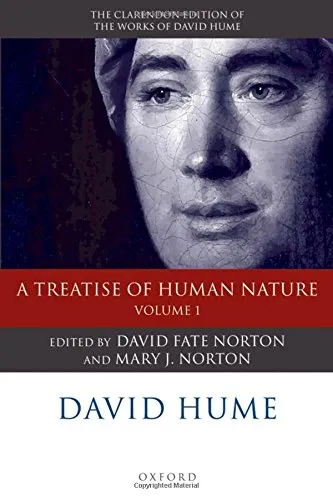
David Hume,David Fate Norton,Mary J. Norton