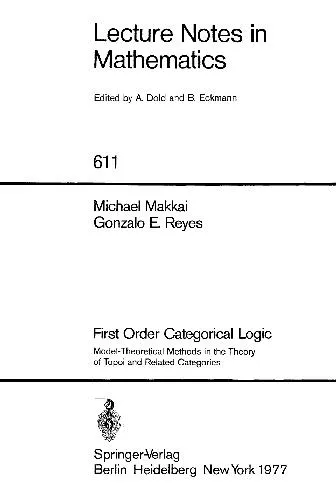
First Order Categorical Logic: Model-Theoretical Methods in the Theory of Topoi and Related Categories
Michael Makkai,Gonzalo E. Reyes
1977
View book
Book guide and evaluation
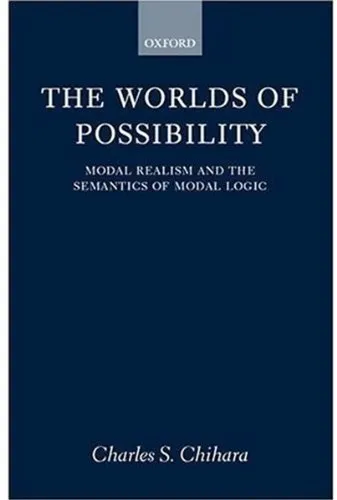
Charles S. Chihara
0 reviews
Published
pages
views
Introduction to 'The Worlds of Possibility: Modal Realism and the Semantics of Modal Logic' Welcome to an insightful journey into the realms of possibility and the semantics of modal logic, as presented in my book, 'The Worlds of Possibility: Modal Realism and the Semantic
Before you read
Welcome to an insightful journey into the realms of possibility and the semantics of modal logic, as presented in my book, 'The Worlds of Possibility: Modal Realism and the Semantics of Modal Logic'. This introduction aims to guide you through the book's core ideas and significance in the fields of philosophy and logic, providing you with a deeper understanding of modal realism and its semantic implications.
The book delves into the intricate landscape of modal logic, a branch of logic that explores necessity and possibility. Within its pages, the concept of 'modal realism' is rigorously analyzed. Modal realism, most prominently advocated by philosopher David Lewis, posits that all possible worlds are just as real as the actual world we live in. By building on Lewis's ideas, the book offers an exploration of how this intriguing thesis can be interpreted and applied to semantic structures.
Through careful examination, the book addresses fundamental questions: What makes a world possible? How can we understand and utilize possible worlds in philosophical discussions? These issues are tackled through a detailed analysis of the application of possible worlds to modal expressions in formal semantics. The interplay between language and metaphysics is critically evaluated, providing readers with a robust theoretical framework to understand the significance of possible worlds.
"Modal realism invites us to see the universe not as a single thread of actuality but as a tapestry richly woven with diverse possibilities."
"In contemplating possible worlds, we begin to grasp the sheer vastness of reality and the fabric of what might come to be."
The significance of this book is grounded in its ability to bridge complex philosophical concepts with accessible understanding and practical semantics. By examining modal realism, it challenges readers to rethink conventional perceptions of reality and offers a profound commentary on how the potentialities contribute to our understanding of the world and language. This book is essential reading for those interested in philosophical logic, linguistics, and metaphysics, as it not only outlines various theories but also engages with critical discourse surrounding them.
Furthermore, 'The Worlds of Possibility' provides a comprehensive critique of modal realism and an incisive interpretation of its role in contemporary philosophical discourse. It casts light on the practicality of possible worlds theory in enhancing the comprehension of modal language, making it a vital resource for students and scholars who wish to delve into the complex interplay between language and metaphysical thought.
This book matters because it pushes the boundaries of traditional logic and opens up new avenues for research and discussion. It challenges readers to broaden their philosophical perspectives and offers a substantive contribution to ongoing conversations in the fields of logic and the philosophy of language.
Your question is answered in the context of this title and author. Each answer uses 2 points.
0 reviews, 5.0 average out of 5
Sign in to publish a review.
Ask a focused question and learn from the community.
Related references that continue this learning path.
Michael Makkai,Gonzalo E. Reyes
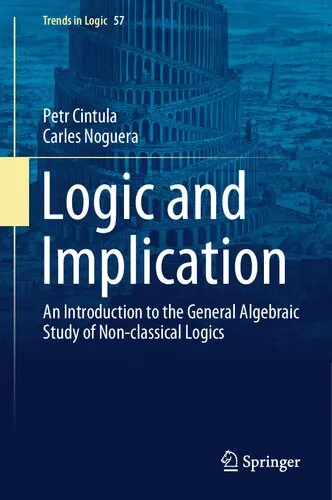
Petr Cintula,Carles Noguera