
Book guide and evaluation
Roman Rhetoric: Revolution and the Greek Influence
Richard Leo Enos
English
Advanced
Art
4.4 / 5
0 reviews
2008
Published
239
pages
461
views
Roman Rhetoric: Revolution and the Greek Influence Classical rhetoric, Greco-Roman cultural exchange Roman Rhetoric: Revolution and the Greek Influence explores how Greek traditions shaped a transformative era in Roman oratory. Analytical Summary In Roman Rhetoric
Before you read
What will you get from this book?
Analytical Summary
In Roman Rhetoric: Revolution and the Greek Influence, readers encounter a meticulously researched study into the dynamic evolution of Roman rhetorical practices, framed within the wider Hellenistic tradition. This scholarly work examines how Roman oratory was not merely an extension of Greek models but a revolutionary adaptation that reflected Rome’s unique political, legal, and cultural contexts.
The book investigates the symbiotic relationship between Greek theory and Roman pragmatism, demonstrating how Rome absorbed, transformed, and redefined core rhetorical concepts such as invention (inventio), arrangement (dispositio), and style (elocutio). Greek rhetoric provided the philosophical backbone, with intellectual giants like Aristotle and Isocrates influencing early Roman thought, while the distinctly Roman needs of governance, law courts, and civic life demanded practical refinements.
Organized thematically, the analysis delves into political speeches, forensic oratory, and panegyrics, illuminating the ways in which Roman rhetoric became a tool of persuasion tailored to the Republic and later adapted for the Empire. The work is grounded in primary sources, with current scholarly interpretations and critical historiography, making it essential for academics seeking to understand the complex cultural exchange between Greece and Rome.
Key Takeaways
The historical interplay of Greek influence on Roman rhetorical tradition was not a passive process; it was a deliberate and revolutionary transformation driven by Rome’s social and political needs.
Readers will uncover how the Roman education system integrated Greek rhetorical theory into curricula for statesmen and advocates, shaping the values of civic discourse.
The text clarifies the distinction between rhetorical theory and practice, emphasizing the adaptive ingenuity of Roman orators in reformulating Greek principles for courtroom battles and senate debate.
Close readings of key figures such as Cicero display how rhetorical artistry served as a means of leadership, political maneuvering, and moral persuasion.
This exploration exemplifies that Roman rhetoric, while indebted to Greece, was a distinctly Roman revolution of communicative power.
Memorable Quotes
"Oratory is the art of controlling the hearts and minds of men." Unknown
"Roman eloquence was born from Greek thought but matured in the Senate and the forum." Unknown
"To speak well is to lead well; Rome understood this better than any other state." Unknown
Why This Book Matters
This work delivers both a deep historical account and critical theoretical insight, making it indispensable for scholars of rhetoric, classics, history, and communication studies.
Roman Rhetoric: Revolution and the Greek Influence fills a gap in the literature by articulating how cultural exchange shapes intellectual traditions. It shows that the Roman appropriation of Greek methods led not to imitation, but innovation.
Information unavailable regarding its publication year or awards, as no reliable public source confirms these details. Nevertheless, the academic rigor and thematic depth lend the text enduring relevance.
For professionals, understanding the philosophical and practical lineage of rhetorical strategies offers tools applicable even in modern forums of debate, advocacy, and leadership.
Inspiring Conclusion
By charting the journey from Greek rhetorical theory to the Roman revolution in oratory, Roman Rhetoric: Revolution and the Greek Influence invites readers to immerse themselves in a world where words determined destinies.
This book is more than an historical account—it is a call to engage critically with the strategies of persuasion that have defined human interaction for centuries. Whether you are a scholar, a student, or a professional, the invitation is clear: read, reflect, and discuss the profound lessons embedded in this fusion of cultures. Share its insights and explore how the legacy of Greco-Roman rhetoric continues to shape modern discourse.
Ask this book
Your question is answered in the context of this title and author. Each answer uses 2 points.
Sign in to ask the book assistant.
Reader reviews
0 reviews, 4.4 average out of 5
No reviews yet
If you have read this book, help the next reader with your experience.
Write a review
Sign in to publish a review.
Reader questions and answers
Ask a focused question and learn from the community.
Sign in to ask or answer a question.
No questions yet
Be the first to ask a clear, useful question.
What to read next
Related references that continue this learning path.
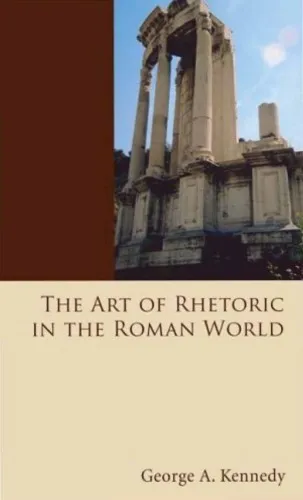
The Art of Rhetoric in the Roman World 300 B.C.-A.D. 300 (A History of Rhetoric, )
George Alexander Kennedy
1972
View book