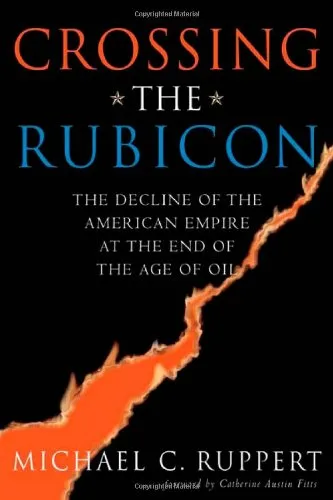
Crossing the Rubicon - Decline of the American Empire at the end of the Age of Oil
Michael C. Ruppert,Catherine Austin Fitts
2004
View book
Book guide and evaluation
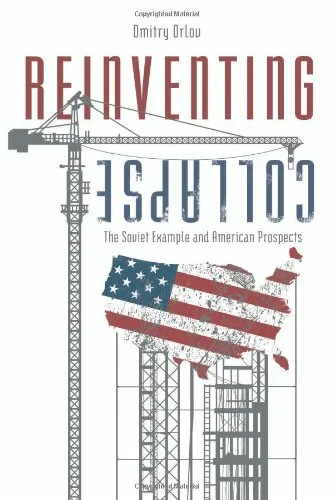
Dmitry Orlov
0 reviews
Published
pages
views
Welcome to an exploration of 'Reinventing Collapse: The Soviet Example and American Prospects' by Dmitry Orlov, a compelling examination of societal resilience and preparedness for economic and political upheavals. Through this lens, Orlov draws intriguing parallels between the
Before you read
Welcome to an exploration of 'Reinventing Collapse: The Soviet Example and American Prospects' by Dmitry Orlov, a compelling examination of societal resilience and preparedness for economic and political upheavals. Through this lens, Orlov draws intriguing parallels between the collapse of the Soviet Union and the potential future of the United States.
'Reinventing Collapse' delves into the complexities of societal collapse, using the Soviet Union's downfall as a case study. Orlov, having witnessed the Soviet collapse firsthand, provides a unique perspective. He begins by analyzing the structural similarities and differences between the former superpower and present-day America. Orlov argues that, much like the Soviet Union, the United States may face its form of collapse due to unsustainable economic practices, energy dependencies, and socio-political issues.
Orlov divides the concept of collapse into several distinct stages: financial, commercial, political, social, and cultural. He argues that while the Soviet Union was prepared, albeit reluctantly, to become self-reliant and adapt to their reduced circumstances, Americans may not be ready for such a transition. The book offers insights into how Westerners, particularly Americans, can learn from the Soviet experience to build more resilient societies.
Orlov intersperses his main analysis with anecdotes and experiences that render the narrative both personal and relatable. The text explores themes of sustainability, community building, and simplicity as pillars of post-collapse survival. 'Reinventing Collapse' challenges readers to rethink their understanding of prosperity, independence, and security.
"Collapse is not a nightmare scenario to avoid but is a historical phase that offers new opportunities for those who are prepared."
"The only revolution that interests the 'have-nots' is a revolution that makes them 'haves'."
"The problem isn’t that collapses happen; the problem is that they are generally quite unexpected and predicted too late."
'Reinventing Collapse' is significant for its bold examination of contemporary societal vulnerabilities. Orlov sheds light on how societies can adapt to drastic changes, offering a rare blend of theoretical insights supported by empirical experiences. It serves as a wake-up call, encouraging readers to critically evaluate their perceptions of stability and preparedness.
Its growing relevance in an era of environmental challenges, political instability, and global financial crises underscores the critical need for constructive dialogues on future readiness. The book's compelling narrative, grounded in the Soviet experience, holds poignant lessons for today's uncertain world.
As nations navigate uncharted waters, 'Reinventing Collapse' stands out as a crucial resource for policymakers, planners, and ordinary citizens alike, advocating adaptability, creativity, and community strength as essential components of thriving in post-collapse realities.
Your question is answered in the context of this title and author. Each answer uses 2 points.
0 reviews, 4.5 average out of 5
Sign in to publish a review.
Ask a focused question and learn from the community.
Related references that continue this learning path.
Michael C. Ruppert,Catherine Austin Fitts
Baptist,Edward E