Code Complete: A Practical Handbook of Software Construction (with PDF outline)
Steve McConnell
2004
View book
Book guide and evaluation
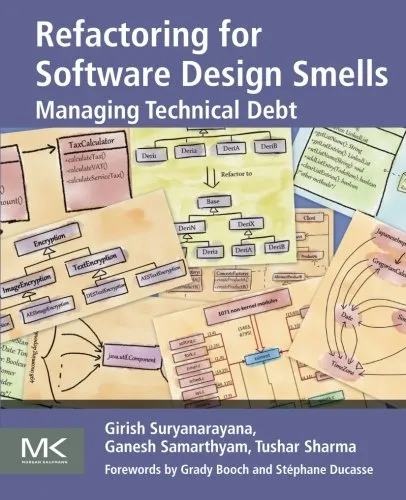
Girish Suryanarayana,Ganesh Samarthyam,Tushar Sharma
0 reviews
Published
pages
views
Introduction to "Refactoring for Software Design Smells: Managing Technical Debt" Welcome to an in-depth exploration of "Refactoring for Software Design Smells: Managing Technical Debt," a book authored by Girish Suryanarayana, Ganesh Samarthyam, and Tushar Sharma. Our b
Before you read
Welcome to an in-depth exploration of "Refactoring for Software Design Smells: Managing Technical Debt," a book authored by Girish Suryanarayana, Ganesh Samarthyam, and Tushar Sharma. Our book aims to provide software developers and engineers with practical approaches to effectively managing technical debt by identifying, analyzing, and refactoring design smells. This guide serves as an essential resource for those who are determined to maintain the quality and sustainability of their software systems.
The book delves into the concept of design smells—symptoms of poor design that indicate deeper problems in the codebase—and presents proven techniques to refactor these issues. Broken into six comprehensive chapters, the content walks you through identifying design smells, understanding their causes, and determining the best strategies for refactoring. Throughout the book, we provide real-world examples and case studies that illustrate the process of mitigating technical debt effectively.
A distinctive feature of the book is its emphasis on design patterns and anti-patterns, providing guidance on how to differentiate between them. By focusing on design smells, we shed light on their impact on software sustainability and long-term project success. Additionally, we provide insights into aligning refactoring efforts with business goals and strategies, ensuring that technical debt is managed in a way that aligns with organizational objectives.
"Technical debt is not merely a technical issue; it's a symptom of how well an organization balances its immediate goals with the need for sustainable progress."
"Design smells signal a need for immediate attention, but they also present an opportunity to improve, innovate, and align with future objectives."
In an era where software systems are integral to business operations, managing the hidden costs of software degradation has become paramount. This book is pivotal for software professionals who are keen on mastering the art of maintaining high-quality code. "Refactoring for Software Design Smells: Managing Technical Debt" equips readers with not just theoretical knowledge, but actionable insights that can be applied in real-world scenarios.
The relevance of this book extends beyond technical roles; it is a vital resource for project managers and stakeholders who need a clear understanding of the implications of technical debt. By framing technical debt within the context of business strategy and technical excellence, the book ensures that organizations can strike a balance between innovation and maintaining robust, agile systems.
Your question is answered in the context of this title and author. Each answer uses 2 points.
0 reviews, 4.5 average out of 5
Sign in to publish a review.
Ask a focused question and learn from the community.
Related references that continue this learning path.
Steve McConnell