Book guide and evaluation
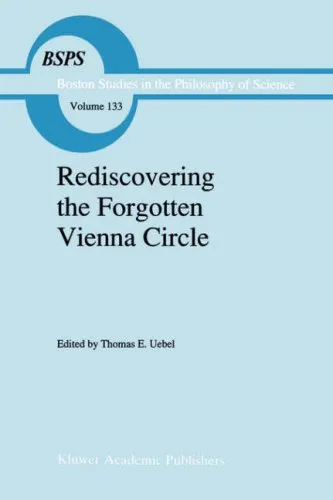
Rediscovering the Forgotten Vienna Circle: Austrian Studies on Otto Neurath and the Vienna Circle
Th.E Uebel
English
Intermediate
novel
4.3 / 5
0 reviews
1991
Published
326
pages
584
views
Introduction Welcome to an exploration of one of the most intriguing intellectual gatherings of the early 20th century, the Vienna Circle, through the lens of one of its most dynamic members, Otto Neurath. 'Rediscovering the Forgotten Vienna Circle: Austrian St
Before you read
What will you get from this book?
Introduction
Welcome to an exploration of one of the most intriguing intellectual gatherings of the early 20th century, the Vienna Circle, through the lens of one of its most dynamic members, Otto Neurath. 'Rediscovering the Forgotten Vienna Circle: Austrian Studies on Otto Neurath and the Vienna Circle' seeks to illuminate the contributions and enduring influence of this remarkable group of philosophers and scientists who profoundly impacted the development of logical positivism and scientific philosophy.
Detailed Summary of the Book
This book delves into the history and philosophy of the Vienna Circle, a collective of thinkers including Moritz Schlick, Rudolf Carnap, and Karl Popper, who gathered during the interwar period in Vienna. Though often overshadowed by other members, Otto Neurath played a critical role in the dissemination of the Circle's thoughts and ideals. This work reexamines his efforts, particularly focusing on his contributions to social science, methodology, and visual education. By rediscovering Neurath’s multifaceted contributions, the book sheds light on the larger narrative of the Vienna Circle, revealing fresh insights and a deeper understanding of its legacy.
The book is structured into several parts, each focusing on different aspects of Neurath's work and the broader activities of the Vienna Circle. It combines historical analysis with thematic explorations, considering the socio-political influences on the Circle’s philosophy. As a result, readers gain a comprehensive view of how the Vienna Circle's ideas continue to resonate in contemporary discussions on philosophy of science and epistemology.
Key Takeaways
- The Vienna Circle was more than just a philosophical movement; it was a hub of interdisciplinary ideas that filtered into various scientific and social fields.
- Otto Neurath was instrumental in the Circle, not only in philosophy but also in pioneering visual education through his invention of ISOTYPE (International System of Typographic Picture Education).
- The book provides insights into how the socio-political climate of pre-war Vienna shaped the Circle's philosophies, leading to the development of logical positivism as a rigorous scientific method of inquiry.
- The contributions of the Vienna Circle extend beyond philosophy, influencing economics, sociology, and even modern design.
Famous Quotes from the Book
"Neurath’s vision of unifying science and society was more than just a philosophical journey; it was an enduring commitment to the belief that science could transform the world."
"The Vienna Circle remains a testament to the power of interdisciplinary dialogue in advancing human understanding and cooperation."
Why This Book Matters
The book 'Rediscovering the Forgotten Vienna Circle' is vital not only for those interested in the history of philosophy but also for readers who wish to understand the broader impact of philosophical ideas on society. By focusing on the often overlooked contributions of Otto Neurath, the book provides a nuanced perspective on the Vienna Circle's work, suggesting that its influence extends far beyond the confines of academia. It highlights the Circle's role in the development of scientific methods that prioritize clarity, precision, and empirical testing—principles that continue to underpin much of modern scientific inquiry.
In today's world, where interdisciplinary approaches to problem-solving are more important than ever, understanding the Vienna Circle's legacy offers valuable lessons. This book invites readers to reconsider the synergy between science and society, a theme as relevant now as it was in the early 20th century.
Ask this book
Your question is answered in the context of this title and author. Each answer uses 2 points.
Sign in to ask the book assistant.
Reader reviews
0 reviews, 4.3 average out of 5
No reviews yet
If you have read this book, help the next reader with your experience.
Write a review
Sign in to publish a review.
Reader questions and answers
Ask a focused question and learn from the community.
Sign in to ask or answer a question.
No questions yet
Be the first to ask a clear, useful question.
What to read next
Related references that continue this learning path.

time travelers of the hard times
( MEI ) JIE KE ( MEI ) LI SI TE ZHOU XIAO YAN /Maria Jack
2008
View book