
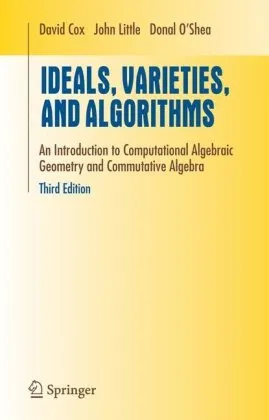
Ideals, varieties, and algorithms: an introduction to computational algebraic geometry and commutative algebra
David A. Cox,John Little,Donal O’Shea
2007
View book
Book guide and evaluation
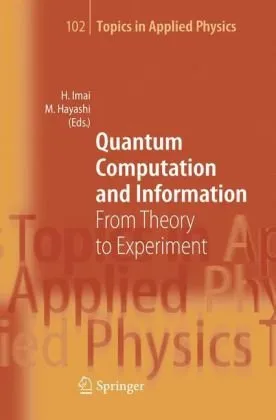
Hiroshi Imai,Masahito Hayashi
0 reviews
Published
pages
views
Introduction to "Quantum Computation and Information: From Theory to Experiment" Step into the multifaceted universe of quantum computation and information, where theoretical concepts meet experimental breakthroughs. This book serves as a navigational compass that bridges
Before you read
Step into the multifaceted universe of quantum computation and information, where theoretical concepts meet experimental breakthroughs. This book serves as a navigational compass that bridges the gap between abstract mathematical models and real-world quantum systems, offering both seasoned researchers and newcomers invaluable insights into this cutting-edge field.
In "Quantum Computation and Information: From Theory to Experiment," we embark on an intellectually stimulating journey that dissects the complexities and nuances of quantum computation and information through both theoretical constructs and experimental validations. The book begins with foundational concepts of quantum mechanics, setting the stage for an in-depth exploration of quantum algorithms, cryptographic protocols, and computational models. Throughout, we juxtapose theoretical postulations with experimental realizations, offering readers a comprehensive understanding of how ideas transition from concept to practice. We engage readers with discussions on quantum gates and circuits, error correction techniques, and quantum complexity theory, each elucidated with precision and clarity.
One of the critical takeaways from this book is the profound impact of quantum computation on the future of information technology. Readers will gain insights into the practical implications of quantum principles that promise to revolutionize the fields of cryptography, secure communication, and complex problem-solving. The text demystifies quantum processes by presenting them alongside clear examples and meticulous experiments, ensuring readers not only grasp theoretical notions but also appreciate their real-world applications. Another essential takeaway is the significance of interdisciplinary collaboration, as the book advocates for a confluence of mathematicians, physicists, engineers, and computer scientists in advancing quantum technologies.
"In the realm of quantum computation, the line between the imaginable and the achievable is continually blurred by the ever-evolving dance between thought and experiment."
"As we decode the language of qubits, we unravel a narrative that challenges the classical confines of computation and projects a vision of limitless potential."
As quantum computing inches closer to practical realization, the importance of a resource that marries theory with experiment cannot be overstated. This book is paramount for students and professionals seeking to deepen their understanding of quantum computation technology. It not only equips readers with the tools to think critically about quantum principles but also inspires innovative approaches to harnessing quantum power. The blend of comprehensive theoretical exploration and practical experimentation makes it an indispensable guide in navigating the challenges and opportunities that quantum computation presents in our era. With topics carefully curated to encourage both contemplation and application, "Quantum Computation and Information: From Theory to Experiment" stands as a critical resource at the forefront of scientific progress.
Your question is answered in the context of this title and author. Each answer uses 2 points.
0 reviews, 4.4 average out of 5
Sign in to publish a review.
Ask a focused question and learn from the community.
Related references that continue this learning path.
David A. Cox,John Little,Donal O’Shea
Michael T. Goodrich,Roberto Tamassia,Michael H. Goldwasser