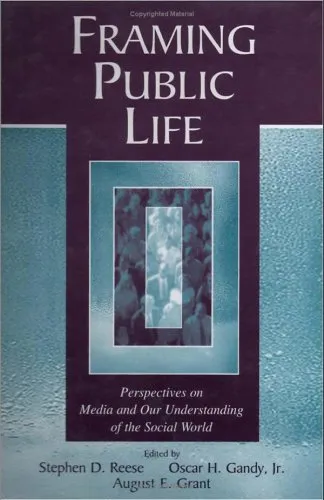
Framing Public Life: Perspectives on Media and Our Understanding of the Social World
Stephen D. Reese,Oscar H. Gandy Jr.,August E. Grant
2001
View book
Book guide and evaluation
Jacques Ellul
0 reviews
Published
pages
views
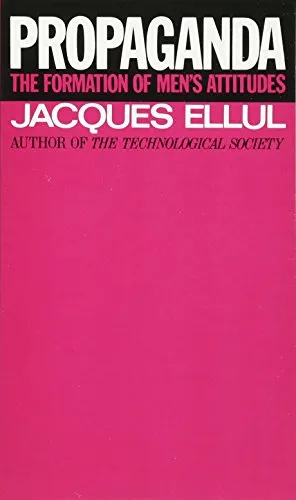
Propaganda: The Formation of Men’s Attitudes Mass communication strategies, manipulation of public opinion Exploring Propaganda: The Formation of Men’s Attitudes, a seminal study on human perception and influence in modern society. Analytical Summary Written by Ja
Before you read
Written by Jacques Ellul, Propaganda: The Formation of Men’s Attitudes stands as one of the most enduring examinations of how propaganda shapes societies, individuals, and collective decision-making. First published in 1965, the book dives deep into the mechanisms, techniques, and psychological underpinnings of propaganda, particularly in the context of modern communication channels, mass media, and political systems.
Ellul moves beyond simplistic definitions, arguing that propaganda is not merely about overtly manipulative political messaging, but is a pervasive force embedded in daily life. It operates through education, advertising, journalism, and entertainment, influencing attitudes progressively and often without the subject’s conscious awareness. This expansive interpretation challenges the reader to recognize propaganda as a complex societal phenomenon that intersects with technology, culture, and human behavior.
Anchored in historical examples and theoretical rigor, Ellul’s analysis reveals how propaganda adapts to new media landscapes and leverages emotional, rational, and social levers to embed ideas. His work explores the dual dimensions of political propaganda—both agitation and integration—and how they work hand-in-hand to govern perception and action. These frameworks remain relevant in our age of algorithmic feeds, viral content, and opinion polarization.
The text also challenges the notion that propaganda is exclusively a tool of authoritarian regimes. Democratic societies, according to Ellul, also engage in sophisticated forms of propaganda to sustain public consensus, making his arguments indispensable for political scientists, media scholars, and civic leaders seeking to understand the mechanics of influence and control.
Ellul’s work distills propaganda into a structural and psychological process that transcends cultural boundaries and political systems, offering profound insights into everyday communication.
One major takeaway is that propaganda is continuous; it reinforces attitudes over time rather than relying solely on rapid persuasion. This persistence makes it subtle yet powerful.
Ellul emphasizes that modern citizens, inundated with information, are paradoxically more susceptible to propaganda because they lack adequate frameworks to critically assess messaging.
Another crucial point is the integration of propaganda into technological systems. Mass communication amplifies its reach and authority, especially when intertwined with the credibility of “objective” information sources.
Finally, the book clarifies how propaganda aligns individual behavior with group norms, ensuring societal cohesion even when such cohesion might limit independent thought.
“Propaganda is not a matter of manipulation; it is a matter of integration.”Jacques Ellul
“In the modern world, propaganda is a necessary organ of government and of life.”Unknown
“To be effective, propaganda must be a constant activity.”Jacques Ellul
Propaganda: The Formation of Men’s Attitudes matters because it reframes how we understand influence in democratic and authoritarian contexts, revealing hidden structures of persuasion that affect all citizens.
In today’s information-saturated landscape, the themes of mass communication strategies and manipulation of public opinion resonate more than ever. Ellul’s methodical exploration helps readers identify, analyze, and confront the narratives shaping their beliefs and behaviors.
The book stands as an essential tool for academics studying political science, communication theory, sociology, and psychology, as well as for professionals engaged in media, advertising, public relations, and governance. Its cross-disciplinary relevance ensures it remains a touchstone for understanding both historical and contemporary propaganda.
The insights presented in Propaganda: The Formation of Men’s Attitudes remain profoundly relevant, offering tools to identify and navigate influence in our hyperconnected era.
Jacques Ellul’s unwavering analysis is not simply an academic exercise—it is a call to action for readers to critically engage with the world around them, to question the narratives they consume, and to relish informed discourse. Whether as a scholar, professional, or curious reader, embracing these lessons can foster resilience against manipulation and empower communities to uphold transparent, thoughtful dialogue.
Now is the time to read, share, and discuss Propaganda: The Formation of Men’s Attitudes with others committed to understanding the forces shaping contemporary society.
Your question is answered in the context of this title and author. Each answer uses 2 points.
0 reviews, 4.5 average out of 5
Sign in to publish a review.
Ask a focused question and learn from the community.
Related references that continue this learning path.
Stephen D. Reese,Oscar H. Gandy Jr.,August E. Grant
Anthony DiMaggio