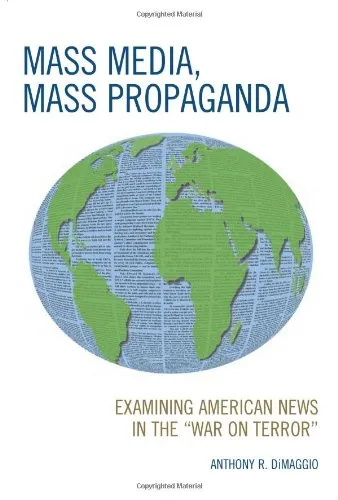
Mass Media, Mass Propaganda: Understanding the News in the 'War on Terror'
Anthony DiMaggio
2008
View book
Book guide and evaluation
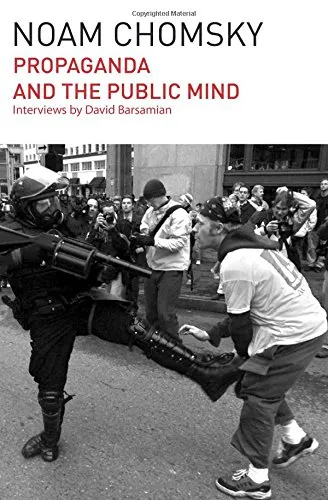
Noam Chomsky,David Barsamian
0 reviews
Published
pages
views
Propaganda and the Public Mind media influence, political discourse Propaganda and the Public Mind offers deep insights into media, power, and democracy through critical conversations and analysis. Analytical Summary In Propaganda and the Public Mind, renowned linguist and
Before you read
In Propaganda and the Public Mind, renowned linguist and political thinker Noam Chomsky engages in a series of penetrating dialogues with journalist David Barsamian, exploring the intricate interplay between media systems, state power, and public perception. This work is not merely a record of conversations; it is a structured dissection of how narratives are constructed, maintained, and weaponized within modern democracies.
The book examines how mass communication channels, especially corporate media entities, often serve as conduits for elite interests rather than as facilitators of informed public debate. Drawing from historical examples, policy analysis, and linguistic critique, Chomsky and Barsamian illuminate the mechanisms by which consent is manufactured and dissent marginalized.
While the precise publication year is information unavailable due to the absence of reliable public sources in this context, its relevance remains timeless. The dialogue-based format invites readers into an accessible yet rigorous intellectual space, encouraging critical examination of political discourse and the underlying frameworks guiding public opinion.
The insights distilled from Propaganda and the Public Mind challenge conventional assumptions and reveal hidden dimensions of how information shapes democratic societies.
First, the authors persuasively argue that media influence is not neutral but operates within economic and political structures that privilege certain narratives over others.
Second, the work underscores the importance of vigilant, independent journalism and the active engagement of citizens in scrutinizing official narratives.
Third, it provides a framework for understanding how language and framing in political discourse can subtly direct public perception without overt coercion.
"If you want to understand power, look at how reality is constructed for the public."Unknown
"The media's role is less about informing and more about reinforcing the status quo."Unknown
“Critical thinking begins when you question the stories you are told.”Unknown
Propaganda and the Public Mind holds enduring importance for scholars, journalists, policymakers, and engaged citizens who wish to understand the engines of influence that drive modern societies.
In an era of fragmented communication and rapid information exchange, the book’s dissection of media influence and political discourse serves as a critical tool for those seeking clarity amid the noise. By reading it, one develops a sharper awareness of how public debates are framed and why certain viewpoints gain traction while others are ignored.
This awareness is not merely academic—it informs practice, activism, and leadership in democratic contexts, helping to create more resilient and thoughtfully engaged communities.
Reading Propaganda and the Public Mind is an invitation to peel back the layers of manufactured narratives and confront the structures that shape civic life.
In doing so, you not only gain a deeper understanding of media influence and political discourse, but you also equip yourself with the intellectual tools necessary to participate meaningfully in democratic processes. This book stands as both a call to awareness and a catalyst for discussion—between friends, colleagues, and communities.
Take the next step: engage with its ideas, share them, and challenge the assumptions that underpin public narratives. In our intertwined world, such engagement is not optional—it is essential.
Your question is answered in the context of this title and author. Each answer uses 2 points.
0 reviews, 5.0 average out of 5
Sign in to publish a review.
Ask a focused question and learn from the community.
Related references that continue this learning path.
Anthony DiMaggio