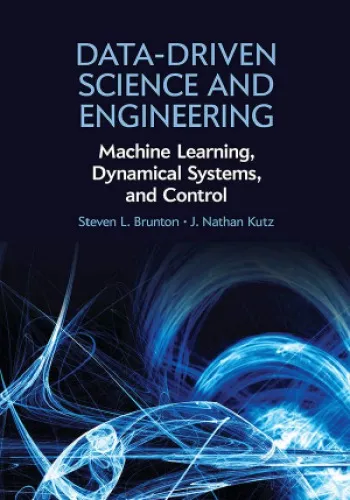
Data-Driven Science and Engineering: Machine Learning, Dynamical Systems, and Control
Steven L. Brunton,J. Nathan Kutz
2019
View book
Book guide and evaluation
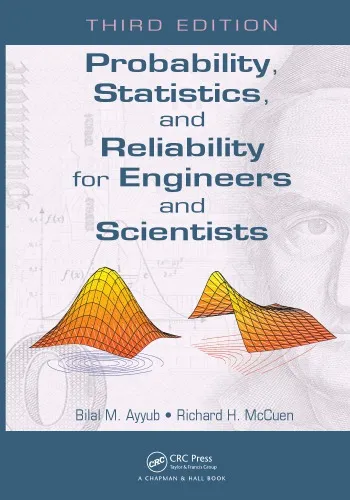
Ayyub, Bilal M.;McCuen, Richard H.
0 reviews
Published
pages
views
Introduction to "Probability, Statistics, and Reliability for Engineers and Scientists" "Probability, Statistics, and Reliability for Engineers and Scientists" by Ayyub, Bilal M., and McCuen, Richard H. serves as a comprehensive resource tailored to meet the growin
Before you read
"Probability, Statistics, and Reliability for Engineers and Scientists" by Ayyub, Bilal M., and McCuen, Richard H. serves as a comprehensive resource tailored to meet the growing demands of engineers and scientists who require a deep understanding of statistical methods, probabilistic modeling, and reliability analysis. Written with precision and clarity, this book bridges the gap between theoretical probability and its practical applications, making it relevant to a wide range of technical disciplines.
In today's rapidly advancing world, the ability to model uncertainty and manage risks has become paramount across engineering, research, and scientific fields. This book not only introduces core concepts but also provides extensive examples, case studies, and exercises to help reinforce learning. Whether you're a student, practicing professional, or researcher, this text offers valuable insights and tools for dealing with variability and designing systems under uncertainty.
The book is structured to guide readers through the essential components of probability, statistics, and reliability without requiring prior advanced mathematical knowledge. It covers a wide range of topics — starting with fundamentals like probability theory, random variables, and distributions — before advancing to statistical inference, hypothesis testing, and regression analysis.
One of the standout features of the book is its focus on reliability engineering and risk analysis. By incorporating real-world examples drawn from engineering and scientific scenarios, the authors help link theoretical concepts with practical applications. The book emphasizes frameworks for decision-making under uncertainty, enabling readers to approach problems logically and confidently.
In addition to its theoretical rigor, this text is application-oriented. It integrates statistical software tools and computational methods, making it a modern guide for data-driven engineering and scientific research. The collection of worked examples and exercises ensures that readers not only understand the concepts but can also apply them to real-life challenges such as system reliability, failure probabilities, and quality control.
Overall, the book is a blend of foundational theory, practical problem-solving techniques, and forward-thinking approaches tailored to meet the demands of today's engineering and scientific landscapes.
Readers will walk away with a balanced understanding of theoretical principles and practical techniques for analyzing uncertainty, which is crucial in engineering design, product quality, and performance assessment.
"The true challenge of engineering is not to eliminate uncertainty but to understand and manage it effectively."
"Probability is not just a mathematical abstraction; it is a tool for understanding and working with the uncertainties that pervade all aspects of life and technology."
"Reliability engineering is about designing systems that do not fail when the stakes are high."
Engineers, scientists, and researchers operate in a world filled with uncertainties. From designing resilient structures to predicting system failures, the ability to model and quantify uncertainty is critical to success. "Probability, Statistics, and Reliability for Engineers and Scientists" plays a pivotal role in equipping professionals with the tools they need to tackle these challenges head-on.
The book's emphasis on reliability analysis is particularly relevant in industries like aerospace, civil engineering, manufacturing, and technology, where the smallest failure can have significant consequences. By presenting methods to evaluate and improve system performance, the book helps reduce costs, enhance safety, and drive innovation.
Furthermore, the accessibility of the text means that it can be used by students as a foundational learning resource and by experienced professionals as an authoritative reference. In an age where data-driven decision-making dominates, this book ensures that engineers and scientists are equipped to navigate the complexities of probability, statistics, and reliability with confidence.
Your question is answered in the context of this title and author. Each answer uses 2 points.
0 reviews, 4.5 average out of 5
Sign in to publish a review.
Ask a focused question and learn from the community.
Related references that continue this learning path.
Steven L. Brunton,J. Nathan Kutz
ALAN. FRANKLIN AGRESTI (CHRISTINE. KLINGENBERG,BERNHARD.),Christine Franklin,Bernhard Klingenberg