
Book guide and evaluation
Probabilistic Machine Learning: An Introduction
Kevin P. Murphy
English
Advanced
Artificial Intelligence (AI)
4.3 / 5
0 reviews
2021
Published
863
pages
577
views
In 2012, I published a 1200-page book called “Machine learning: a probabilistic perspective”, whichprovided a fairly comprehensive coverage of the field of machine learning (ML) at that time, underthe unifying lens of probabilistic modeling. The book was well received, and won th
Before you read
What will you get from this book?
In 2012, I published a 1200-page book called “Machine learning: a probabilistic perspective”, whichprovided a fairly comprehensive coverage of the field of machine learning (ML) at that time, underthe unifying lens of probabilistic modeling. The book was well received, and won theDe Groot prizein 2013.The year 2012 is also generally considered the start of the “deep learning revolution”. The term“deep learning” refers to a branch of ML that is based on neural networks with many layers (hencethe term “deep”). Although this basic technology had been around for many years, it was in 2012when [KSH12] used deep neural networks (DNNs) to win the ImageNet image classification challengeby such a large margin that it caught the attention of the community. Related work appeared aroundthe same time in several other papers, including [Cir+10;Cir+11;Hin+12]. These breakthroughswere enabled by advances in hardware technology (in particular, the repurposing of fast graphicsprocessing units from video games to ML), data collection technology (in particular, the use of crowdsourcing to collect large labeled datasets such as ImageNet), as well as various new algorithmic ideas.Since 2012, the field of deep learning has exploded, with new advances coming at an increasingpace. Interest in the field has also exploded, fueled by the commercial success of the technology,and the breadth of applications to which it can be applied. Therefore, in 2018, I decided to write asecond edition of my book, to attempt to summarize some of this progress.By March 2020, my draft of the second edition had swollen to about 1600 pages, and I was stillnot done. Then the COVID-19 pandemic struck. I decided to put the book writing on hold, and to“pivot” towards helping with various COVID-19 projects (see e.g., [MKS21;Wah+21]). However, inthe Fall, when these projects were taking less of my cycles, I decided to try to finish the book. Tomake up for lost time, I asked several colleagues to help me finish the last⇠10%of “missing content”.(See acknowledgements below.)In the meantime, MIT Press told me they could not publish a 1600 page book, and that I wouldneed to split it into two volumes. The result of all this is two new books, “Probabilistic MachineLearning: An Introduction”, which you are currently reading, and “Probabilistic Machine Learning:Advanced Topics”, which is the sequel to this book [Mur22]. Together these two books attempt topresent a fairly broad coverage of the field of ML c. 2021, using the same unifying lens of probabilisticmodeling and Bayesian decision theory that I used in the first book.Most of the content from the first book has been reused, but it is now split fairly evenly betweenthe two new books. In addition, each book has lots of new material, covering some topics from deeplearning, but also advances in other parts of the field, such as generative models, variational inference
xxviiiPrefaceand reinforcement learning. To make the book more self-contained and useful for students, I havealso added some more background content, on topics such as optimization and linear algebra, thatwas omitted from the first book due to lack of space. Advanced material, that can be skipped duringan introductory level course, is denoted by an asterisk * in the section or chapter title. In the future,we hope to post sample syllabuses and slides online.Another major change is that nearly all of the software now uses Python instead of Matlab. (Inthe future, we hope to have a Julia version of the code.) The new code leverages standard Pythonlibraries, such as numpy, scipy, scikit-learn, etc. Some examples also rely on various deep learninglibraries, such asTensorFlow,PyTorch,andJAX. In addition to the code to create all the figures,there are supplementary Jupyter notebooks to accompany each chapter, which discuss practicalaspects that we don’t have space to cover in the main text. Details can be found atprobml.ai.AcknowledgementsI would like to thank the following people for helping me to write various parts of this book:•Frederik Kunstner, Si Yi Meng, Aaron Mishkin, Sharan Vaswani, and Mark Schmidt who helpedwrite parts ofChapter8(Optimization).•Lihong Li, who helped writeSec.5.3(Bandit problems *).•Mathieu Blondel, who helped writeSec.13.3(Backpropagation).•Roy Frostig, who wroteSec.7.8.8(Functional derivative notation *)andSec.13.3.5(Automaticdifferentiation in functional form *).•Justin Gilmer, who helped writeSec.14.7(Adversarial Examples *).•Krzysztof Choromanski, who helped writeSec.15.6(Efficient transformers *).•Colin Raffel, who helped writeSec.19.2(Transfer learning)andSec.19.3(Semi-supervisedlearning).•Bryan Perozzi, who helped writeChapter23(Graph embeddings *).•Zico Kolter, who helped write parts ofChapter7(Linear algebra).I would like to thank John Fearns and Peter Cerno for carefully proofreading the book, as well asfeedback from many other people, including 4 anonymous reviewers solicited by MIT Press.I would like to thank Mahmoud Soliman for writing all the “back-office” code, that connects latex,colab, github and GCP. I would like to thank the authors of [Zha+20], [Gér17]and[Mar18]forlettingme reuse or modify some of their open source code from their own excellent books. I would also liketo thank many other members of the github community for their code contrbutions (see thefull listof names).Finally I would like to thank my manager at Google, Doug Eck, for letting me spend companytime on this book, and my wife Margaret for letting me spend family time on it, too. I hope myefforts to synthesize all this material together in one place will help to save you time in your journeyof discovery into the “land of ML”.Kevin Patrick MurphyPalo Alto, CaliforniaApril 2021
Ask this book
Your question is answered in the context of this title and author. Each answer uses 2 points.
Sign in to ask the book assistant.
Reader reviews
0 reviews, 4.3 average out of 5
No reviews yet
If you have read this book, help the next reader with your experience.
Write a review
Sign in to publish a review.
Reader questions and answers
Ask a focused question and learn from the community.
Sign in to ask or answer a question.
No questions yet
Be the first to ask a clear, useful question.
What to read next
Related references that continue this learning path.
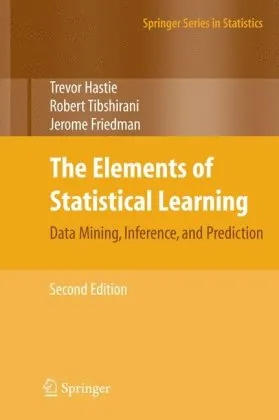
The elements of statistical learning: Data mining, inference, and prediction
Trevor Hastie,Robert Tibshirani,Jerome Friedman
2009
View book
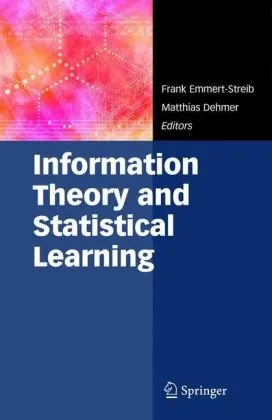
Information theory and statistical learning
Ray J. Solomonoff (auth.),Frank Emmert-Streib,Matthias Dehmer (eds.)
2009
View book
The Definitive Guide to Google Vertex AI: Accelerate your machine learning journey with Google Cloud Vertex AI and MLOps
Jasmeet Bhatia | Kartik Chaudhary
2023
View book