
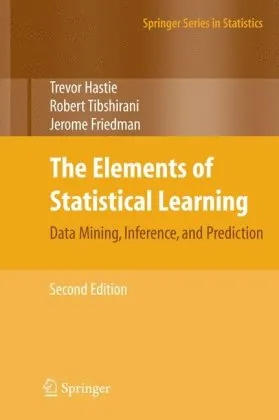
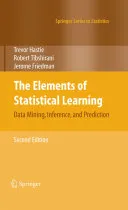
The elements of statistical learning: Data mining, inference, and prediction
Trevor Hastie,Robert Tibshirani,Jerome Friedman
2009
View book
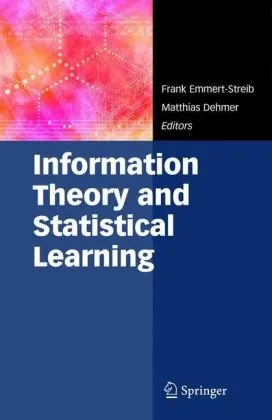
Book guide and evaluation
Ray J. Solomonoff (auth.),Frank Emmert-Streib,Matthias Dehmer (eds.)
0 reviews
Published
pages
views
Introduction to "Information Theory and Statistical Learning" Welcome to the captivating world of "Information Theory and Statistical Learning," a profound journey through the intersection of mathematics, data science, and learning algorithms. Authored by emi
Before you read
Welcome to the captivating world of "Information Theory and Statistical Learning," a profound journey through the intersection of mathematics, data science, and learning algorithms. Authored by eminent intellectuals Ray J. Solomonoff, Frank Emmert-Streib, and Matthias Dehmer, this book seamlessly bridges the theoretical underpinnings of information theory with practical methodologies of statistical learning.
In this comprehensive guide, "Information Theory and Statistical Learning" explores the symbiotic relationship between two pivotal domains: information theory and statistical learning. The book delves deep into the quantification, storage, and communication of information, while intricately linking these concepts to the techniques used for learning from data.
The authors meticulously unravel the historical evolution of information theory, highlighting its rich legacy in encoding, data compression, and transmission efficiency. By positioning these core principles alongside statistical learning, readers gain insight into the practical applications of these theories in contemporary data science, machine learning, and artificial intelligence.
Each chapter is strategically designed to build upon prior knowledge, ensuring the content is accessible to both novices and seasoned professionals. From deep-diving into entropy and mutual information to dissecting the nature of support vector machines and neural networks, this book offers a holistic view of how data-driven decision-making is fundamentally intertwined with information theory's core tenets.
"Information Theory and Statistical Learning" aims to:
By the end of this book, readers will have acquired the ability to synthesize theoretical concepts with practical data handling skills, paving the way for advanced research and application in numerous scientific fields.
The authors thoughtfully intersperse the narrative with profound insights, reminiscent of the interdisciplinary nature of the book:
"In a world inundated with data, our ability to distill wisdom from information is the key to unlocking the future."
"The marriage between information theory and statistical learning is one of rigor and creativity, establishing the foundation of data sciences."
"Information Theory and Statistical Learning" is not merely an academic exploration; it's a crucial resource in our data-driven age. As every industry inch towards data-centric models, understanding the theories and methodologies elucidated in this book grants readers a competitive edge.
By shedding light on the mechanics behind algorithms and data processes, it enriches our comprehension of how modern technologies operate. This book is valuable not only for computer scientists and data analysts but also for anyone interested in the analytics that inform our increasingly digital society.
Persian Summary
Your question is answered in the context of this title and author. Each answer uses 2 points.
0 reviews, 4.0 average out of 5
Sign in to publish a review.
Ask a focused question and learn from the community.
Related references that continue this learning path.
Trevor Hastie,Robert Tibshirani,Jerome Friedman
Gareth James,Daniela Witten,Trevor Hastie,Robert Tibshirani
Trevor Hastie,Robert Tibshirani,Jerome Friedman