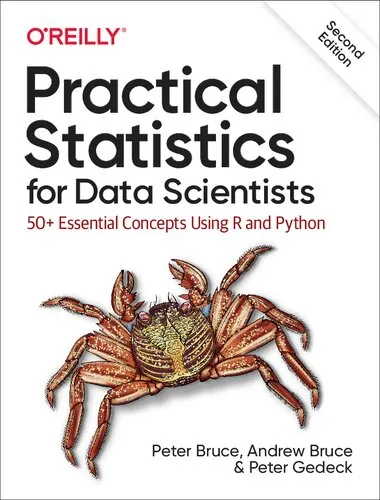
Practical Statistics for Data Scientists: 50+ Essential Concepts Using R and Python
Peter Bruce,Andrew Bruce,Peter Gedeck
2020
View book
Book guide and evaluation
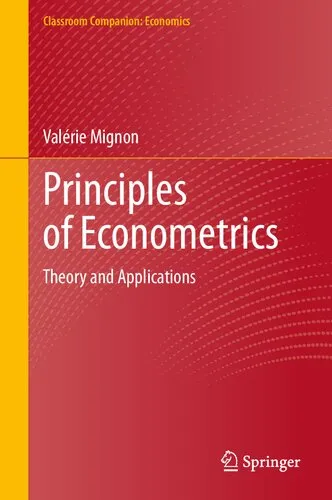
Valérie Mignon
0 reviews
Published
pages
views
Introduction to "Principles of Econometrics: Theory and Applications" Econometrics is the bridge that connects economic theory with real-world data analysis, equipping researchers, analysts, and students with the essential tools to understand and interpret economic phenomena
Before you read
Econometrics is the bridge that connects economic theory with real-world data analysis, equipping researchers, analysts, and students with the essential tools to understand and interpret economic phenomena. "Principles of Econometrics: Theory and Applications (Classroom Companion: Economics)" is a comprehensive guide designed to demystify the complex concepts of econometrics and make them accessible to learners and professionals alike. Written with clarity, precision, and a pedagogical approach, this book is a trusted resource that combines theoretical rigor with practical applications.
The book is meticulously crafted to cater to a vast audience, ranging from university students just starting their econometric journey to professionals aiming to refine their analysis skills. With its emphasis on both theoretical foundations and applied techniques, readers will find step-by-step instructions, illustrative examples, and an actionable approach to econometric modeling. Let us delve deeper into what makes this book an essential addition to your library.
The book is divided into chapters that build up gradually, ensuring that readers can progress seamlessly from basic concepts to advanced econometric methodologies. Beginning with an introduction to the principles of econometrics, it explores the scope, importance, and relevance of econometric analysis in today's data-driven world. Readers are introduced to concepts such as regression analysis, ordinary least squares (OLS), hypothesis testing, and diagnostic checks, which lay the foundation of econometric modeling.
One of the key highlights of the book is its practical approach. Real-world scenarios and datasets are used to demonstrate how econometric tools can be applied to analyze and interpret economic relationships. Multicollinearity, autocorrelation, and heteroskedasticity—some of the most critical challenges faced in econometric modeling—are explained in simple terms, accompanied by actionable strategies for resolution.
More advanced topics, such as time series analysis, panel data, and simultaneous equation modeling, are covered for those seeking to explore beyond the basics. Alongside sufficient mathematical rigor, the book emphasizes intuition and clarity, fostering a deep understanding of the assumptions and limitations inherent to these techniques. Supplementary material, including practice exercises and case studies, is provided to reinforce learning and encourage active engagement with the material.
Throughout the text, this book provides a wealth of thoughtful insights, motivating readers and offering a philosophical perspective on the role of econometrics. Here are some quotes that stand out:
"Econometrics is not just about crunching numbers; it's about uncovering the subtle patterns that define our economic lives."
"Modeling is an art and a science; econometrics helps us seamlessly integrate both to inform better decisions."
"Assumptions are the soul of every econometric model, and questioning them is the heart of econometric analysis."
In an age where data influences every aspect of decision-making, econometrics has become an indispensable tool. This book stands out for its ability to teach, inspire, and equip readers with the necessary skills to analyze and interpret economic data accurately. Unlike many other texts that focus solely on statistical theory or algorithm-based approaches, "Principles of Econometrics: Theory and Applications" strikes a fine balance between theory and practice. This ensures that readers not only understand the ‘how’ but also the ‘why’ behind econometric methods.
Further, the utility of this book extends beyond academia. Policy analysts, business strategists, and economic researchers can all benefit from the cogent explanations, real-world applications, and actionable insights provided in this text. It fosters critical thinking, deepens statistical knowledge, and enables problem-solving in real-world contexts—all of which are invaluable skills in today’s competitive and data-centric world.
By presenting econometrics as an accessible and versatile toolkit, this book empowers readers to tackle complex challenges, make informed predictions, and contribute meaningfully to the advancement of economic science. It truly embodies the ethos of applied and theoretical econometrics, making it an essential resource for learners and professionals alike.
Your question is answered in the context of this title and author. Each answer uses 2 points.
0 reviews, 4.0 average out of 5
Sign in to publish a review.
Ask a focused question and learn from the community.
Related references that continue this learning path.
Peter Bruce,Andrew Bruce,Peter Gedeck