Structure and Interpretation of Computer Programs - 2nd Edition
Harold Abelson,Gerald Jay Sussman
1996
View book
Book guide and evaluation
it-ebooks
0 reviews
Published
pages
views
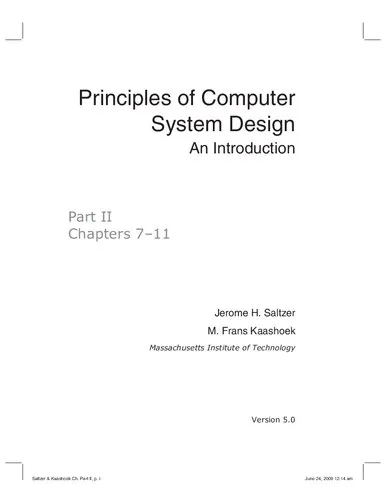
Introduction Welcome to the detailed exploration of "Principles of Computer System Design An Introduction Part II," a pivotal resource for those delving into the intricate world of computer systems. This book, a part of the MIT 6.004 curriculum, offers a comprehensive look
Before you read
Welcome to the detailed exploration of "Principles of Computer System Design An Introduction Part II," a pivotal resource for those delving into the intricate world of computer systems. This book, a part of the MIT 6.004 curriculum, offers a comprehensive look into the principles and innovative ideas that form the backbone of modern computer systems. It is designed to bridge the gap between theoretical concepts and practical applications, making it an essential read for students, educators, and practitioners alike.
The book delves into the essential principles of computer system design by presenting a layered approach to understanding the complex structures and functionalities inherent in modern computational devices. The second part builds on the foundation laid in the first by diving deeper into the areas of system architecture, data storage solutions, network design, and concurrent processing. Each chapter is meticulously crafted to progressively introduce higher levels of abstraction, encouraging readers to piece together small components into a more encompassing view of system architecture.
With real-world examples and extensive theoretical frameworks, the book not only discusses how systems are designed but lays out why systems are designed in this manner. It relates to crucial concepts such as modularity, abstraction, and performance analysis while highlighting common trade-offs encountered in system design. Throughout its pages, readers will find a balance between classic theories and emerging trends, making it both a timeless resource and a contemporary touchstone.
"The art of computer system design is finding the plethora of ways to creatively utilize resources, while minimizing complexity."
"Balancing the simplicity of abstraction with the necessity of precision is the cornerstone of effective system design."
"The true test of a design's elegance lies not in its initial creation, but in its ability to adapt to new demands over time."
"Principles of Computer System Design An Introduction Part II" matters because it provides a deep dive into the core principles and methodologies that guide the design and construction of computer systems. As our reliance on computers and digital devices grows, understanding the frameworks and blueprints that underpin these technologies is crucial for anyone involved in the field. The book emphasizes the importance of adaptive design, encouraging a mindset that is crucial for tackling the rapid evolution of technology.
Additionally, the book is a testament to MIT's forward-thinking approach in education, pushing boundaries in how theoretical knowledge is translated into practical skills. It is aligned with the need for scalable, robust, and efficient system designs that are increasingly critical not just in academia, but in industries across the globe. For students, educators, and technology enthusiasts, embracing the principles set forth in this book is a step towards mastering the art and science of computer system design.
Your question is answered in the context of this title and author. Each answer uses 2 points.
0 reviews, 4.3 average out of 5
Sign in to publish a review.
Ask a focused question and learn from the community.
Related references that continue this learning path.
Harold Abelson,Gerald Jay Sussman
James Reinders,James Jeffers