Introduction
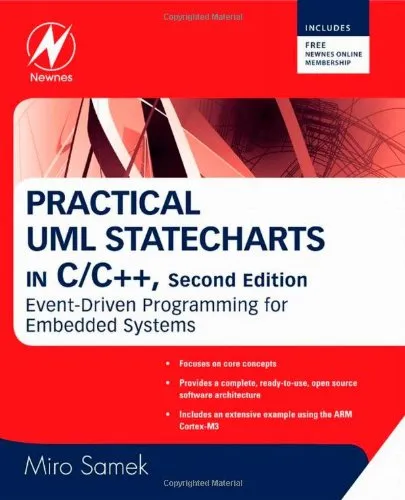
Welcome to 'Practical UML Statecharts in C-C++: Event-Driven Programming for Embedded Systems', an insightful journey into the world of designing and implementing state-of-the-art embedded systems using UML statecharts and C/C++. This book is not just a guide but a hands-on roadmap for engineers, developers, and enthusiasts eager to elevate their proficiency in building reliable, responsive, and maintainable systems.
Detailed Summary of the Book
The book delves into the practical applications of UML (Unified Modeling Language) statecharts, a powerful visual tool for modeling complex event-driven behavior. It takes readers from the fundamental principles of state-based design through to advanced techniques and strategies to implement state machines in C/C++. This journey is scaffolded with examples and practical exercises, enabling readers to apply the theory in real-world scenarios.
Miro Samek, the author, embraces a hands-on approach, ensuring that each concept is backed by practical application. Readers will explore the intricacies of designing events, states, transitions, and actions. Through a series of illustrative examples, the book leads you through building robust systems capable of handling various intricacies inherent in embedded software.
The narrative also incorporates a discussion on hierarchical state machines, encapsulations, and domain-specific extensions. Readers will learn how to enhance their designs to achieve greater modularity and reusability. Furthermore, the implementation sections cover pragmatic software patterns essential for state machine logic and pertinent to real-time embedded systems.
Key Takeaways
- Understanding UML statecharts and their application to embedded systems.
- Implementing efficient event-driven systems using state machines in C/C++.
- Mastering concepts of state hierarchy, nesting, and parallel execution.
- Developing strategies for real-time system constraint management and optimization.
- Gaining insights into software architecture patterns and best practices for embedded systems.
Famous Quotes from the Book
“The crux of designing scalable and maintainable software lies in mastering the art of decomposing complex behavior into smaller, manageable states.”
“By bringing visual modeling closer to the earned reality of code, we empower developers to build systems that not only work but endure.”
Why This Book Matters
In a world increasingly reliant on embedded systems, mastering the art of state-machine-based design has become essential. This book matters because it provides a pragmatic, code-centric approach to applying UML statecharts to embedded systems, which is crucial for developing robust and scalable systems.
The unique blend of theoretical discourse with practical coding exercises ensures that readers can build intuition and confidence in applying the concepts to their projects. Furthermore, the book introduces concepts that are pivotal to designing systems with real-time critical operations—an area where reliability and performance aren't just desirable, but vital.
The relevance of this book is further underscored by the rapid growth of the embedded systems sector, which underpins a broad spectrum of modern technology including automotive systems, consumer electronics, and industrial automation. By equipping readers with the necessary skills to harness the power of UML statecharts integrated with C/C++, it ensures they remain at the forefront of technological advancement.