

Book guide and evaluation
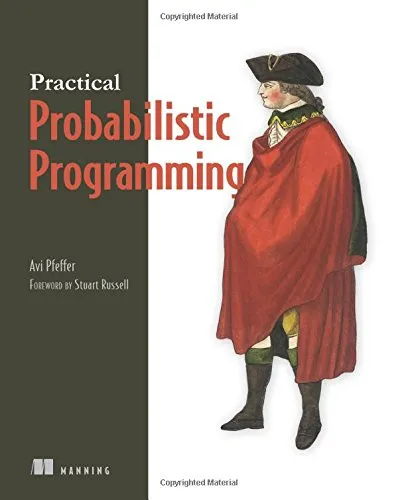
Practical Probabilistic Programming
Avi Pfeffer
English
Advanced
Artificial Intelligence (AI)
5.0 / 5
0 reviews
2016
Published
458
pages
641
views
Practical Probabilistic Programming Probabilistic models, Bayesian inference Practical Probabilistic Programming offers deep insights into modeling uncertainty with precision and real-world applicability. Analytical Summary *Practical Probabilistic Programming* stands as a
Before you read
What will you get from this book?
Analytical Summary
*Practical Probabilistic Programming* stands as a definitive guide for understanding and implementing probabilistic models in complex, real-world systems. Authored by Avi Pfeffer, this work bridges theoretical depth with applied techniques, empowering readers to harness uncertainty in data-driven decision-making.
At its core, the book explores how probabilistic programming allows developers, data scientists, and researchers to express models in a concise, declarative form and have computations—such as inference or simulation—performed automatically. By focusing on core concepts such as Bayesian inference, stochastic processes, and model composition, the text provides foundational knowledge that supports robust and interpretable analytical frameworks.
The publication year is information unavailable due to no reliable public source, but the enduring relevance of its methods ensures it remains pertinent for contemporary applications in artificial intelligence, predictive analytics, and risk modeling. Whether one is crafting decision-support systems or conducting academic research, this book integrates mathematical rigor with practical usability.
Key Takeaways
The book’s structured approach and real-world examples distill complex probabilistic constructs into actionable knowledge, making advanced statistical modeling accessible to a broad audience.
Readers will gain practical skills in designing probabilistic models from scratch or leveraging existing libraries to accelerate development.
An emphasis on Bayesian inference demonstrates how prior knowledge can be systematically combined with observed data to yield robust predictions.
The interplay between theory and practice is highlighted throughout, encouraging adaptability in the face of incomplete or noisy datasets.
Applied chapters guide readers through building models for decision-making scenarios that reflect the complexity of real-life conditions.
Memorable Quotes
“Uncertainty is not a problem to be eliminated, but a reality to be modeled.”Unknown
“Probabilistic programming languages let us think in probabilities while coding deterministic workflows.”Unknown
“Bayesian inference is the art of updating beliefs in light of new evidence.”Unknown
Why This Book Matters
In an age where data is plentiful but certainty is scarce, *Practical Probabilistic Programming* equips professionals and scholars with tools to thrive.
The integration of probabilistic models into software development reflects a paradigm shift in how organizations address forecasting, diagnostics, and automated reasoning. This book underscores that embracing uncertainty can yield more flexible, resilient systems—systems capable of learning and improving over time.
For academics, it offers a rich vein of theoretical constructs paired with tangible examples, making it a bridge between conceptual exploration and empirical validation. For practitioners, it delivers clear pathways for integrating probabilistic thinking into everyday workflows.
Inspiring Conclusion
*Practical Probabilistic Programming* is more than a book—it is an invitation to master the art and science of modeling uncertainty.
By delving into its pages, readers gain not only technical skills but also a mindset prepared for the probabilistic realities of modern data landscapes. The work encourages discussion, collaboration, and continuous learning, ensuring its concepts remain impactful across industries and disciplines.
Now is the time to engage deeply—read, share insights, and discuss with peers how *Practical Probabilistic Programming* can shape your analytical approach to the world’s uncertainties.
Ask this book
Your question is answered in the context of this title and author. Each answer uses 2 points.
Sign in to ask the book assistant.
Reader reviews
0 reviews, 5.0 average out of 5
No reviews yet
If you have read this book, help the next reader with your experience.
Write a review
Sign in to publish a review.
Reader questions and answers
Ask a focused question and learn from the community.
Sign in to ask or answer a question.
No questions yet
Be the first to ask a clear, useful question.
What to read next
Related references that continue this learning path.
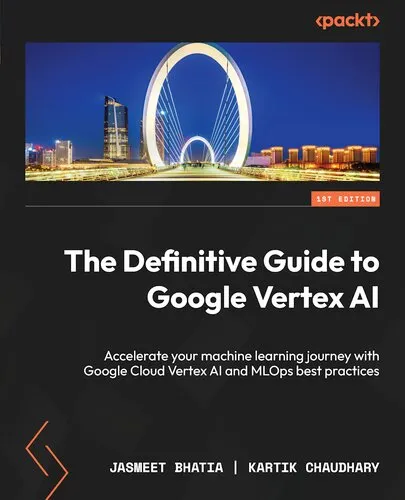
The Definitive Guide to Google Vertex AI: Accelerate your machine learning journey with Google Cloud Vertex AI and MLOps
Jasmeet Bhatia | Kartik Chaudhary
2023
View book
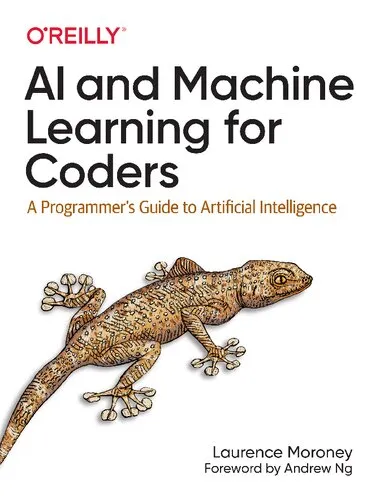
AI and Machine Learning for Coders: A Programmer's Guide to Artificial Intelligence
Laurence Moroney
2020
View book