
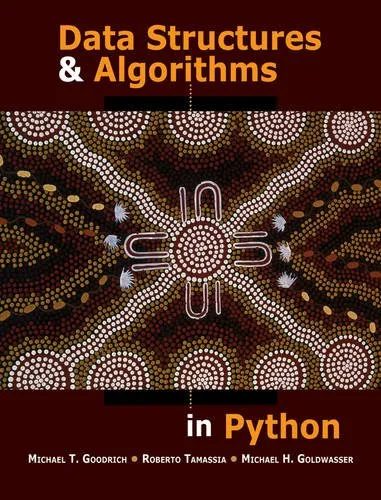
Data Structures and Algorithms in Python
Michael T. Goodrich,Roberto Tamassia,Michael H. Goldwasser
2013
View book
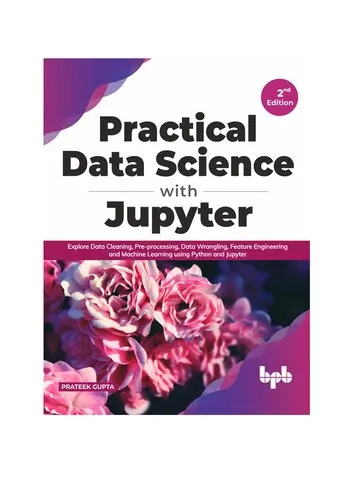
Book guide and evaluation
PRATEEK GUPTA
0 reviews
Published
pages
views
Introduction to "Practical Data Science with Jupyter" Welcome to "Practical Data Science with Jupyter: Explore Data Cleaning, Pre-processing, Data Wrangling, Feature Engineering and Machine Learning using Python and Jupyter (English Edition)", a comprehensive guide for asp
Before you read
Welcome to "Practical Data Science with Jupyter: Explore Data Cleaning, Pre-processing, Data Wrangling, Feature Engineering and Machine Learning using Python and Jupyter (English Edition)", a comprehensive guide for aspiring and experienced data scientists ready to enhance their skills in data science. This book is not just another theoretical discourse—it is a hands-on, practical resource designed to empower you with actionable knowledge using accessible tools such as Python and Jupyter notebooks.
With data emerging as the cornerstone of decision-making in today’s digital age, professionals, students, and enthusiasts alike are looking for structured guidance to navigate this vast field. This book blends code demonstrations with conceptual clarity to deliver a well-rounded data science learning experience. Whether you are a novice stepping into the field or an experienced practitioner polishing your expertise, this book will serve you as a dependable learning companion.
The journey of this book begins by grounding the reader in the fundamentals of data science and its associated best practices. At the heart of the book lies the idea of equipping you with practical, actionable techniques to handle data across its various stages—acquisition, cleaning, manipulation, and modeling. Using Python as a programming language and Jupyter notebooks as an interactable environment, this book brings together the power of simplicity and innovation.
Readers will start by understanding the importance of raw data and how to transform it into meaningful insights. The chapters are meticulously crafted to cover topics such as:
By walking through real-world datasets and coding examples, this book thoroughly demonstrates the value of a structured approach in handling data science challenges. It also covers troubleshooting pitfalls, ensuring smooth navigation even for complex datasets. Each chapter builds upon the previous one, ultimately enabling the reader to perform end-to-end data science projects confidently.
By the end of this book, readers will not only be capable of solving data science problems with confidence but also be able to articulate their findings in impactful ways using insights from their analyses.
"Data is messy, but insights emerge when you wrangle it into shape."
"Informed decisions begin with structured data."
"The true value of a data scientist lies not just in technical ability, but in the power to communicate insights effectively."
This book matters because it bridges the gap between theory and practice, which is often where learners struggle the most. By focusing on practical implementation and real-world examples, the book enables readers to quickly adapt their knowledge to solve tangible problems. Data scientists are increasingly in demand, but navigating the complexities of the field can be daunting—this book makes that journey less intimidating by breaking down both basic and advanced concepts into digestible, actionable steps.
Furthermore, the use of open-source tools like Python and Jupyter notebooks ensures that the learning journey is accessible and affordable for anyone with a laptop and an internet connection. It also aligns with the real-world workflows of professional data scientists, providing the skills to excel in their careers or personal projects.
In essence, "Practical Data Science with Jupyter" provides readers with the knowledge to transform raw data into impactful, decision-driving insights—a skill that is not only valuable but essential in today’s data-driven world.
Your question is answered in the context of this title and author. Each answer uses 2 points.
0 reviews, 4.5 average out of 5
Sign in to publish a review.
Ask a focused question and learn from the community.
Related references that continue this learning path.
Michael T. Goodrich,Roberto Tamassia,Michael H. Goldwasser
Peter Bruce,Andrew Bruce,Peter Gedeck