

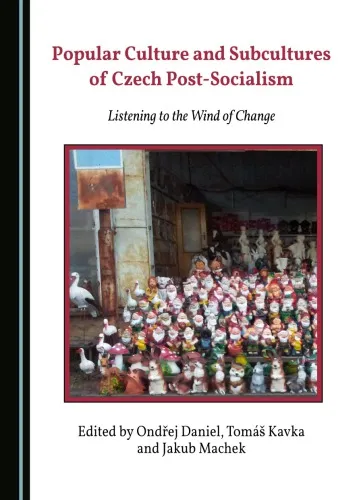
Book guide and evaluation
Popular Culture and Subcultures of Czech Post-Socialism: Listening to the Wind of Change
Ondaej Daniel;Tomaa Kavka
English
Beginner
Listening
4.0 / 5
0 reviews
2016
Published
217
pages
338
views
Introduction to "Popular Culture and Subcultures of Czech Post-Socialism: Listening to the Wind of Change" In the wake of the Velvet Revolution and the subsequent transformation of Czech society, the cultural and social landscapes underwent a seismic shift. "Popular Cultur
Before you read
What will you get from this book?
Introduction to "Popular Culture and Subcultures of Czech Post-Socialism: Listening to the Wind of Change"
In the wake of the Velvet Revolution and the subsequent transformation of Czech society, the cultural and social landscapes underwent a seismic shift. "Popular Culture and Subcultures of Czech Post-Socialism: Listening to the Wind of Change" explores the intricate web of cultural movements, subcultures, and societal changes that defined Czechia in the post-socialist era. This book delves into how the newfound freedoms, economic transitions, and global influences reshaped the everyday lives of Czech citizens, offering fresh insights into the complexities of post-communist identity.
Detailed Summary of the Book
This thought-provoking work examines the interplay between popular culture and subcultures in a nation transitioning from socialism to a market economy and democratic governance. The book begins by contextualizing the end of state socialism in 1989, reflecting on how the Velvet Revolution paved the way for an era of personal freedom, consumerism, and cultural pluralism. It then moves into an exploration of how Western cultural exports—such as music, fashion, and media—interacted with pre-existing Czech traditions and values.
One of the focal points of the book is the rise of various youth subcultures during the 1990s and early 2000s. From punk and hip-hop to eco-activist movements and underground rave scenes, these subcultures are analyzed for their roles not only in self-expression but also in resistance to the new capitalist order. The adaptation of Western cultural trends, alongside the reimagining of Czech identity, forms a recurring theme throughout the chapters.
The book also investigates how Czech humor, satire, and new media became powerful tools in critiquing both the remnants of the former regime and the excesses of neoliberalism. Additionally, it explores the commercialization of Czech culture, balancing discussions on agency and commodification. Through interviews, archival research, and cultural analysis, the book illuminates how Czech popular culture became a battleground where tradition and modernity collided and coalesced.
Key Takeaways
- The post-socialist era in Czechia was marked by a dynamic interplay between Western influences and local traditions.
- Youth subcultures played a crucial role not only in cultural innovation but also in political dissent and grassroots activism.
- Popular culture became a reflection of societal shifts, but also a potent medium for critiquing systemic changes under capitalism.
- The fusion of humor, satire, and media innovation represented powerful ways for Czechs to navigate their new socio-political reality.
- The study underscores the resilience of Czech cultural identity in the face of globalization and commercialization.
Famous Quotes from the Book
"In the whispers of raves and the echoes of punk songs, one can hear not only the rebellion of youth but also the struggle to create a renewed national identity."
"Post-socialist Czech culture is an intricate dance of remembering and forgetting, of clinging to roots while embracing the new."
"Popular culture is not merely entertainment; it is the lens through which societies understand themselves in moments of transition."
Why This Book Matters
This book offers an invaluable resource for understanding the cultural shifts that followed the collapse of socialism in the Czech Republic. It sheds light on how everyday practices, creative expressions, and collective identities adapted to sweeping socio-economic changes. By marrying meticulous research with cultural analysis, "Popular Culture and Subcultures of Czech Post-Socialism: Listening to the Wind of Change" highlights the transformative power of popular culture in shaping societal trajectories.
This work appeals to scholars of post-socialist studies, cultural studies, and European history, as well as anyone fascinated by the intersections of culture and politics. It serves as a reminder that cultural phenomena are not peripheral but central to understanding the broader currents of historical change.
Ultimately, the book is a celebration of Czechia's resilience, creativity, and capacity for reinvention during one of its most dynamic periods of change. Through its pages, readers are invited to reflect on the universality of cultural struggles and triumphs in the face of systemic upheaval.
Ask this book
Your question is answered in the context of this title and author. Each answer uses 2 points.
Sign in to ask the book assistant.
Reader reviews
0 reviews, 4.0 average out of 5
No reviews yet
If you have read this book, help the next reader with your experience.
Write a review
Sign in to publish a review.
Reader questions and answers
Ask a focused question and learn from the community.
Sign in to ask or answer a question.
No questions yet
Be the first to ask a clear, useful question.
What to read next
Related references that continue this learning path.
Phoenix leadership for business: an executive's strategy for relevance and resilience
Gokenbach,Valentina
2019
View book
Built to Learn: The Inside Story of How Rockwell Collins Became a True Learning Organization
Cliff Purington,Chris Butler,Sarah Fister Gale
2003
View book

The Emotional Life of Your Brain: How Its Unique Patterns Affect the Way You Think, Feel, and Live—and How You Can Change Them
Richard J. Davidson,Sharon Begley
2012
View book