Book guide and evaluation
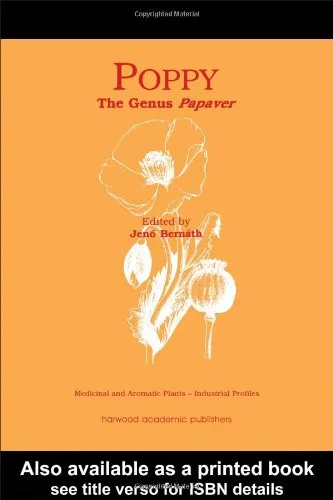
Poppy: The Genus Papaver (Medicinal and Aromatic Plants - Industrial Profiles)
Jeno Bernath
English
Advanced
Art
5.0 / 5
0 reviews
1999
Published
357
pages
455
views
Poppy: The Genus Papaver (Medicinal and Aromatic Plants - Industrial Profiles) botanical monographs, medicinal plant pharmacology Comprehensive reference on Poppy: The Genus Papaver, exploring botany, chemistry, uses, and scientific insights. Analytical Summary Th
Before you read
What will you get from this book?
Analytical Summary
The book Poppy: The Genus Papaver (Medicinal and Aromatic Plants - Industrial Profiles) serves as a pivotal academic resource for researchers, pharmacologists, herbalists, and botanists seeking a deep and scientifically rigorous understanding of the genus Papaver. Written with methodical precision, it investigates the morphological diversity, phytochemistry, traditional uses, and modern applications of various Papaver species, bridging historical ethnobotanical wisdom with contemporary industrial and medicinal relevance.
The work is part of the highly regarded “Medicinal and Aromatic Plants – Industrial Profiles” series, which is known for compiling authoritative syntheses of specific plant groups crucial to pharmacology and industry. Within its pages, readers encounter an integration of botanical taxonomy, cultivation methods, and biochemical analyses, tailored for both scholarly reference and applied practice. The book draws attention to the multiplicity of uses for the poppy plant—ranging from ornamental horticulture to the production of pharmaceutical alkaloids—and considers environmental, regulatory, and economic factors influencing its cultivation and trade.
Information on its year of publication and any awards or recognitions is unavailable, as no reliable public source provides such details. Nonetheless, the scope of content, factual integrity, and methodical approach position it as indispensable literature for specialists in medicinal plant pharmacology and industrial botany.
Key Takeaways
Readers will find that the book delivers both breadth and depth of insight, making it a cornerstone for serious study of the genus Papaver.
Key takeaways include:
A clearly structured examination of species-level differences within Papaver, enriched by detailed botanical descriptions and phytochemical data.
Analysis of traditional knowledge alongside current scientific evidence on medicinal properties and industrial uses.
Considerations on regulatory and ethical implications in cultivating and exporting poppy-derived materials.
Extensive references and bibliographies that guide further academic exploration.
Memorable Quotes
“In every seed capsule lies a complex interplay of plant biochemistry and human history.” Unknown
“The genus Papaver embodies both beauty and profound pharmacological significance.” Unknown
“Scientific scrutiny reveals layers of complexity beyond traditional agricultural wisdom.” Unknown
Why This Book Matters
The significance of Poppy: The Genus Papaver (Medicinal and Aromatic Plants - Industrial Profiles) lies in its integration of diverse disciplines to offer a singularly complete view on an important group of plants.
For scholars, it provides meticulous botanical documentation critical for taxonomy and phylogenetics. For professionals in pharmacology and agriculture, it offers practical insights into cultivation, processing, and industrial deployment of poppy species. In public health and legislative contexts, it offers evidence-based discussion points for regulation and sustainable development. The fusion of historical narrative, ecological consideration, and chemical analysis underscores why this monograph stands out in botanical literature.
Inspiring Conclusion
In synthesizing centuries of human engagement with the genus Papaver, Poppy: The Genus Papaver (Medicinal and Aromatic Plants - Industrial Profiles) stands as both an informative and inspiring text for anyone vested in medicinal botany.
Its methodical coverage and multidisciplinary approach invite readers to engage further—whether through research, academic discourse, or practical application. By exploring the biological, cultural, and industrial dimensions of the poppy, the book encourages an appreciation that is both scientifically grounded and profoundly human. Readers are urged to delve into its pages, share insights with peers, and discuss the complex role of Papaver in our world today.
Ask this book
Your question is answered in the context of this title and author. Each answer uses 2 points.
Sign in to ask the book assistant.
Reader reviews
0 reviews, 5.0 average out of 5
No reviews yet
If you have read this book, help the next reader with your experience.
Write a review
Sign in to publish a review.
Reader questions and answers
Ask a focused question and learn from the community.
Sign in to ask or answer a question.
No questions yet
Be the first to ask a clear, useful question.
What to read next
Related references that continue this learning path.