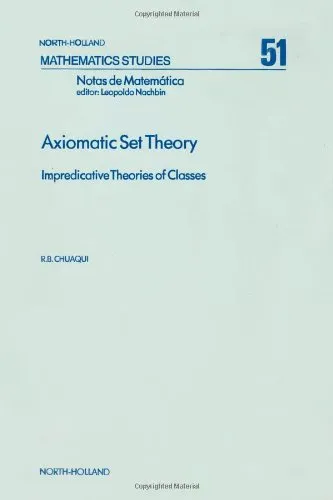
Axiomatic Set Theory: Theory Impredicative Theories of Classes
Leopoldo Nachbin (Eds.)
1981
View book
Book guide and evaluation
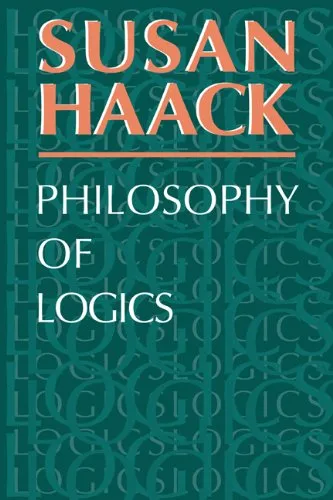
Susan Haack
0 reviews
Published
pages
views
Introduction to "Philosophy of Logics" "Philosophy of Logics" by Susan Haack explores the profound and intricate landscape of logic and its philosophical underpinnings. This influential text serves as a comprehensive guide for students, academics, and a
Before you read
"Philosophy of Logics" by Susan Haack explores the profound and intricate landscape of logic and its philosophical underpinnings. This influential text serves as a comprehensive guide for students, academics, and anyone interested in understanding the complex interplay between logical systems and philosophical queries.
The book meticulously unpacks the nature of logic, starting with basic principles and gradually advancing to more complex topics. Susan Haack begins by addressing the fundamental questions: What is logic? How do logics work? She posits that, far from being monolithic, logics are pluralistic and vary widely across different philosophical traditions.
The early chapters lay the groundwork by discussing classical logic, its syntax, semantics, and significance. Moving beyond tradition, Haack ventures into non-classical logics, providing insights into modal, intuitionistic, and relevance logics. Each form is examined not just structurally but also through its philosophical implications. Haack meticulously contrasts these systems, highlighting their strengths and limitations with clarity and precision.
The book further explores the nature of logical truths, dissecting the philosophical debates surrounding truth's definition and its role in logical systems. Haack's treatment of these topics balances technical rigor with accessible language, making complex ideas approachable and engaging.
"Logic is neither a purely formal nor a purely empirical science; it, instead, occupies a unique intersection of rules, interpretation, and meaning."
"The diversity of logics is a testament to the richness of human thought and its capacity for adaptation and transformation."
"Philosophy of Logics" is an essential read for anyone delving into philosophical logic. Susan Haack provides a robust framework for understanding not just the technical mechanisms of logic but also its broader philosophical significance. Her ability to weave together detailed logical analysis with deep philosophical insight distinguishes this work as a vital resource in the field.
The book encourages critical thinking and challenges readers to reconsider prevailing assumptions about logic. It inspires an appreciation for the depth and complexity of logical systems and emphasizes the indispensable role of philosophical inquiry in the study of logic. Haack's contribution is a testament to the enduring relevance of logical studies in contemporary philosophy.
Through "Philosophy of Logics," readers gain not only a greater understanding of logic itself but also a broader appreciation for the philosophical questions that continue to shape our understanding of the world.
Your question is answered in the context of this title and author. Each answer uses 2 points.
0 reviews, 4.5 average out of 5
Sign in to publish a review.
Ask a focused question and learn from the community.
Related references that continue this learning path.
Leopoldo Nachbin (Eds.)

Charles M. Quinn